Home Blog Page 35

Top 5 Possible Questions to Ask Your Interviewer After a Job Interview

For most job applicants, preparing for a job interview involves researching answers to all the possible questions to expect at the interview. From responses to the always-asked tell us about yourself, to the rarely-asked where do you see yourself in the next five years, job applicants do all sorts of research to ensure they answer these common interview questions as best as possible.

But only very few do their research on another aspect of a job interview that is as important – the part where tables are turned, and you temporarily become the interviewer (but not really). This is the point where the interviewers allow you to ask them questions too.

In this article, I will share some top intelligent questions you should ask your interviewer after your next job interview.

Think about it, how many times have you gone for an interview and you’re told something like do you have any question for us or what will you like to ask us? Several times, right?

A lot of job applicants make the mistake of responding with something in the line of I don’t have any question, you’ve said it all. Seriously?

By the way, if you’re more of a video person, you might want to just watch this

Why you need to ask your interviewer questions after your interview

Did you know that asking the wrong questions (or not asking any question at all) may determine whether or not you will get the job? E shock you? Take a look at some of the reasons why you need to ask questions after your interview.

  • Shows Interest in the Company

You got to a job interview, and you suddenly don’t feel like working there? Just don’t ask any question after your interview and your interviewer will get the message.

The easiest way to make your interviewer know you’re no longer interested in the job or the company is by not asking any questions after your interview. They will get the message and probably not bother you again after the interview.

So, if you’re not trying to suggest lack of interest, you better go in there prepared with your questions.

  • Shows you are intelligent

The type of question you ask sometimes show how you think. How many times have you heard people say “that’s an intelligent question”? Yeah, questions provide the opportunity to show intelligence level.

Hiring managers are always after the best talents, and you know it’s really competitive out there. So that opportunity to ask questions is another opportunity to boost your chances, so you better make good use of it.

  • Shows you did Your Research

It’s 2020 and getting information about companies a lot easier now than ever. This makes it possible to find the most information about your potential employer before you go in for your interview.

But you still won’t find everything. There is some information about the company that they may not have out there. Also, there are some that you may have read but may not fully understand. Asking questions in this line show that you did your homework well.

If you start asking questions like “what does this company do?” Well, that would clearly show you did not do any research which may be proof that you’re not interested in the job or the company.

Questions you should NOT ask

Perhaps, before going to the list of the right questions to ask your interviewer, first, let’s take a look at some questions you should NOT ask at your job interview. Some of these questions seem harmless, but hey, they may cost you that job. Here you go

  • So, did I get the job?

Lol, you need to calm down. First of all, even your interviewers may not have an answer to that just yet. Remember, you’re not the only candidate being interviewed for the role so they may not have arrived at a decision just after talking to you.

Secondly, you don’t want to seem too desperate. That’s a red flag for most employers.

  • What do you guys do?

Wait, what? You went for a job interview in a company, and you don’t know what they do? O wrong nau.

This, as I mentioned earlier, would suggest you have not done your homework, so take it off your list of questions.

  • If I get the job, can I change my schedule?

At least, wait till you get the job first before asking this question. Putting up a question like this while you are still being interviewed may not go down well with some interviewers.

To them, it may be a sign that you’d be the problematic type. And always remember; you’re not the only candidate being considered.

  • Don’t ask yes or no questions

Like I mentioned earlier, this is an opportunity to flaunt your intelligence. Asking a yes or no question is obviously not the best way to go about this.

  • Don’t ask personal questions

“So, how much is your salary?” Of course, you don’t want to ask personal questions like this for obvious reasons.

Possible Questions to ask your Interviewer

So, here we are. These are the top 5 intelligent questions you ask at your next job interview

  • How does one advance on the role?

Asking this question shows you are already thinking of succeeding on the job. That’s the kind of spirit most employers resonate with.

It shows you are confident of getting the job without you sounding desperate. Enthusiasm, confidence and ambition are all you’d be demonstrating by asking this question.

And of course, you don’t want to get the job and be stagnant for the rest of your life so you actually should pay attention to how this question is answered.

  • What are the biggest challenges on this job?

Trust me, every role has its challenging part, and your interviewer knows this too. Asking this question helps you to understand what to expect on the job and prepare for it ahead.

By the way, if your interviewer says there are no challenges on the job, then you need to be extra cautious.

  • When can I expect to hear from you?

This is probably the last question you should ask. In other words, it shouldn’t be your only question.

With this question, you know when to expect to get feedback on your interview and not be in suspense waiting by your phone (or email) forever.

  • Do you have any reservations on my qualifications, skills or experience?

Asking this question is giving yourself a second chance to correct certain impressions that your interviewer may have of you.

For instance, the interviewer may say you did not fully explain how your previous experience is relevant to the job. So, what do you do? You take a deep breath and make another attempt at convincing the person that indeed your experience would help on the job.

You want to ask this question to inform your decision about working with the company. Pay attention to the response you get from this question.

According to The Cut columnist, Alison Green, the way your interviewer answers this will reflect their experience working with the company.

If your interviewer answers with so much enthusiasm, then it may mean that working there wouldn’t be a wrong decision.

But when you get a not so exciting or enthusiastic response, then you may want to think again. That may be a sign.

Conclusion

After all is said (and done), one thing you must note is the fact that these things are not cast in stones. What may work for one may not work for another.

You may recall an exchange between a job applicant and an interviewer that generated controversy on social media some months back. In case you missed it, a job applicant had complimented his interviewer with the comment “you smell nice” after his interview.

I interviewed a guy for a job yesterday and when he was leaving he said to me ‘you smell nice’ and I told him that’s very rude of him, he left looking stupid.

 A lot of men don’t have manners!!!

— Taiwo (@taiwo__y) March 11, 2019

Human resources practitioners were divided on whether or not this is right. This is proof that what works for one may not work for another.

Just make sure to make your findings and know all you can about the company, and if possible, about your interviewer. The information you find will help you determine what questions to ask and how to frame your questions.

But irrespective of who your interviewers are and their value system, not asking any question is a no-no. Go for your interview, prepared to be interviewed and to temporarily be the interviewer.

Have you asked any of these questions at an interview before? What was the response like? Are there some other questions you think should be listed here?

Let us know in the comments.
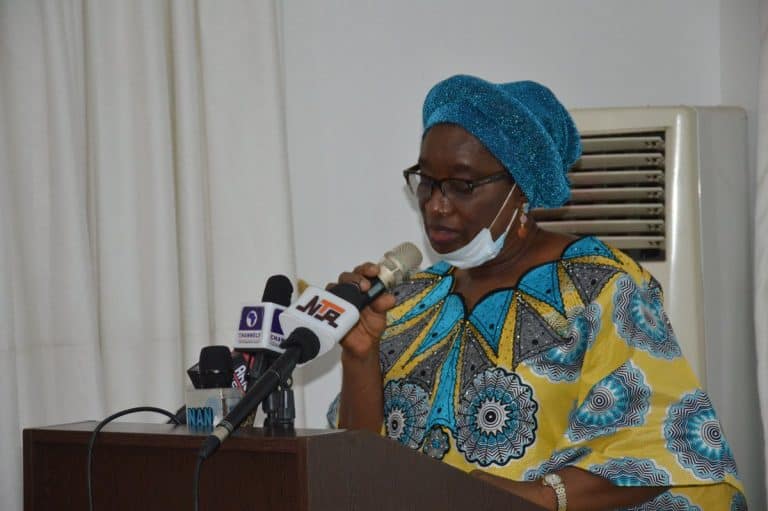
PTAD holds a 3-day sensitization and capacity building programme for Anti-graft agencies

259

Worried by the increasing activities of scammers who defraud unsuspecting pensioners, the Pension Transitional Arrangement Directorate (PTAD) has stepped up its awareness campaign against the menace.

Executive Secretary of PTAD, Dr. Chioma Ejikeme, said before assuming the responsibility for the payment of monthly pension, the pension industry was rife with complaints of extortion by fraudsters who calls pensioners, demanding for money to quicken computation and payment of outstanding liabilities.

Speaking at the opening of the 2020 sensitisation and capacity building workshop for anti-graft and other related agencies on the Defined Benefit Scheme (DBS) in Abuja, she said these fraudsters take advantage of the desperate and unsuspecting pensioners to defraud them of their meagre benefits.

The PTAD boss also said the Directorate had been inundated with complaints of scammers impersonating or posing as staff of PTAD usually conveying wrong information and misleading write-ups.

She said the agency had deemed it fit to engage its stakeholders to continually re-strategise and come to terms with the realities of fraudulent activities as it pertains to the management of the Directorate’s pensioners.

She pointed out that it was against this backdrop that PTAD had launched the maiden edition of the workshop with the theme: “Zero-Fraud Pension Administration in Defined Benefit Scheme (DBS)”.

Nonetheless, Ejikeme said the PTAD had been liaising with security agencies including the Department of State Security (DSS), Nigerian Police Force (NPF), Economic and Financial Crime Commission (EFCC) and the Independent Corrupt Practices and other related offences Commission (ICPC) to curtail the menace.

According to her, the synergy with security agencies has yielded some level of success in the apprehension and prosecution of some fraudsters, especially at verification centers. 

She said: “Though there are still pockets of complaints bordering on illicit request for funds to process pension arrears and defrauding of the pensioners, the Directorate has concluded its on-field pensioner verification exercises. And, as it stands, a reasonable level of decline in the complaints has been achieved.”

She further added that through several collaborations, PTAD has been able to mitigate the perpetration of fraudulent activities carried out by syndicates and persons who fraudulently take advantage of the pensioners. 

She said the Directorate at several stakeholder engagements at the various geopolitical zones, had reiterated its commitment to curtailing the perpetration of fraudulent acts. 

She further stated that the successes recorded by the Directorate in curtailing fraudulent and dubious activities could not have been achieved without partnerships with the security and anti-graft agencies as well as the Public Complaints Commission, and SERVICOM. They all have served as avenues of informing the Directorate of the plights of the pensioners under the DBS. 

Notwithstanding the feats, she there is always room for improvement and upskilling, pointing out that the forum provided an opportunity for all present to contribute from their pool of knowledge and expertise to achieve a zero-fraud pension administration in the DBS.

A representative of the security agencies, Commissioner of Police, Pension Office, DCP Ibrahim Tarfa said the pension reforms stands as one of the greatest legacies of government.

He said while corruption had destroyed the old pension scheme, the emergence of the Contributory Pension Schemes and the DBS was a game-changer for pension administration.

He specifically commended PTAD for sanitizing the pension industry in the country.

Suggested: How to Apply for MSME Survival Fund and Guaranteed Offtake Scheme

CBN Commits N374bn to Smallholder Farmers 

The Central Bank of Nigeria (CBN) Tuesday said the bank had funded smallholder farmers (SHFs) under the Anchor Borrowers Programme (ABP) to the tune of N374 billion across the cassava, maize, cotton and rice value chain from 2016 to date.

CBN Director, Development Finance Department, Mr. Yila Yusuf, disclosed this at a meeting of key stakeholders in the programme.

Specifically, he said in the 2020 wet season farming, the apex bank disbursed over N200 billion to SHFs which represented the highest amount made available in a single year from the inception of the programme. 

He said the CBN had aggressively embarked and accentuated the importance of cultivating staple foods locally to drive its food security mandate and shore up its foreign reserves by discouraging the importation of these commodities that could easily be cultivated in the country. 

He said, “In this season, we have emphasized the use of new improved seeds which will guarantee bumper harvest for the farmers and enable the SHFs to pay back their loans with ease. 

“The season also saw more involvement of prime anchors participation in the programme. The proposed 2020 dry season farming, will focus on the use of contagious lands for mechanization by increasing land under cultivation with state government contributing between 20,000 to 100,000 hectares, use of improved seed and establishment of off take agreement.”

The CBN director, also pointed out that the ABP which was introduced in 2015 had witnessed a reasonable degree of success as indicated by the reduction in commodities importation, value chain development- particularly development of processing capacity of indigenous companies, empowerment and job creation as well as financial inclusion among others.

Yila said the stakeholders’ meeting had been convened to “take stock of our achievements and strategize on ways of achieving increased food production to meet the country’s ever-increasing food needs and avert predicting food crisis on the nearest future.

“We will therefore capitalize on our learning experiences thus far to achieve early successes, to move the bank forward particularly in its effort to achieve employment creation, poverty reduction and sustainable economic growth.”

He said the ABP emerged in 2015 to create a linkage between anchor companies involved in the processing and SHFs of the key agricultural commodities adding that it is primarily used to finance farmers in groups and associations so that they will have all the inputs needed by them to reap a bountiful harvest.

According to him, the programme thrust of the ABP is the provision of farm inputs in kind to smallholder farmers to boost production of these commodities, stabilize inputs supply to agro-processors and address the country’s negative balance of payments on food.

Selected FG Owned Enterprises To Get Revenue Directors

5

The federal government yesterday said it had concluded plans to deploy directors of finance&accounts to selected Federal Government’s Owned Enterprises (FGOEs) to act as drivers in its efforts at increasing revenue performance, ensure transparency and prevent further leakages in accruals.

This move was disclosed by Mrs. Zainab Ahmed the Hon. Minister of Finance, Budget and National Planning. She said the initiative which is still on pilot phase, will involve 10 FGOEs including the Nigerian  National Petroleum Corporation (NNPC), Federal Inland Revenue Service (FIRS), Nigeria Customs Service (NCS), Department of Petroleum Resources (DPR) and the Federal Airports Authority of Nigeria (FAAN).

Others are the Corporate Affairs Commission (CAC), Nigerian Communication Commission (NCC), Nigeria Shippers Council and Nigerian Port Authority (NPA).

Speaking at the opening of an orientation programme for the revenue directors, which was organised by the office of the Accountant General of the Federation (OAGF), the minister said government enterprises have huge potentials and capacity for revenue generation if properly managed to significantly improve the revenue base of the federal government.

She said: “It is in this light that the deployment of the treasury directors is considered expedient to the selected FGOEs as a pilot.”

She said the continuous reliance on oil revenue would mean that public expenditures will always be dwindled by shocks in global oil market price, which is not within the government’s control.

Ahmed said one of the possible solutions was to look into the non-oil revenues, take advantage of the potentials and make it robust.

She expressed optimism that the presence of directors of revenue at the FGOEs will ensure strict adherence to extant rules and regulations in the areas of compliance to approved budgets and due process mechanism in procurement and payments.

Significantly, the minister said the directors would in the course of the discharge of their functions be involved in the revenue operations of the FGOEs, have a better understanding of business processes and procedures of the enterprises and cause improved transparency and accountability in their revenue reporting.

She said they are also expected to seek for opportunities and avenues for revenue improvements which is the ultimate aim of the government adding that the discharge of these duties will be aided with the deployment of Information Technology tools to help their tasks.

Ahmed further pointed out that the integrated revenue monitoring system is being put in place to help the monitoring of the revenues of the FGOEs online real-time and to ensure its improved transparency and accountability.

The Accountant General of the Federation (AGF), Mr. Ahmed Idris, said the only solution to the serious fiscal challenges facing the country was to diversify from the volatile oil revenue and look inward into the non-oil revenues with particular attention to the FGOEs.

He said the development was in line with the circular from the Secretary to the Government of the Federation (SGF) dated October 16, 2018, on revenue performance framework for FGOEs.

He said: “The vision of this initiative is to achieve transparency and accountability of government revenue with special focus on FGOEs, improved revenue performance and ultimately to provide a sustainable source of funding for government budget execution.”

The initiative will further ensure that government enterprises remit appropriate operating surpluses into the federation account.

Also in the news: FIRS Attributes Improved Non-oil Revenue to Tax Reforms

CBN Reduces MPR to 11.5%

2

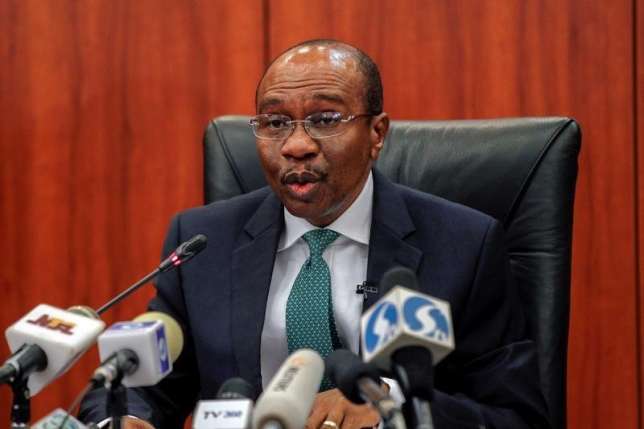
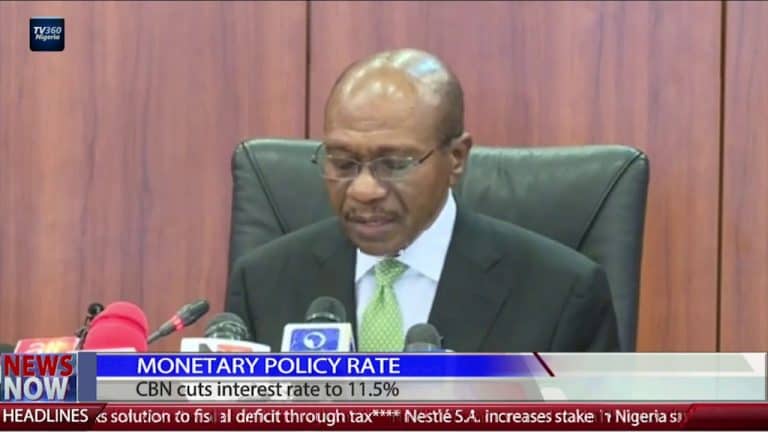
The Central Bank of Nigeria (CBN) Tuesday resolved to reduce the Monetary Policy Rate (MPR) by 100 basis points to 11.5 per cent from 12.5 per cent and adjusted the asymmetric corridor to +100/-700 basis points around the MPR.

The MPR is the rate which the apex bank lends to commercial banks and often determines the cost of funds.

Addressing journalists at the two-day meeting of the Monetary Policy Committee (MPC in Abuja, the CBN also retained Cash Reserve Ratio (CRR) 27.5 per cent and Liquidity Ratio at 30 per cent.

Top 10 Richest People in Nigeria in 2020 and What You Can Learn From Them

155

Find out which of these Famous billionaires still top the chart as the richest people in Nigeria, and which of their net worth has dropped since the 2020 Pandemic.

From Aliko Dangote to Oba Otudeko, these names have been around for a while, but how rich are they and where does that leave the infamous billionaire Terry Waya?

Did you know that 90% of Nigeria’s foreign exchange comes from oil? Little wonder why a fall in the oil market has a great impact on the financial status of the richest people in Nigeria.

When the Coronavirus hit the global markets in 2020, many investments crashed and oil prices collapsed, but this isn’t the first time a market crash would affect the billionaires of Africa.

Knowing how much Nigeria’s economy depends on oil, and that the majority of these richest people in Nigeria made their money in trading oil, export, and investments, one has to wonder: How rich are they?

How hard did the pandemic affect the famous billionaires in Nigeria and where are they ranked now?

Although the oil sector took one of the biggest hit in 2020, not all businesses and business owners completely lost out of trades and shares.

Top 10 Richest Individuals In Nigeria

Aliko Dangote $8.1 billion

The CEO, Dangote Group Aliko Dangote has remained at the top of the chart since he was listed on Forbes Richest men in Africa in 2012. Dangote was worth 13.8 billion in 2011. But how much is he worth in 2020 and what can we learn?

According to Forbes Real Time Billionaire list, Aliko Dangote is currently worth $8.1 billion. Despite the slight fall, Dangote still ranks as number 1 on the list of Billionaires in Africa and 247 in the world.

Did you know Dangote’s grandfather Sanusi Dantata was a wealthy trader in Kano. He traded in rice and oats.

What entrepreneurs can learn from Dangote

As the wealthiest man in Africa, Aliko Dangote has stayed true to the business niche as opposed to ploughing the political ladder.

Another thing Dangote has proven is that one can be a jack of all trade and still master all. he started in construction then diversified to manufacturing and later fast-moving consumer goods (FMCG). One thing is clear he is not afraid to challenge the status quo.

Mike Adenuga $6.1 billion

Mike Adenuga is the second biggest name in Nigeria and Ranks as number 3 in Africa and 366 in the world. From a net worth of 2 billion in 2011, the Telcom boss and “Bull” has made considerable strides in the financial market thanks to his keen eyes for business opportunities.

Did you know: Mike Adenuga made his first million selling lace and distributing soft drinks. Despite his fame, Adenuga has lived his life on a very lowkey, granting interview ones to Bisi Olatilo on the then Bisi Olatitlo Show (BOS).

What entrepreneurs can learn from Adenuga

Hard work is the key to success.

Mike Adenuga was ahead of his competition and it gave him an edge over others. His major business break came through the selling of removable car stereos.

He believes in researching a business before going into it as it makes it easier to add value.

He also admits to knowing the workings of government very well.

Know your business, work hard and trust God.

Abdulsamad Rabiu $3.1billion

Did you know that Abdulsamad Rabiu is the founder of BUA Group, a Nigerian conglomerate active in cement production, sugar refining and real estate, and he owns 98.5% of its shares?

He currently ranks at 846 in the real-time billionaires’ list with a net value of $3.1 billion as of 6 AM September 27, 2020. He is the 8th richest man in Africa.

What entrepreneurs can learn from Rabiu

In line with business development, Rabiu like his Aliko and Otedola appear to have diversified his business toward owing an oil refinery and power.

This transition is nothing short of timing.

As entrepreneurs, timing is key to success within any field.

Amidst the pandemic, Bua Group signed an agreement with Axens of France for the supply of process technologies for its upcoming 10million tonnes per annum mega refinery and petrochemicals facility to be sited in Akwa-Ibom, Nigeria.

Rabiu’s 200,000 bpd refinery and petrochemical plant aim at producing Euro-V fuels and polypropylene for domestic and regional markets.

A few weeks after BUA Cement announced it was planning to establish a 3million metric tonnes per annum cement plant as well as a 50megawatts power plant in Adamawa State in North-East Nigeria.

Famously Rich but Not Listed on Forbes

Femi Otedola

The Internet went wild a few weeks ago when Otedola bought 3 Ferraris for his daughters. So how much is the energy magnate worth?

Ranking 16 among Africa’s 50 richest and formerly 1011 on the world’s real times list in 2017, Otedola has since dropped off the Forbes list.

Since he sold his 75% shares in Forte Oil PLC to Prudent Energy services, Otedola’s current net worth is undisclosed.

Following his divestment from Forte oil, Otedola reportedly invested $1bn in Nigeria’s power sector through Geregu Power Plc.

With the current performance of Geregu Power PLC, Otedola may be making a comeback on Forbes list.

Did you know: Femi Otedola is the son of the former Governor of Lagos state Sir Micheal Otedola.

What entrepreneurs can learn from Femi Otedola

Resilience is the word that comes to mind when one thinks about Femi Otedola, from his years in his family printing and stationary business to his venture into supplying diesel and eventually into becoming an oil magnate.

Femi Otedola’s path is littered with many stories of failure and a rise back to wealth.

In an interview he discloses that “being a good entrepreneur does not necessarily make you a good business manager. I learned to keep my hands off managing and leave it in the hands of experts”.

Femi has proved time and time again that one can lose it all and still bounce back.

Folorunsho Alakija $1 billion

Formerly ranked at 1914 on world list of billionaires, Folorunsho has since dropped out of the Forbes list in 2017 with a net worth of. She was last estimated in January 2020 at $1bn.

Alakija recently dropped out from the Forbes real time billionaires list due to inconsistencies in oil prices. The tycoon who made her wealth from oil was at some point listed as part of the 80most influential women.

Did you know Alakija’s first company was a fashion label whose customers included the wife of former Nigerian president Ibrahim Babangida.

What entrepreneurs can learn from Folorunsho Alakija

For a woman whose story has been passed around from parents to children, one lesson stands out in Alakija’s story – maximize opportunity.

A lot of people miss opportunities even when they are glaring.

Another aspect of Alakija’s story that stands out is her enterprising mindset. Be resourceful. Constantly look for opportunities to maximize and create wealth.

Theophilus Danjuma

The former Nigerian defense minister and the founder of oil exploration company South Atlantic Petroleum. He also owns real estate plus a stake in Notore Chemical Industries, a manufacturer of urea fertilizer, as well as a stake in NALComet, one of Nigeria’s largest shipping companies. His net worth fell a year ago due to the sustained weakness in oil prices.

Theophilus Danjuma like Alakija is a famed billionaire based on old stories.

Like other famed oil magnates in Nigeria, Danjuma dropped off the list of top 50 richest men in Africa in 2016.

Danjuma was last estimated at $750 million.

Tony Elumelu $700 million

The renowned philanthropist and investor is no longer listed on Forbes, since he dropped off in 2016.

His last known net worth was 700 million as at 2015.

Before dropping off the list, he ranked 31 in the list of Richest men in Africa.

Nigerian entrepreneur and investor Tony Elumelu owns a controlling interest in Transcorp, a publicly traded Nigerian conglomerate with interests in hospitality, agriculture, oil production and power generation.

He came into the limelight in 1997 when he led a small group of investors to take over a small, floundering commercial bank in Lagos. He turned it profitable within a few years and in 2005 he merged it with the United Bank for Africa.

That banking group now has subsidiaries in 20 African countries and in the U.S and U.K. Elumelu also owns extensive real estate across Nigeria and a minority stake in mobile telecom firm MTN Nigeria, among other assets.

What entrepreneurs can learn from Tony Elumelu

Speaking during the Tony Elumelu Foundation boot-camp for entrepreneurs, Tony Elumelu said; “I want them (the 1,000 entrepreneurs) to imbibe my own business values which include hard work, emotional and social intelligence, integrity, resilience, and discipline,“ he said.

You have to dream the dreams, set the milestones, develop a saving culture, and ‎most especially, form visionable partnerships. If we imbibe these factors, then we are on the way to having future leaders in Africa,” he stressed.

“What we are doing is a means to an end. The end is to see these entrepreneurs create jobs, develop society, and enable Africa to achieve an all-inclusive growth,” he added.
Elumelu pointed out that there are lots of unemployed people in Africa, while also calling on other endowed Africans to support entrepreneurs to help reduce the joblessness plaguing the continent.” Source.

Orji Uzor Kalu 1.1 billion

The name Orji Uzor Kalu is legendary amongst Nigerian youths. As a kid, I sang songs about him in the playground.

Like Dangote, Oriji Kalu is one of the few rich Nigerians whose wealth is not tied to oil.

Did you know that Orji Kalu started his trade with a $35 loan from his mother and after diverse trade in palm oil, rice, and sugar, he later traded in furniture?

He made his first million at the age of 20. He also made a huge profit in the military era in Nigeria, when he won a contract to supply ammunition to the Nigerian military.

In 2015 however, Kalu dropped off the list of richest men in Africa. He had previously ranked 49 out of 50 richest men in Africa.

Kalu’s net worth was last estimated in 2015 at $330 million a huge drop from 1billion as the previous year.

Jim Ovia $550 million

The founder of Zenith bank was at some point reportedly worth $1 billion, 850 million, and 2.3 billion.

He was listed as the 37th richest man in Africa in 2015 but dropped off in 2016.

His last estimated net worth was $550 million.

What entrepreneurs can learn from Jim Ovia

From his beginnings in sales of used cars during his NYSC, Jim Ovia success relies on a strong sense of intuition. As an entrepreneur, learn to listen to your inner self, it would guide you through instincts and impulse.

What determines whether a great idea can ever come to fruition is the initial will to act on instinct…” says Jim Ovia.

Your field of business may not turn out to be your biggest source of wealth but the experience will guide you as you grow.

Jim’s experience in negotiation during his early days in car sales eventually helped him in obtain a banking license even though he did not qualify.

Oba Otudeko $650 million

With a net worth of $550 million, Oba Otudeko the founder and chairman of Honeywell Group was once listed as the 46th richest man in Africa.

However, he dropped off the list in 2015.

His conglomerate’s operations stretch across oil and gas, flour milling, real estate, and marine transportation. And he has a stake in the oceanfront Radisson Blu in Lagos, Nigeria.

What entrepreneurs can learn from Oba Otudeko

Otudeko’s life may hold lessons for young ones given the many opportunities for skill acquisition through online learning platforms.

Otudeko began in the banking industry and diversified into manufacturing.

Terry Waya $865 million

Terry Waya is currently one of the richest and the most influential socialites in Nigeria with an estimated net worth of $865 million. Terry Waya Million Dollar Empire was brought again to limelight when his son, Teeseer KiddWaya appeared on the 2020 Big Brother Naija Reality TV Show. Since he resurfaced online, he has gone back to his old ways where he flaunts his flamboyant cars and posts live videos of himself counting huge piles of money.

Other Street Famous Billionaires and Their Tentative Net Worth

A few of these names pop on the news every now and then and they rank as one of the richest people in Nigeria.

DISCLAIMER: these figures may not be accurate.

  1. Arthur Eze 5.7 billion
  2. Cletus Ibeto 3.7 billion
  3. Benedict Peters $2.7 billion
  4. Igho Sanomi $1.3 billion
  5. Bryant Orjiako $1.2 billion
  6. Bode Akindele 1.2 billion
  7. Emmanuel Ojei $1.2 billion
  8. Bola Ahmed Tinubu $8.4 billion
  9. Ibrahim Badamase Babaginda $5 billion
  10. Ifeanyi Ubah $1.7 billion
  11. Olusegun Obasanjo $1.6 billion
  12. Rochas Okorocha $1.4 billion
  13. Atiku Abubakar $1.4 billion

Other Famous Millionaires in Nigeria

  1. Mohammed Indimi $670 million
  2. Tunde Folawiyo $650 million
  3. Hakeem Bello $600 million
  4. Cosmas Maduka $800 million
  5. Terry Waya UNKNOWN

Conclusion

Of all the famous richest people in Nigeria, only 3 still maintain a world record in 2020. Reed Hastings and Jeff Bezos may have made huge profits during the pandemic, but Nigeria’s billionaires weren’t as lucky. Arguably, Femi Otedola foresaw the fall of the oil market when he made the switch from Oil to Energy. Good call!

See Article On: Empowering Female Entrepreneurs in Africa

Federal Government Makes a U-turn on Self-Certification Form, Apologizes to Nigerians for Error

8

The federal government of Nigeria has announced that the earlier announced self-certification form for all bank owners was a mistake, as the form is not meant to be filled by all Nigerians.

The official twitter account of the Federal Government of Nigeria had tweeted that all Nigerians should go collect the self-certification form from their respective banks, fill it and submit or lose their bank accounts.

The now deleted statement reads thus;

This is to notify the general public that all account holders in Financial Institutions (Banks, Insurance Companies, etc) are required to obtain, complete and submit Self – Certification Forms to their respective Financial Institutions.

— Government of Nigeria (@NigeriaGov) September 17, 2020

The statement generated outburst from Nigerians on social media with many asking the question on the need for the form since there is BVN and other biometrics, and why the process has to be analog.

However, the federal government has made a U-turn on the statement and has apologized stating that the form is not for everyone but certain category of people (reportable persons).

And here is FIRS’ statement

They have however stressed that failure to fill the form for all those concerned may lead to the closure of account.

The form can be accessed on FIRS website.

ICRC Dispels Alleged Embankment Collapse in Kainji Dam

1

The Infrastructure Concession Regulatory Commission (ICRC) has assured that the integrity of Kainji Dam remained intact following reports of an alleged embankment breach.

The Director-General/Chief Executive, Infrastructure Concession Regulatory Commission (ICRC), Mr Chidi Izuwah, who disclosed this added that the facility is “operating flawlessly and injecting lowest-cost power to the national grid”.

The ICRC boss described recent reports about a possible dam collapse as “fake news” adding that “Kainji Dam has one of the most sophisticated real-time inflow prediction and reservoir basin management systems.”

In a statement, he said, “We inform the public that Kainji is safe and advice them to ignore the fake news. We advice all Nigerians to please kindly check status of our PPP and concession projects on the ICRC disclosure portal or directly with the Commission.”

Izuwah said during the commission’s last compliance monitoring visit to the dam before the emergence of COVID-19, all aspects of the dam were inspected and appropriate function tested.

He said: “We thoroughly inspected the Dam Crest, Reservoir, Embankment Rip Rap, Dam Toe, Toe Drain, Piezometers, Spillway, Stilling Basin, Power House etc.

“Furthermore, Kainji has one of the most sophisticated real-time inflow prediction and reservoir basin management systems. This computer-based system with feeder monitors on the upstream and downstream stretches is designed to ensure world-class hydraulics flow management for dam, upstream and downstream safety management.

“It’s important to inform Nigerians what an embankment collapse means and its implications. Kainji dam impounds over 16 billion litres of water. Embankment collapse means the dam structure is breached, leading to loss of containment of the impounded water.”
According to him: “Embankment collapse will result in what is called a dam break wave. Most empirical hydraulic models will show that everything probably some decent distance on both banks of the Niger from Kainji dam location to the sea will be washed away.

“This will probably be the biggest disaster to hit Nigeria since the turn of the century – destructive power of water. A dam break wave is very similar to a Tsunami wave but is not of seismic origin. We are not sure any person would  wish his or her country this.”

He, however, noted that as part of the federal government’s power sector reforms initiatives, Kainji Hydropower Facilities were concessioned to Mainstream Energy Solutions.

He said Mainstream’s responsibility included safe custody of the entire dam structure and appurtenances adding that ICRC being the statutory agency responsible for pre and post contract regulation of PPPs and concessions had continued regular technical and other compliance monitoring of the Kainji concession.

FIRS Attributes Improved Non-oil Revenues to Tax Reforms

1

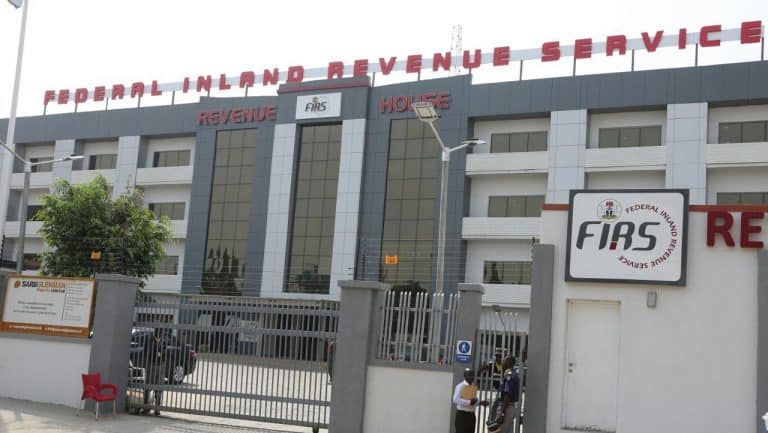
The Executive Chairman, Federal Inland Revenue Service (FIRS), Mr. Muhammad Nami said the service has continued to record a significant increase in collectable tax revenue from the non-oil sector of the economy despite the global economic crisis occasioned by the COVID-19 pandemic.

He attributed the increase in non-oil sector receipts to reform measures introduced by the FIRS board and management since inception as well as the renewed vigour in the service workforce.

Speaking when members of the board paid a courtesy call on the Minister of Finance and National Planning, Mrs. Zainab Ahmed, Nami said non-oil tax receipts had consistently contributed between 75 per cent and 90 per cent of total tax revenue in recent months.

He said out of N490 billion collected by the service in July, only N52 billion was from the oil sector as non-oil receipts accounted for the bulk of the revenue.

In a statement issued Thursday by the Director, Communications and Liaison Department, FIRS, Dr. Abdullahi Ismaila Ahmad, the FIRS boss, however, commended the minister for her support to the board since their inauguration earlier in the year and solicited closer working relationship between the service and her ministry.

Ahmed, however, commended the FIRS for working to limit the disruptive impact of COVID-19 on government revenue through proactive and bold reforms and noting that this had made it possible for the three tiers of government to receive their monthly statutory allocations from the federation accounts.

The minister specifically observed that Value Added Tax (VAT) and stamp duties receipts had boosted government revenue despite the pandemic.

She also promised to continue to support the service, urging it to work harder towards diversifying government revenue sources further away from the dependence on oil.

FG Moves to Review Outdated Treasury, Accounting Documents

160

The Federal Government of Nigeria on Thursday, September 9, 2020, said it has commenced a comprehensive review of treasury forms and other accounting source documents that are in use in all Federal Ministries, Department and Agencies (MDAs), in Nigeria.

The Accountant General of the Federation (AGF), Mr. Ahmed Idris, who disclosed this said that the contents of the treasury forms and other accounting source documents in use were no longer relevant and useful to drive the various public finance management reforms of the Federal Government, which are mostly ICT-driven.

He noted that the review was in the exercise of the mandate of the AGF under FR.107 (n) to issue officially approved forms bearing treasury numbers for use in all to ensure uniformity.

Ahmed had earlier inaugurated an inter-ministerial committee to handle the review.

He said the committee was expected to identify all treasury forms and accounting source documents presently in use and come up with new formats in line with the public finance reforms.

Suggested Read: The Need To Document Corporate Entrepreneurial Experiences For Future Studies

The committee will also recommend additions or deletions of the contents; assign relevant number systems to the treasury forms and review the documents in line with GIFMIS operations.

In a statement by the Director of Information, Press and Public Relations, Mr. Henshaw Ogubike – the AGF further stressed that in carrying out the assignment, the committee should be guided by the federal government’s quest for adoption of e-governance at all levels.

He also endeared them to note that the fact that all the public finance reforms initiatives being driven by the treasury are predicated on a full deployment of ICT solutions.

According to the AGF, a comprehensive review and update of these accounting source documents became imperative for an efficient and successful implementation of governments financial management reforms.

He reiterated the governments resolved to ensure a successful review of the documents and charged the committee to give the assignment all amount of seriousness it deserves and delivers on time.