Home Blog Page 38

Big Brother Naija: Lessons for Business Enthusiasts

For the next few weeks, Nigerians will stay glued to their televisions to watch and talk about the Big Brother Naija reality TV show.

The housemates would need to sell themselves in order to be the favourite housemates of their audience. And yes, Nigerians will rally around their favourite housemates.

One after the other, the housemates would be evicted, based on the votes cast for them by Nigerians. Like any other reality show out there, Big Brother Naija may hold lessons for us as business enthusiasts.

The reality show has successfully aired for five seasons since 2004. Regardless of its many challenges, it has lasted way more than many small businesses in Nigeria and has been more successful than most reality shows in Nigeria.

Given the few reality shows that succeed on local television, you’d assume Nigerians don’t like reality TV. Yet we’ve had Project Fame, Nigerian Idols, Gulder Ultimate Search, Maltina Dance All, and very recently, Love. How are they all doing?

So what’s behind the success of Big Brother Naija?

What business lessons can we learn from the BBN?

The BBN holds several lessons, especially to an entrepreneur. While you may find other lessons, for me the lessons that resonate most are:

  1. In Business You Need The Right Partners To Succeed
  2. Quality is key – You must know your target market and serve them quality

Big Brother Naija (BBN) formerly Big Big Brother Nigeria is a spin-off from Big Brother Africa. A good show that sadly ended in 2014 after airing its 9th season. By the company’s official press release, they claimed sponsorship was the reason it closed, but I’m sure our prayer warriors and holier than thou opinion leaders would beg to differ.

Whatever your reservation on the moral conducts of BBN, no doubt you can agree that it is a show that requires a lot of money, creativity, and teamwork to be successful. But above all, there’s a deliberate systemic, strategic flow behind the show’s success.

Endemol and the Genius John De Mol Jr

I know the word genius gets thrown around a lot. But, what do you call the mind that created Big Brother and The Voice? Genius! There’s no other word for that. It’s simply awesome!

Of course, no great company succeeds by a single effort but John deserves the spotlight. This is why I say every business enthusiast or business owner could learn a dozen lessons to learn from John.

The company was originally founded as John De Mol Produkties in the Netherlands and in 1994 it became Endemol through a merger with Joop Van den Ende.

In 1997 John produced The Dutch version of Big Brother and The Voice.

In 2000 John sold his shares to Telefonica yet continued to serve as creative director until 2004 and founded Talpa Media Holding.

Remaining as creative director was a smart move because Talpa – later named Tien – would rank poorly on TV ratings leading to John selling off to RTL Netherlands but retaining some of its shares.

Another smart move if you’re following. As business enthusiasts, you have to know when to hold ‘em and when to fold ‘em. I picked that up from some Hollywood film. Some type of gambling slang.

After jumping ship on Tien, John De Mol returned to Endemol in 2007 as a major shareholder together with Mediaset of Silvio Berlusconi.

In 2011 Endemol relaunched The Voice. This time it was a global success, giving Rise to several editions of The voice in other Countries.

Endemol was succeeded in 2015 by Endemol shine group growing into a Global force with 120 production companies operating in 20+ countries. That is huge!

Now if you’ve been following dates, you’d see that each merger made Endemol bigger and its shows grew popular with TV fans. I mean I’m stuck on some moments from the voice and Big Brother.

But honestly, Endemol has given us good content for years. From Big Brother to The Voice and Fear Factor, Love Letters, 1 vs 100, Deal or No Deal, Your Home Made Perfect. And many more.

68,000 hours of finished programming!

Yes! That is some success story.

Later as Endemol Shine Group, it created the Money drop, Peaky Blinders, Masterchef, Black Mirror, Humans, Grantchester, and Tin star.

It’s recent acquisition by Banijay on July 3, 2020 made grand records in the history of Business merger.

Deal or No deal!

I say deal already!

Content

I’m sure you heard the famous Bill Gates quote – content is King. Among Kings, Big Brother Naija has proven to become an empire. With its Fifth season underway, Twitter will never be normal. All types of debates would set the trend table on fire. With the Betway ambassadors keeping its fandom active.

You see when it comes to content, Big Brother delivers.

This is what has kept the audience- At least its Nigerian audience – actively engaged since it premiered as Big Brother Africa in 2000.

So what’s so special about the content that has never been seen on screen?

You’d think it’s the adult content. But sleazy shows turn people off. If you are on Nigerian Twitter, you know what I mean. The activist in union with the unpopular Nigerian mothers’ Whatsapp group would make sure such a show never sees the light of day.

But here we are. There’s already the Nengi vs Dorothy debate and this season has only begun.

In some way Big Brother Naija directly affects lives. That’s soft power and the show runners recognize this power.

Investors

As business enthusiasts, perhaps, and this is me taking a wild but obvious guess. One of the reasons the show has successfully found sponsors is the biding style that allows different businesses with multiple interest bid for ad placements in the show.

That’s one business lesson for show creators and business enthusiasts.

This is different from other shows as Gulder Ultimate search, Project fame, and oh who remembers You see the difference. The others are either owned by a Bank or a breweries company. Then they want to fund it all by themselves to advertise their own product thereby monopolizing the market. How has that worked so far? Which is why I worry for all these Bank owned online Film platforms.

Endemol recognizes its strength as an independent production company. It has a success record and has continued to build on it.

This is something content writers understand. If a post gets good engagement on one platform a smart content person takes it up and tweaks it for another platform. Same Content.

Over time you build a good record of success story. Enough to convince an investor.

Now you’d think it’s the adult content that attracts investors. Don’t do that, you’d never learn. First, you’ve thought yourself to believe a lie. Secondly, you’ve invariably stopped yourself from expecting a positive response from your investors just because you think people only invest in cheap thrills. Suddenly, you’d find yourself shifting from your true intent in a bid to score cheap points in advertising.

Unlike other TV shows, BBN doesn’t end when a brand cuts sponsorship. The show continues. MTN is written all over Project fame it almost isn’t project fame without the obvious sponsor. If I never told you, you’d never know the name Endemol or its new owner Banijay.

Funds appropriation

As someone who knows someone who knows someone that makes content for Nigerian TV, I’d tell you one thing – misappropriation of funds is the chief problem with many productions on our TV.

MONEY will never be enough but money can do more than we are letting it do as business people.

Read the article on finance tools for small businesses. It starts here.

I’ve seen filmmakers eat the funds for their production before production begins. In the long run, they start micromanaging just to complete the production. Very few Media houses in Nigeria run on proper structures. I said it.

It takes more than a registered business name to grow a company. Financial know how is key.

Lessons for Business Enthusiasts

Here’s a highlight of todays discuss; when you find a good product make sure it delivers on its promise.

Secondly,

Dey your dey.

Stop jumping on every trend if it doesn’t fit your business. Except your team is as good as the guys at Durex. They can turn anything to fit their brand.

Lastly, Finance.

Understand how to separate your personal money from your business. You see that popular debate amongst married people about husband’s money vs wives’ money, whose money should fund the home?

As a business owner you need to be very clear about whose money runs the business if you want to see your business grow.

Your money is the business money but the business money is not your money.

Once again.

Understand how to manage money using financial tools as discussed in this article.

BBN compulsorily created pairs- it’s part of the game but if you looked closer, you’d have seen that not all members of each pair have been particularly acting like they were part of a team. It is also no coincidence that the strongest teams were the most voted to remain in the house- MiNa and BamTeddy. Who’s your numero uno fan in your life who genuinely wants the best for you? Team up and do great things together.

Loans Without Collateral in Nigeria – ExpertsNG

The term loan refers to a type of credit vehicle in which a sum of money is lent to another party in exchange for future repayment of the value or principal amount. In many cases, the lender also adds interest and/or finance charges to the principal value which the borrower must repay in addition to the principal balance. Loans may be for a specific, one-time amount, or they may be available as an open-ended line of credit up to a specified limit. Loans come in many different forms including secured, unsecured, commercial, and personal loans – Investopedia

Online Platforms that give Quick Loans to Small Businesses

If you’ve been wondering where you can access loans as a small business in Nigeria, here are 10 online platforms where you can get quick loans for your business in Nigeria (in no particular order)

1. SMEDAN – SME loan supported by federal government

Let’s start with this government-backed initiative before going to the private sector. As a way of supporting small and medium businesses in the country, Nigeria’s federal government established the Small and Medium Enterprises Development Agency of Nigeria (SMEDAN) in 2003 to help promote the growth of small and medium enterprises.

They do this in different ways including training, mentorship and provision of loan. 

  • Minimum amount: N100,000
  • Maximum amount: N2,000,000
  • SMEDAN Loan Requirements: Business Plan and National ID
  • Interest rate: 4%/month

You can visit SMEDAN website to apply for this loan.

2. Renmoney – Personal and business loan

Renmoney is a digital-friendly microfinance bank that gives quick loans to small businesses and individuals in Nigeria.

To get SME loan from Renmoney, you have to show proof that your business has monthly earnings so that you can payback.

  • Minimum amount: N100,000
  • Maximum amount: N6,000,000
  • Renmoney Loan Requirements: Bank Statement, Utility Bill and National ID
  • Interest rate: 2.8%/month

Visit Renmoney official website to apply for the loan.

3. Lidya – Small business loans and working

Lidya is a leading SME-only loan platform. The online platform was launched in 2016 to close the credit gap, in Nigeria and other emerging markets.

If you’d like to access an easy loan for your business, you can apply for Lidya business loan online or through mobile phone and receive feedback in a couple of hours.

Lydia makes use of technology and algorithms for risk assessment before disbursing loans. Once they run your application through their system and you are eligible for the loan, disbursement is made.

  • Minimum amount: $500
  • Maximum amount: $50,000
  • Lydia Loan Requirements: Proof of registration, Existed for 3 months+ and a Bank Account
  • Interest rate: 3.5%/month

If you’d like to take a loan from Lydia, you can start your application here.

4. Kiakia – Smart lending and swift loans

Backed by a renowned commercial bank, Sterling Bank, Kiakia is an Abuja based financial institution that gives quick loan to small businesses in Nigeria.

The online platform also makes it possible for users to give each other loans using intuitive conversations.

  • Minimum amount: N50,000
  • Maximum amount: Depends on credit score
  • Kiakia Loan Requirements: BVN, Valid ID, verified source of income
  • Interest rate: 3.5%/month

Begin your business loan application with Kiakia on their website.

5. Carbon – Fast, flexible loan for businesses

Carbon is a popular digital loan platform in Nigeria. Formerly known as Paylater, Carbon was initially known as the go-to platform for instant personal loans.

However, Carbon recently launched Carbon for business to support SMEs and startups with loans to scale.

Using your BVN, Carbon can calculate your credit and determine how much they can give you.

  • Minimum amount: N50,000
  • Maximum amount: N20,000,000
  • Carbon Loan Requirements: Business running for 12 months +, 1 million+ monthly revenue
  • Interest rate: Depends

You can access carbon business loan here.

6. QuickCheck – Quick loans for Nigerians

Quickcheck loan app gives you access to instant loan online for personal and business needs.

  • Minimum amount: N1,500
  • Maximum amount: N500,000
  • Quickcheck Loan Requirements: Depends
  • Interest rate: 5%/month

7. C24 – Online loan without collateral

This financial institution gives loans to support individuals and businesses with urgent financial needs. With your internet-enabled device, you can access quick business loan for your small business in Nigeria.

  • Minimum amount: N5,000
  • Maximum amount: N5,000,000
  • C24 Loan Requirements: Formal loan application, recent utility bill, means of identification among others
  • Interest rate: 4%/month

Start your C24 loan application here.

8. FastCredit – Fast loan for your needs

Small and medium enterprises like yours can access quick loans from Fast Credit SME loan. This one requires a guarantor and the maximum tenor is 6 months for businesses that meet their criteria.

  • Minimum amount: N100,000
  • Maximum amount: N5,000,000
  • FastCredit Loan Requirements: 12 months business account bank statement, proof of registration, evidence of tax payment among others
  • Interest rate: 4%/month

9. EazziCash – Easy access to loans

Eazicash has two loan packages for small business owners, namely Eazzipawn and EazziAssist. 

  • Minimum amount: N100,000
  • Maximum amount: N6,000,000
  • EazziCashLoan Requirements: Must be resident in Lagos and its environs
  • Interest rate: Depends

Visit Eazzicash website to apply.

10. Zedvance – Access to quick loans without collateral

Last but not least, Zedvance is an online platform that gives loans mostly to individuals. However, in a bid to encourage entrepreneurship, Zedvance has loan facilities for small businesses run by salary earners (as side hustle).

So if you have a job but run a business on the side, then Zedvance loan is for you.

  • Minimum amount: N20,000
  • Maximum amount: N5,000,000
  • EazziCashLoan Requirements: NUBAN cheques or debit mandate, Employee ID, Employment letter, among others.
  • Interest rate: Risk-based

Start your Zedvance loan application here.

Reasons To Take Loans

The importance of loans to a small business or individuals cannot be overemphasised. Except you want your business to remain small permanently, you are most likely going to take loans at some point.

Before now, only big companies had access to loan facilities in Nigeria. That has changed in recent years since it’s now glaring to all that small business play important roles in the economy.

In a report made public by PwC in 2018, SMEs (Small and Medium and Enterprises) constitute 96% of businesses in the country and the employer of 84% of Nigerians. Also, SMEs contribute 48% of Nigeria’s GDP (Gross Domestic Product).

With this, it’s glaring that the growth of your small business has a positive impact on the country’s economy. And loans can help to make that growth you desire a reality.

Aliko Dangote is the biggest inspiration for most entrepreneurs in Nigeria. He is the richest black man on earth, so it makes sense that he inspires us all.

The Kano-born business mogul is currently worth over $7billion. But all of the money and success notwithstanding, Dangote too gets to take a loan sometimes. Even if we don’t know of the unpublicised loans from friends and business associates, Forbes reported in 2018 that Dangote got $650 million loan from Afreximbank (African Export-Import Bank).

The Dangote example is just because it’s closer home and would resonate more. There are several other successful businessmen and women in the international space that had to take loans to support their businesses at some points.

Jeff Bezos’ parents loaned him $250,000 in 1995 (about $30 billion dollars today). Bill Gates loaned Steve Jobs $150 million in 1997 as a form of investment in Apple when it was at the Brink of Bankruptcy. We can go on and on.

The point here is not to encourage you to take needless loans. No one, absolutely nobody said you should take loans to flex. Not at all. Instead, here are a few reasons why you should consider taking loans

  • Loans can help you expand your small business
  • It can be used to offset inventory costs
  • To acquire expensive equipment or other business needs
  • For cash flow: operational costs
  • To stand the chance of getting higher loans with better terms in the future

Top Places To Apply For Loans in Nigeria 

Accessing loans is one of the major necessities in Nigeria. 

To get an idea of what sort of loans are available in Nigeria, we decided to find out what funding options are available in the country. We conducted a search on various finance websites and compiled our best picks into this post.

There are so many organisations that grant loans in Nigeria. Some of these organisations are either owned by the Government or owned by private individuals.

This article lists the very functional, top 50 organisations in Nigeria that give loans out.

1. Bank of Agriculture (BOA)

The Bank of Agriculture is a Nigerian government-sponsored bank that provides loans, credits, and other forms of funding for farmers and farming businesses.

They provide products and services such as Agro-processing facilities, Export finance facilities, and many others. They can award loans up to NGN 5 million Naira, and their interest rate is between 7% and 21%. 

To apply for a loan at the BOA, you must first:

  • Have collateral
  • A duly completed application form
  • Three recent passport photographs
  • A current copy of utility bills
  • An initial deposit of NGN 3000
  • An existing farmland
  • A signed letter from the bank 
  1. Bank of Industry(BOI)

The Bank of Industry Limited (BOI) is Nigeria’s oldest, largest and most successful development financing institution. It was reconstructed in 2001 out of the Nigerian Industrial Development Bank (NIDB) Limited, which was incorporated in 1964. The bank took off in 1964 with an authorized share capital of 2 million (GBP).

The BOI’s core mandate is to provide financial assistance for the establishment of large, medium and small projects as well as the expansion, diversification and modernisation of existing enterprises; and rehabilitation of existing ones. 

Once you meet its requirements, accessing loans from the BOI is not so cumbersome, the BOI is one of the best sources of funds available to Nigerian businesses.

Development Bank of Nigeria (DBN)

The Development Bank of Nigeria (DBN) was conceived by the Federal Government of Nigeria (FGN) in collaboration with global development partners to address the major financing challenges facing Micro, Small and Medium Scale Enterprises (MSMEs) in Nigeria.

As the name implies, this bank disburses loans to SMEs. DBN loans can be accessed through PFIs, which include Commercial Banks, Microfinance Banks, Development Finance Institutions (DFIs) and other Financial Institutions.

DBN loan repayment tenure is flexible (up to 10 years with a moratorium period of up to 18 months) and the interest rates are on a market-conforming and fully financially sustainable basis.

How to get a DBN Loan

You can access the DBN loan through any of these Participating Financial Institutions (PFIs) by contacting any of the banks listed below:

Access Bank PlcOnyinyechi.Uba@ACCESSBANKPLC.com,
CorporateFinance@ACCESSBANKPLC.com,
Oreoluwa.Adeyemo@ACCESSBANKPLC.com,
Omotolani.Ketiku@ACCESSBANKPLC.com,
Moses.Osondu@ACCESSBANKPLC.com
Ecobank Nigeria Bank PlcEbere Onyenweaku – eonyenweaku@ecobank.com,
TOLARINDE@ecobank.com
Fidelity Bank PlcOsaigbovo Omorogbe – osaigbovo.omorogbe@fidelitybank.ng,
Jennifer.David-Ake@fidelitybank.ng,
Chiwuike.Okere@fidelitybank.ng
To get a loan, Click Here
FCMB LtdOluremi Agboola – Oluremi.Agboola@fcmb.com,
George.Ogbonnaya@fcmb.com,
Toyin.Ajibulu@fcmb.com
To get a loan, Click Here
First Bank Nig LtdDBNFUNDS@FIRSTBANKNIGERIA.COM
GTBanklucia.jaiyeola@gtbank.com,
kelvin.biiranee@gtbank.com
To get a loan, Click Here
Providus BankEnyinnaya Akagha – eakagha@providusbank.com
Stanbic IBTC Bank PlcUmeasala, Damian – Damian.Umeasala@stanbicibtc.com,
Ojosipe, Ayodele – Ayodele.Ojosipe@stanbicibtc.com
To get a loan, Click Here
Sterling Bank Plcbusinessbanking@sterling.ng
Union Bank of Nig Plcaoordia@unionbankng.com,
aebassey@unionbankng.com,
SMEProduct@unionbankng.com
To get a loan, Click Here
Wema Bank PlcOlolade.Adekunle@wemabank.com,
Arthur.Nkemeh@wemabank.com
To get a loan, Click Here
AB Microfinance Bank Nigeria Ltd Oladapo.Ikupolati@ab-mfbnigeria.com,
Olukorede.Ekundebe@ab-mfbnigeria.com
Accion Microfinance Bank LimitedNdubuisi Onuoha – nonuoha@accionmfb.com,
Adetokunbo Elliot – aelliot@accionmfb.com,
Emeka Uzowulu – euzowulu@accionmfb.com,
uchukwu@accionmfb.com
Addosser Microfinance Bank Olusola Howells – howells.olusola@addosser.com,
deji.sobulo@addosser.com,
oluwaseun.adekanbi@addosser.com
Astra Polaris MFB Onifade Abimbola – abimbola.onifade@astrapolaris.com,   info@astrapolaris.com,
Baobab Microfinance Bank Achenyo Oyibo – aoyibo@baobab.bz,
cgwehi@baobab.bz
Bosak Microfinance Bank Toyin Peters – toyinpeters@bosakmfb.com,  teepeeters@gmail.com,
FrancisAtiri@bosakmfb.com
To get a loan, Click Here
Davodani Microfinance Bankjohne.ologe@davodanimfb.com,
aayotomi@davodanimfb.com,
ayodejitomi@yahoo.com,
soyebisi@davodanimfb.com,
ufelix@davodanimfb.com
FSDH Merchant BankAyodele Akinwunmi – aakinwunmi@fsdhgroup.com
HASAL Microfinance Bank bukola.afariogun@hasalmfb.com,
njoel-ezeugo@hasalmfb.com
To get a loan, Click Here
Infinity Microfinance Bank Ltd Oludotun Adewunmi – g.adewunmi@infinitymfb.com,   oludotunadewunmi@yahoo.com,
s.ogunniyi@infinitymfb.com
Infinity Trust Mortgage BankAbiodun Akanbi – abiodun.akanbi@itmbplc.com
Jubilee Life MortgageKushiro Roli – rolikushimo@jubileelifeng.com
La Fayette Microfinance Bank Limitedeodetayo@advans-lfmfb.com
LAPO Microfinance Bank LtdEfosa Aigbe – efosa.aigbe@lapo-nigeria.org,
hope.ogbe@lapo-nigeria.org
Mainstreet Microfinance Bank LtdAdegoke E. Adegbami – aadegbami@mainstreetmfb.com,
midris@mainstreetmfb.com,  midris@mainstreetbankmfb.com
Microvis Microfinance Bankoolaiya@microvismfbank.com,
oaustin@microvismfbank.com,
eokpanachi@microvismfbank.com
NPF Microfinance Bank PlcRotimi Dada – rotoyin1159@gmail.com,  rdada@npfmicrofinancebank.com,
cwosu@npfmicrofinancebank.com,
chima_wosu@yahoo.com
Parallex Microfinance Bankabimbola.akande@parallexbank.com,
femi.otenigbagbe@parallexbank.com
Regent Microfinance Bankfatima.rufai@regentmfb.com
Seedvest Microfinance BankKehinde Oyeleke – kehinde.oyeleke@seedvestgroup.com,  oyelek@yahoo.com,
omololaakinjoko1@gmail.com,
jannybee1@live.com
Stanford Microfinance BankVincent Aluu – nellyvingroup@gmail.com
Trust Microfinance Banktrustmfb@yahoo.com,
debanjajayi@gmail.com,
Sodiyasamusideen@yahoo.com
Source: DBN

NIRSAL Microfinance Bank

The NIRSAL microfinance bank is a CBN licensed institution that offers loans for developmental purposes, mainly to households and MSMEs. 

NIRSAL Current Loan Products:

  1. Agric Small Medium Enterprise Scheme (AGSMEIS)
  2. Anchor Borrowers’ Program (ABP)
  3. NIRSAL Access Target Savings Accounts (NAT)
  4. COVID-19 Support

And a host of others. Kindly Click on the link above to get more details on NIRSAL loans and services.

NIRSAL Loan Criteria: 

  • Valid Employment letter
  • Staff identity card
  • Payslip
  • Six months statement of accounts
  • National ID card of any form
  • Utility bills
  • Passport photographs and other relevant documents. 

The Nigerian Export-Import Bank (NEXIM)

The NEXIM Bank is mandated to help provide loans to facilitate export goods and services from Nigeria. Only Business owners and organisations related to exporting activities are required to access loans at the bank. NEXIM Bank provides products like direct lending, foreign input, local, and other related services

Small and Medium Enterprise Development Agency of Nigeria (SMEDAN)

SMEDAN is charged with granting loan access to MSMEs; it provides schemes such as the commercialisation empowerment initiative, conditional grant scheme and other empowerment schemes for growing business owners. 

Conclusion

Just as getting a loan can be good for your business, approaching it the wrong way may haunt you later. That’s why it’s always important to read every term and condition before you submit that loan application.

Here you have 10 different options. Go through each of their offers and settle with what works best for you in terms of the amount offered, tenor, interest rates and other conditions.

Related: Solved:

7 Free Financial Tools for Small Business Owners

Top 6 Challenged of Small Business Owners Today

MSME Survival Fund and Guaranteed Offtake Scheme

7 Free Financial Tools for Small Business Owners

As a small business owner, you know money is essential to the overall success of your business; however, your financial management capability is more critical. And having the right financial tools to help with the planning, analyses, ad reporting of your finance is the most crucial of them all.

Business is war and like any other war, you need the right equipment to win your battles.

ExpertsNG

Have I lost you?

I hope not. Let me explain.

Business growth requires a lot of checks and balances, and one of the things that need your constant check as a business owner is your financial statement.

Financial statements are important because they contain significant information about a company’s financial health. Financial statements help companies make informed decisions since they highlight which areas of the company provide the best ROI (return on investment).

Trust me Big businesses are doing more than buying and selling and recording profit and losses.

I know you probably started this entrepreneurial journey to earn a little more cash but let’s face it; you need some form of knowledge in finance and plenty of help with financial analysis.

So, you probably should have listened more in your accounting class. Kidding.

What was I saying?

As the owner of a small business in Nigeria, you must review your financial statements regularly https://dashbetcasino.com/. I do understand that you may not necessarily have the required skills at an expert level but analyse, you must.

Below are seven of the tools that I use to help with my financial planning and analysis.

What sets the Big businesses apart from other companies is data. The capability to collect and effectively analyze and utilize financial data is key to the development of any business – big and small.

So How Do You Check Your Business Health?

You see, your financial statements, also called financial reports are formal records of the financial activities of your business.

Related: Bookkeeping 101 for Small Businesses in Nigeria

Now financial statement analysis, on the other hand, reviews the financial statement of your business in other to help you make better economic decisions that will help you earn more.

No. That piece of paper squeezed in your back pocket doesn’t count. You need a balance sheet, an income statement, a statement of changes in equity or rather – retained earnings, and a cash flow statement. I’m starting to sound like your account teacher, but those rows and columns are very important, else you’d have a headache trying to sort out your money as your business grows. We don’t want that.

Now that you have all your financial records sorted I know you think you could just glance over it and I’m going to say stop. Don’t do that. There are free financial tools to help you analyze your financial records.

But before that, let’s talk about the HOWS.

How to Analyse Your Small Business Financial Statement

There are several ways to analyse your financial statement but let’s leave that for the big shots. I’ll focus on these three;

  • Horizontal Analysis
  • Vertical Analysis
  • Ratio Analysis

But what I really want to talk about are free tools for financial analysis. So I’m just going to skip right through these:

In no particular order

HORIZONTAL ANALYSIS

  1. Also called Trend analysis
  2. Financial activities are compared over period. Could be over years.
  3. It’s presented in percentage with a baseline of 100%. Simply put, product A did 40% in 2015 and in 2016 it did 60% (Something like that.)
  4.  It’s easy to spot the growth trends of any given product by looking at the financial patterns

VERTICAL ANALYSIS

  1. Compares items on the expense line to see how each item contributes to overall sales in percentage

RATIO ANALYSIS

  1. It helps you evaluate operational efficiency.
  2. Your business may be making good profit but isn’t experiencing growth because when it comes to internal revenue money is not being managed properly.
  3. When paired with Horizontal and Vertical analysis, ratio analysis can help provide insight on the financial health of a business.

It’s a lot to take in for a budding business but trust me it would save you a lot of effort if you get the frame work right.

Every small business has it’s challenges but financial management shouldn’t be a part of yours.

Let’s jump right over to the 7 free Tools for Financial Analysis.

7 Free Tools for Financial Analysis

There are different aspects of financial analysis. Each of the financial tools listed will help track a different aspect of business finance. Some of these tools incorporate your business finance statement from multiple sources helping you to access the financial health of your business with little stress. I have ranked these tools in order of the purpose they serve in finance management.

1. Account Management Tool

Xero is the trusted software as far as free goes. Top features as Invoices, Quotes, Contacts, Bills, Bank reconciliation, Spending, Bank account balances, Profit and Loss, Cashflow. Although some features as the CIS calculations may be limited to the UK. Other than that, Xero seems like the best option for your multipurpose account needs.

2. Cash Flow Management Tool

Float comes highly recommended but really if you’re a budding entrepreneur in Nigeria, you could use Google Docs to track your cash projections. You bet it. Google Docs may not come off as fancy for your taste but it does the same work for FREE with no catch to go premium to use its best features.

3. Payroll Management

Xero offers employee payroll tracking but as a small business owner in Nigeria, I can bet you are mostly multitasking on job roles.

4. Expense tracking

While there are more professional expense tracking apps, for a start try Spending tracker. The User interface is simple and it offers charts to help you visualize your spending patterns. You could also check out Zoho books.

5. Inventory management

I couldn’t find a mobile App for Ordoro and is best suited if you run a dropshipping business but it won’t hurt to snoop around. Ordoro takes pride in providing an efficient workflow for seamless shipping. Like I said suitable if you run a dropshipping business.

6. Budgeting

I don’t know how much of the features on planGuru are offered for free but it’s worth a shot.

7. Business credit

Now, this is new. According to Meredith Wood, A business credit card increases the credit score of your business. I know credit cards aren’t popular in the Nigerian market. Hence, my advice is to keep track of the small loans incurred for your business and build your credit score by maintaining an excellent reputation for loan returns this would help for accountability when investors go through your financial statement.

Finally, and I probably don’t need to tell you this, but your business account should be separate from your account as an entrepreneur. Contact your local bank about opening your business account. Your ability to separate business from personal accounts is the first step to a healthy financial life.

Click here to talk to an expert on how best to manage your accounts and business finances.

Suggested Reading: Solved: Top 6 Challenges of Small Business Owners Today

7 Simple Steps to Boost Instagram Engagements

So you have a business on Instagram, and you’re wondering how to boost Instagram engagements on your posts? Not to worry, you are not alone.

When Kevin Systrom and Mike Krieger founded Instagram in 2010, they only thought of creating a photo app with photo-sharing features concentrating on pictures taken with a mobile phone. Little did they know that they were making what would turn out to be the platform where businesses and brands keep in touch with their customers and prospects. In fact, for many small businesses in Nigeria today, their only store (online and offline) is on Instagram.

When Kevin Systrom and Mike Krieger founded Instagram in 2010, they only thought of creating a photo app with photo-sharing features concentrating on pictures taken with a mobile phone.

Over the years, Instagram algorithms have become smarter, and your competitors (especially the bigger ones) are investing so many resources into their Instagram content. How do you, as a small business with just a few followers, attract engagements to your posts? How do you stay above the waters?

In this post, we will be looking at 7 smart ways to boost engagements on your Instagram posts. But just before that, you may be wondering why you need engagements on your posts? Who cares about engagements when we all know what matters to you as a business is sales/conversion?

Why You Need Instagram Engagements

You must have seen some of those funny Instagram pages with thousands of followers but very few engagements on their posts. What’s the first thing you think of when you see such pages? Fake followers? Stolen account? Bought account? Scam?

Whatever you think is exactly what others think of your brand when they start noticing the same on your page. How do you explain having over 50k followers but an average of 50 likes on your posts? Something is definitely not right, right?

It’s pointless having all Instagram users following you if they are not going to engage with your content. This can only mean either of these two.

  • They do not see your contents due to competitive Instagram algorithms
  • They don’t “like” your contents

This post will show you how to make more people see and like your content. But before that…

It’s pointless having all Instagram users following you if they are not going to engage with your content.

How to Measure Instagram Engagements

Another question you may have is what constitutes engagement, and how do you measure it?

According to Pixlee, Instagram engagement refers to a person’s degree of social involvement as defined by at least a comment or like. In other words, likes and comments are the minimum metrics for measuring engagements. There are other metrics such as the number of views, “saves”, shares, profile visits, and website clicks.

Having talked about engagement, there is something more important than engagement, though; and that is the engagement rate.

At the end of the day, what matters most about your page is not the number of engagement. Instead, it’s the number of engagements against the number of followers.

And there is a formula for calculating the engagement rate.

boost Instagram engagements

Let’s try to calculate the engagement rate for a brand on Instagram

This is Rage Group, a “A Global Marketing & Integrated Creative Communications Agency”

At the time of writing this, Rage Group had 6,202 followers

boost Instagram engagements

Their most recent post has 86 likes and 6 comments.

boost Instagram engagements

Going by that formula, Rage Group Engagement Rate is:

boost Instagram engagements

Therefore, Rage Group Engagement rate is 1.5%

Is this low or high? You be the judge of that. According to Oberlo, however, the average engagement rate on Instagram is 1-3%.

7 Simple Steps to Boost Engagements on Instagram

Now that you understand why you need engagements on Instagram and how to measure it, it’s about time we got to why you are here – how you can increase Instagram engagements.

Here are 7 proven steps to boost post engagements on Instagram with real-life examples. Get your writing materials as the class starts now!

1. Always Engage with Similar Pages

One of the many algorithms of Instagram is that engagement begets engagement. When you interact with other users, you increase your chance of visibility. You also attract visitors to your profile.

But while engagement is important, the quality of engagement is importanter (more important). This explains why you should be selective in the type of account you engage with. Always go for accounts similar to yours.

boost Instagram engagements
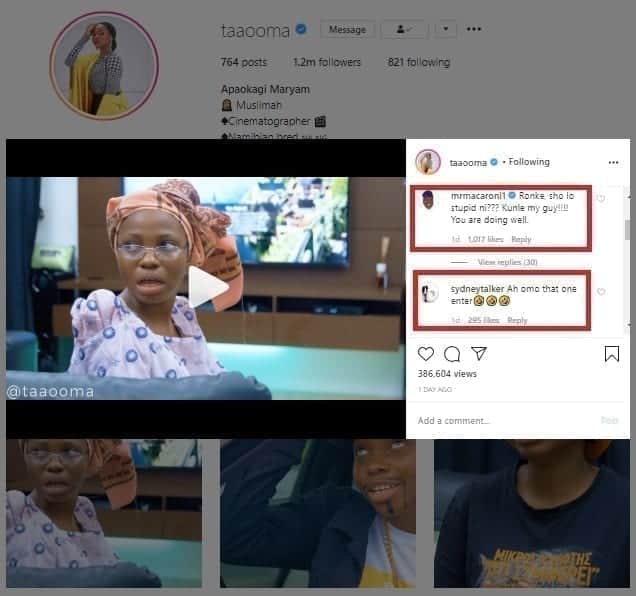
Two Instagram comedians, @sydneytalker and @mcmacaroni1 commenting on the post of another Instagram comedian, @taaooma

If your business or brand is in the music industry, engage with contents from other brands in that industry. You are a fashion brand? Engage with fashion content.

2. Improve on Your Captions

Your captions shouldn’t be an after-thought. It should be well planned and strategic.

The more time people spend on your posts, the more the Instagram algorithms smile at you. And captions help to increase the time people spend on your posts.

Your captions shouldn’t be an after-thought. It should be well planned and strategic.

Apart from that, a good caption helps you to give a voice, tone, personality, and context to your post.

You can choose to write a long or short caption. Whichever you choose, make sure to include a CTA (Call to Action) at the end of it, telling people what you want them to do next. You can ask a question that they’d need to answer in the comments or direct them to take a particular action such as click the link in bio, share, among others.

3. Reply to Comments as Soon as You See Them

Business aside, Instagram is a social media platform. And what is the use of social media if there are no conversations?

Replying to comments helps to sustain conversations and push your content further up the feeds of your followers.

As more people respond to your content, Instagram sees it as valuable content that would be interesting/beneficial to others. So, they show it to them.

It doesn’t matter the length of your response. In fact, it could even be an emoji. Just reply, and be fast about it.

4. Use Instagram Stories to Draw Attention

Since Instagram added stories in 2016, it has proven to be an essential tool for businesses. In 2019, 50% of businesses on Instagram worldwide created at least one sorry in a month. Similarly, one-third of the stories that get viewed the most on Instagram are from businesses.

Stories are a great way of getting noticed on Instagram. While you can create content to share on your stories only, you can also use it to call attention to your latest post. Simply click the arrow icon just below your post and select share to story in the options that’d follow.

5. Engage with Other Contents Before and After You Post

We talked about engaging with similar content earlier. This is similar to that, just that it’s more strategic and timed.

This is how it works. When you get engagements on your post within the first 1 hour, the Instagram algorithm sees it as good content and pushes it in the feeds of more of your followers.

Engaging with other content just before and after posting would cause some of them to visit your page to return the favour by engaging with your most recent posts. And that automatically boosts the visibility of your latest post, which increases the possibility of engagement.

6. Use Long-tail keywords

Hashtags are another vital tool you can use to increase the visibility of posts and boost engagement on Instagram. However, the mistake most businesses make is they go for the short and highly competitive hashtags.

The problem with that is; your posts get quickly pushed off the explore as more people post with the hashtag.

So, rather than short-tail keywords that would end up being a waste of time, go for strategic long-tail keywords.

Instagram hashtag is a whole different topic on its own. Intag is a great tool you can use for your hashtag research.

7. Post More Human Photos

Take a quick look at the contents on your page. Don’t just stop there, go to other pages, and quickly scan through the engagements on each of their posts. You will notice a pattern; contents with real human face attract more engagements than those that showcase products or other forms of graphics.

Findings have shown that the contents that show faces have 38% more likes than those that don’t.

So, don’t just be about your products and services all the time if you want engagements. Sometimes, people want to see your face. They want to see the face of the person behind the brand. It even has a way of reassuring them that your business is legit. Put your face (and that of your team) out there more often.

Conclusion

Some other tactics you can use to boost engagement on Instagram include:

  • Study what time of the day you get most engagements and try to always post by that time
  • Post videos on your feed and story
  • Use Instagram IGTV
  • Collaborate with similar brands or businesses through guest posting

You have to be patient and consistent. All of these may not give the desired result instantly. That does not mean it’s not working; people (without even knowing it) want to see your consistency first before taking you seriously.

So, make sure you show up and put contents out there consistently.

7 Steps To Grow Your Small Business And Improve Its Reach

Most business owners go into business with the expectation of overall success, profitability, steady growth, and a big company. However, it takes hard work to attain such lofty goals. Yet, regardless of the work put into it, only a few businesses survive.

Data from the Bureau of Labor Statistics (BLS), shows that approximately 20% of new businesses fail during the first two years of being open, 45% during the first five years, and 65% during the first 10 years. Only 25% of new businesses make it to 15 years or more. – Investopedia

Basically, there are about 5 stages every business evolves through–

  1. Existence
  2. Survival
  3. Success
  4. Take-off
  5. Resource Maturity

It is common to see that most businesses spend their first few years focused on survival. However, prioritizing your business’s growth is one of the best ways to increase the chances that your company will move past the survival stage, evolve through the highlighted stages to maturity, and contribute to your economic well-being and a stable financial future.

With these staggering statistics, how can business owners ensure that they do not spend so much time focusing on survival to the point that they end up being another statistic of failed businesses?

What can you do to move your beloved business beyond survival? What can you do to transform it into the income-generating machine that you envision?

Like any machine, different parts must come together in harmony to make your business function effectively as you envision.

Here are seven growth strategies that you can try; they have worked for many entrepreneurs including myself.

1. Have A Clearly Defined Business Purpose

The simpler, the better – One primary reason most small businesses find it hard to attain growth is that they do not have a clearly defined business objective. Therefore, the employees of most small businesses find it hard to define what their employers are truly into; only a handful might be able to successfully describe their business offerings in clear terms.

I’ve seen companies that most of their prospective customers do not understand what they sell or the services they render. I know this because it is one regular answer that I get when I run surveys to know why my clients are not retaining enough of their customers.

So, the clearer you make your mission statement and marketing messages, the easier it would be for your clients to know how best your product or services fit into their needs and will solve their pain points. Customers will not buy unless they are clear that you can meet their demands.

2. Choose the Right Growth Strategy for Your Business

Most growth strategies in business revolve around activities related to – market penetration, market expansion, product expansion, diversification, and acquisition.

The choice of the growth strategy that a business adopts is mostly dependent on its financial position as well as overall objectives, and are mainly affected by such external forces as government regulations, and other prevailing market forces.

A business leader must understand the various strategies available; their unique features, and when/how to adopt the most relevant strategy based on the scenario at hand. Your business growth is directly tied to your ability to identify and effectively utilize the right strategies to help your business grow.

3. Understand Your Customers

Profitable companies know their customers better than they know themselves. They sell the value, impact, and results their customers want to buy.

The very experienced entrepreneurs know that entrepreneurship is a marathon, you fail a lot of times. Yes, there would be seasons when you might be in abundance, but many more seasons when the only thing that would see you through would be your love for what you do – the solutions you provide to your clients’ problems; seeing the smiles on their faces.

So, ensure that you understand your customer, understand what they need, and ensure that you have the resources to deliver above and beyond what they require.

4. Offer great customer service

boost Instagram engagements

You need a ton of loyal paying customers to achieve actual business growth, and one sure way to get such loyal paying customers is to provide your customers with excellent service consistently.

Excellent customer service creates loyal customers who often are willing to refer your business to friends, family, and colleagues. Providing such type of excellent customer service begins with genuine love to solve your customers’ pain points. However, you also have to think beyond selling your products or services.

The customer is at the heart of your business growth. In other words, you must ensure that everything you do is focused on making your customers happy.

Your ability to provide excellent customer service consistently involves carefully designing a whole customer experience covering the entire customer journey from their first contact with your service to after-sales support services. And achieving such a lofty feat takes knowing your customers.

5. Recapture Existing Customers

Acquiring new customers isn’t always the best, and certainly not the only way to grow your business. Oftentimes, your existing customers are your best bet for increasing your sales.

Furthermore, several studies suggest that asides from ensuring that a business has some level of consistent inflow, improving your customer retention rate has a direct correlation with improving the value of your company.

6. look for new opportunities

Opportunity identification and product growth

As a business, especially when you are still a small business, you must find ways to constantly seek new business opportunities to ensure sustained business growth and profitability.

Now more than ever, we need to experiment with new ideas to attract new businesses. If you can find other services to offer, set aside some time to brainstorm what those services would look like.

i. Ask for Referrals

One sure way to grow your business is by constantly attracting new paying customers and there is no better way to attract more customers than to find ways to get your existing clients to bring them in.

Customers who have experienced what it’s like to be your customers would find it easier functioning as your brand ambassadors to people in their social circles who incidentally are likely to fit into your target market.

However, do not assume that your loyal customers would naturally send referrals your way unsolicited, you must actively ask them for referrals and if they have been treated fairly as customers, they would willingly grant your request.

ii. Extend Your Market Reach

There are several ways of growing your small business, and one such approach is by Extending Your Market Reach and getting your product or service more available to your existing and a new set of prospective customers.

When it comes to extending market reach you must work around the following:

  • Open new store locations – Physical or virtual
  • Promote your products in ways to encourage new uses for your products and services
  • Improve on your marketing efforts
  • Target new demographics

7. Build Required Structure

One way to ensure that your customers enjoy a quality user experience is to build structures that will help them enjoy quality user experience through your service delivery processes. One major area that is usually overlooked by most service companies is after-sales support.

Create a customer journey map and take a walk in their shoes, building relevant structures at every level to ensure that your customers have the best journey possible.

Every good salesman knows that one sure way to improve your customer lifetime value is by making the customer happy – you should endeavour to be the best in your market.

RELATED ARTICLES

How to Promote Your Services as a Practicing Lawyer in Nigeria

The restriction on advertising by lawyers is not specific to Nigeria; it is found in many jurisdictions around the world. The key principle behind this is the belief that the practice of law is a profession, not merely a business, and as such, shouldn’t be advertised in the same way as commercial products or services. This belief holds that advertising can undermine the solemnity, dignity, and integrity of the profession.

However, it’s important to note that the blanket ban on advertising has seen revisions and liberalizations over recent decades. The modern view in many jurisdictions, including Nigeria, allows for limited forms of legal advertising, as long as it is done in a professional, straightforward manner. For instance, having websites that describe the services, qualifications, fees, etc., is usually acceptable. But the specifics can vary by place, and it’s essential for any lawyer to understand and abide by the rules provided by the local legal professional bodies.

Imagine graduating with the heart that you can finally relax from all the rigid rules that regulated your conduct in law school only to realize that there are moderations to how you conduct your business as a lawyer.

For a long time, Nigerian lawyers could not advertise in public media. The old rules Prohibited a lawyer from soliciting employment.

This rule was moderated in 2007 to keep up with the changes in modern society.

Yes, I said it right. Moderated. While soliciting may be outrightly prohibited, there is nothing wrong with talking about yourself or engaging in talks that promotes you as a brand.

Speaking at the maiden edition of the Business of Law Conference, Marx Ikongbeh said:

“The rules say you cannot solicit personal employment through certain means such as circulars, handbills and the rest.”

– Marx ikongbeh

This moderation is necessary as the legal profession goes beyond practice and procedure. Therefore, the business aspects of the law cannot be ignored. This moderation does not totally limit you as a young professional looking to sell yourself and grow your brand. Rather, it regulates the mode of attraction of business.

The subject of advertising by lawyers was in the past outrightly prohibited, under the old Rules of Professional Conduct (RPC). However, advertising should not be misconstrued for soliciting.

So Why Don’t Lawyers Advertise?

Several reasons support this stance:

  1. Minimize Misleading Information: Advertising may lead to misrepresentation or over-exaggeration of legal services, thus misleading potential clients. It may create unrealistic expectations about the outcomes of legal cases.
  2. Preservation of Professionalism: Lawyers are seen as officers of the court with roles extending beyond the provider-client relationship. There’s a concern that advertising would commercialize the profession, potentially compromising the emphasis on integrity, independence, and professional conduct.
  3. Avoiding Conflicts of Interest: Advertising could tempt lawyers to take on more cases than they can handle effectively, potentially declining the quality of legal services.
  4. Access to Justice: There’s a belief that law should not be a pure commodity where only those who can most afford (and are attracted by) the best advertising get the best representation.

I think millennial lawyers are careful in their conduct to avoid breaking the Rules of Conduct.

Lawyers from the older generation do not find it difficult to comply with the rules of conduct. Mostly because they’ve grown used to it. On the other hand, millennials are constantly seeking ways around the old rules without breaking the law.

According to the RPC The following acts will not amount to advertising:

  1. Introduction by himself or another of his name, address, profession, and educational qualification. A lawyer’s degree may also appear after his name. If he is a notary public, it could also be included but it does not include specialist qualification. For example, Commercial Land consultants, experts in family issues, divorce, custody, welfare, etc. Such an advert is unethical.
  2. To publish in a reputable law list or directory a brief biographical or informative data of himself including his name, personal bio-data, legal teaching position, national honours, etc. – Rule 39(4) of the RPC. The reason why the above will not amount to advertising is that they do not contain anything about the quality of his practice.
  3. To cause to be printed on his note-papers, envelops and visiting cards his name, address and academic qualification including the titles ‘Barrister-at-Law’, ‘Barrister and Solicitor’, etc. and any national honours – Rule 40 of the RPC
  4. If he writes a book or article on the law, he may add his professional qualification after his name – Rule 42 of the RPC
  5. He can send notices to his client or put an advertisement in a newspaper or journal of a change in his office address or telephone number. It should not relate to the quality of his practice or success – Rule 43 of the RPC.
  6. A lawyer who is specialized in an area of law and readily available as an associate /consultant may make a brief and dignified announcement to lawyers in his locality only or publish in his local journal. However, it should not amount to the improper attraction of business – Rule 44 of the RPC.

Here’s how you Can Sell Yourself as a Lawyer

boost Instagram engagements

In this light, lawyers can advertise their practice. As long as it complies with the Rules of Professional Conduct as stated in RPC 2007.

Social media: LinkedIn, Facebook and Twitter – As a lawyer, there’s no restriction on owning a social media account. provided you do not use your account to undermine other lawyers. Most lawyers use their social media to address trending topics from a legal point of view, not in a bid to indirectly solicit employment but to make the general public more aware of the legal implications of social matters.

Websites and Blog-post: With a website, you can do more! You could create content on your blog that centers around your field using the right keywords to boost your page’s relevance. some examples include the use of a story to narrate what a person can do in the case of an accident and so on. Most law firms have websites that bear their details but in a modest manner.

Recommended: 5 Must Read Marketing Books For Business Owners in Nigeria 2020

Pitches and Response to Proposals: In recent times people request a lawyer’s credentials to enable them to ascertain if they are the best fit for a job.

Google Map: You could have your business listed on Google my Bussiness to increase your chances of being spotted online.

Lawyer listings: Check for lawyer listings in your area and get your name listed on as many as possible.

Events: Attend professional events and other events to increase your chances of in-person introduction. Note that a business card does not count as soliciting.

Publication: You could publish articles on print and online platforms. This would help to establish you as an authority in your area of specialty. This could go in addition to your personal blog and social media handles. For example, @Segalink has gained a wide reputation online through the effective use of social media.

Other Points to Note when Advertising

The limitation on legal professionals is not limited to country.

Other Marketing Devices Prohibited by the 2007 RPC include:

  1. Certain endorsements or testimonials from a former client
  2. Portrayal of judges
  3. Paid, undisclosed payment of testimonials
  4. Portrayal of a judge, or fictitious lawyer or law firm
  5. Use of actors or fictionalized persons
  6. Irrelevant characteristics of the lawyers
  7. Ads that resemble legal documents
  8. Certain limits on soliciting new clients for 30 days after a tort
  9. Certain other limits on communications with non-clients
  10. Use of a nickname or moniker.

How to Avoid Distractions and Boost Productivity in 7 Quick Steps

Are you wondering how you can avoid distractions and stay focused at work? Do you think you need to boost your productivity? Are you one of those who say 24hours is too short for a day? Do your smartphones, and other gadgets constantly distract you from work?

Let me guess – you have a 9-5 job and say one or two side hustles. Yeah, me too. Or maybe you are a freelancer who continuously has to work from home. Oh, maybe the pandemic turned you into a remote worker.

Whichever of the categories you belong, one thing you must be battling with in 2020 is how to avoid distraction and boost productivity. I know you are struggling with it because it used to be a struggle for me too.

I have a demanding fulltime job where I am required to work from the office 9-5, Monday to Friday. Then there are side hustles here and there to keep body and soul together. All these activities and still different forms of distractions won’t let the son of man be.

I eventually found a way around it, and I would be discussing that soon. But just before that, what are the sources of distractions at work? This is important because you may even be distracted without realizing it.

Sources of Distractions While Working

Social Media

You can’t deny that social media is such a powerful tool for networking and marketing. It’s useful for making new friends, connecting with existing friends, and staying up to date on the latest information around you.

But just as useful as it is, social media often constitute a major source of distraction at work. A 2017 national survey conducted by US-based ComPsych showed that almost 90%  of employees check social media at work. Some of them even admitted to doing it excessively.

This is arguably the major biggest hindrance to most people’s productivity these days. I’m sure you can relate too.

Chatty Co-workers

Those who have to resume in an office every day will understand better. Most offices either have a large chunk of their employees in one big hall. Or in some cases, two or more people share a particular office or workspace. More often than not, you are going to have at least a colleague sitting next to you.

This is great, except if your colleague is the extremely chatty type who continually distracts you from work.

Is this you?

You were the first to get to the office because you know you have a lot to do. Quickly, you set to work. One task at a time, you were taking down the things you needed done for the day. You were on a roll.

Then came in your first colleague. Y’all greeted, and you went back to work. But how dare you go back to work when she has not gisted you about the traffic on her way to the office? So she goes on and on about how she woke up, got to the bus-stop, waited hours before getting a bus, and sooo on. 10 minutes of your time gone, just like that.

It may not be exactly in this format, but if you work in an office, you most likely have experienced this form of distraction from a colleague.

Unexpected Visitors

Who even visits without heads up in 2020? But trust human beings to be full of surprises, especially Nigerians.

People who work remotely suffer this the most. Sometimes, unexpected visitors show up at your home and just disorganize your plan for the day.

They come in different guises. It could be a friend today, a family member tomorrow. Sometimes, maybe even bae/boo. And we are Africans; we try to be courteous at all times. You can’t just tell people, “leave my house, I’m busy.”

And this may not even be a severe problem if they would just stay in their corner and let you be. No way – they will always have questions, quick gist, comments, and all the things in this world that would take away your attention from what you’re doing or have to do.

Emails

Emails are vital communication channels for most of us. But yeah, checking your mail too frequently can constitute a distraction.

You applied for a job, a gig, scholarship, or conference, and you’ve been anticipating a response. So, you check your mail every minute for an update. Every time you leave your work like that, you spend extra time reconnecting to it when you return. Your productivity level is dropping without even realizing it.

Meetings

Meetings are great. They provide an avenue for brainstorming, planning, and analyzing progress. It also has that added benefit of team bonding.

Before now, the word meeting would have meant people sitting together in the same place to meet. But with tools like Zoom, Google Meet, Microsoft Teams, and GoToMeeting, among others, meetings can now hold virtually.

Irrespective of how or where it’s done, meetings cause break to the flow of work and that makes it a form of distraction. And honestly, some meetings can be very unnecessary.

Take these 7 Steps to Boost Productivity and Avoid Distraction

The first step to solving a problem is recognizing you have the problem, which I believe you do if you are still reading. The next is identifying the source of the problem, which is what I just tried to do by listing the various sources of distractions.

Now, let’s got to the solution. How do you become more productive at work? How do you move from your current productivity level to a higher productivity level? As a remote worker, freelancer or 9-5 worker, how do you always ensure you avoid distractions?

Here are 7 Quick steps. They are quick steps because you can start doing them with immediate effect and watch the results follow almost instantly too. Let’s get to it.

1. Turn off notifications

You either control your smartphone or it controls you. Stop allowing that small device to determine what you do per time. Whenever you have work to do, go ahead and turn off all notifications. Don’t worry; nothing will go wrong.

Focus on what you are doing at the time; every other thing can wait.

Do this, and it will go down as your biggest win against distractions. Your productivity level after doing this will shock even you.

2. When you can, say no to meetings

Please, the emphasis here is on “when you can”. The truth is, most of the time, you may not be able to say no to meetings.

But when it’s optional, and it’s not tagged “compulsory,” please forget about meetings and face your work. Like someone once told me, most meetings should have been a mail.

3. Spice up your Work space

Whether it’s in a building you have to spend hours commuting to every day, or it’s the table and chair next to your bed, your office is your office. It’s yours, and you should add some aesthetics, so you have beautiful things to look at around you.

Some findings have shown that adding some aesthetically pleasing items to your work environment can boost your productivity by as much as 15%.

4. Minimize Interruptions from others

Think about this. Let’s say you continue to decline in productivity, and your employer or client just can’t put up with it anymore. So, they disengage you. Will that chatty colleague or uninvited visitor that continuously pop up at your place get you another job or gig? Think about it.

The point here is you have to take charge of your personal space as you will solely bear the consequence of your refusal to do so.

5. Let Those Around You Know What you do

This is especially important for freelancers and remote workers. People see you at home all the time, so they assume you are available for visits and chats. They see you “pressing your phone or laptop” and conclude that you don’t have anything to do (never mind that you are trying to solve a significant problem at the time).

Be communicative about your job to people around you. Let them understand that you pressing your phone or laptop means you’re working. This is something I’ve been able to do. Now when they see me working in my house, they simply avoid me like the plague. And I like it like that (winks).

6. One Task at a time

Who even came up with that term multitasking?! The human brain is not wired to do more than a thing at a time. You’ve got just two hands, and at best they can only complement each other to execute a task at a time.

Attempt to multitask will only slow you down and reduce your productivity. This is backed up by findings that revealed that attempting to multitask reduces productivity by up to 40%. Take it one step at a time; one task at a time.

7. Plan your day ahead (Use to-do list, please!)

Don’t play with your to-do list, they are your most important productivity tool. A to-do list help to make sure you stay focused and organized. And oh, that feeling that comes with ticking tasks off the to-do list as you do them. Nothing compares to it.

The best time to create a to-do list is the night before. Itemize all that you have to do the next day in the order of importance. And don’t forget this order when you want to work.

You may be tempted to start with the easiest tasks and fall back and fall back to the more difficult ones later. That’s not a very good idea. In fact, that can count as a form of procrastination. Take the advice of the bestselling author, Brian Tracy – Eat That Frog.

Conclusion

Who said any of these is going to be easy? It may seem like one minute you are on top of the situation, and the next 5 minutes, you are lost in the world of distraction. Don’t be too hard on yourself; it happens to most of us.

This is like a journey, and it takes time of practice to get used to. Set small targets and crush them. Then go higher and higher. And before you know it, you are operating at your optimal level.

How to Position Your Brand in the Mind of Your Audience

Brand Positioning or brand perception is essential in Marketing. Yet most brands find it difficult to attract the right audience.

Can we say consumers are gullible? Or are Brands poorly positioned in the mind of consumers?

People often misuse the famous Steve Jobs quote that “consumers don’t know what they want, until you show them”. Hence, the endless use of Ads to create awareness for a product. I think it’s poor judgement. A majority of search queries are informational.

If Consumers constantly seek for specific information then, they may know more about what they want than we can imagine. Does your brand come to mind when consumers think of meeting a need specific to your category?

See this google search results and what it tells us about consumer behavior. Consumers aren’t gullible, the problem lies in how brands are perceived in the minds of the consumers.

Search query result for baby care products
Image result for best baby care products

This is a screenshot of the search for Baby care products. Although google largely determines the result on certain keywords, but it could explain how Johnson’s is taking over Pears baby product in the mind of consumers.

Sometimes your product meets the customer’s exact needs but they can’t see it because of poor positioning.

When consumers think skin care they think Dove, because Dove has positioned its brand as the solution to skin problems. in the mind of consumers, that’s how dove is perceived.

What does this mean for you? People are probably looking for your service but they can’t find your brand. You need to make a shift for your brand to be positioned in the mind of your audience.

I will be sharing on types of brand position, strategies to brand positioning and links to brand positioning templates, but first, let’s talk about brand positioning.

What is Brand Positioning?

Brand positioning is how consumers think of you. Consumers tie need to result. If your brand ranks high among other brands in the same product category, consumers tend to think of you first when they think of your product or their need. That’s how brands are perceived in a consumers mind.

Related: Forecasting Revenue And Positioning A Company for Growth

So what do consumers think of when they think of your brand? or what do they think of when they think of the service your brand provides?

This should not be confused for popularity. A popular brand may not position well in the consumer’s mind.

Omo detergent brand is so popular in Nigerian Market that the word Omo is traded for the word detergent. Yet, when people walk into shops and ask to buy Omo, the trader responds with “Which Type?”

Often time, when a brand positions as one thing in the consumer’s mind, it is difficult to reposition.

A good brand perception is essential for marketing.

Types of Brand Positioning

Marketing91 List 8 Types of Brand positioning:

  1. Value-based
  2. Competitor based
  3. Quality based
  4. Benefit positioning
  5. Problem and solution positioning
  6. Price positioning
  7. Celebrity driven positioning
  8. Leader based positioning

Where Do I Begin?

Now that you’ve read every detail on Brand positioning, where do you begin?

First, you need a defined strategy.

Brand positioning is essential from the very start of product design.

5 tips to help you position your brand in the mind of your audience.

  1. Know your Industry: This would help you understand the general place of your product in a consumer’s mind and then you can better craft a niche for your product based on the overall perception of your industry. If the overall position of your industry leaves a negative impression, you can adjust the benefits to provide renewed assurance.
  2. Monitor your brand’s reputation: While a feedback form may not be as honest, social media can help you access unfiltered opinions about your brand.

Here’s an unfiltered opinion of consumer’s perception of AIRTEL (A brand of internet service provider in Nigeria)

Twitter views on how viewers rank Internet providers in Nigeria
Twitter views on Internet provider brand position
  • Monitor other brands: Understand that the market would always have a competition. You need to study brands within your industry and sometimes brands that sell around your industry. Your findings will help you create a better position for your brand. In your studies, don’t leave out the Underdogs within your industry.
  • Determine your position: Be clear on what you want to achieve with your brand and how you want your brand to be positioned in the mind of your audience. Being a jack of all trade may only bring trouble for your brand.
  • Be intentional in your design and marketing: Packaging is important because first impressions count.

Remember your brand statement must reflect;

  1. what your product does
  2. What benefits it serves
  3. The target audience

Making a Statement that Catches your Audience

Most companies contract experts to help write a brand statement that catches the audience.

To write a good brand statement, you must understand the following

  1. Brand Category
  2. Target Audience
  3. The benefits
  4. The advantage it has over competition

Your brand statement is different from your slogan however, it should be short but detailed, for easy recall.

The benefits of your brand may be tied to social status or quality.

Other Strategies to help boost Brand perception

  1. Preemptive positioning: The first to claim a feature.
  2. Superlative positioning: being superior to other brands in terms of quality.
  3. Positioning within a category: Depends on your product, some product ranks are based on prestige or social status. Fashion lines and Cars.
  4. According to product benefit(s): Your product might be Waterproofed, Fire proofed,100% organic.
  5. Price lines: your product may place as premium or economic.
  6. User or user group: Example: Female hygiene products and baby care.

Brand Positioning Template

Here’s how top brands have positioned themselves in the minds of the consumer using 4 brand positioning Strategies.

These four templates highlighted by EquiBrand Consulting puts in perspective all we’ve talked about.

  • Position and own the category benefit
  • Volvo: Safety
  • Miller Lite: Great Taste, Less Filling
  • Walt Disney Company: Magic
  • Position the product and the consumer
  • U.S. Army: Be all you can be
  • Budweiser: For all you do, this Bud’s for you
  • Pepsi Generation
  • Position how the company does business
  • Burger King: Have it your way
  • United Airlines: The friendly skies of United
  • WalMart: Always the lowest price
  • Position against the competition
  • Avis: We’re #2.  We try harder
  • Seven-Up: The Un-cola
  • Apple: Think different

Suggested: A Lesson From Harvard Business School

5 Must-Read Marketing Books for Business Owners in Nigeria 2020

According to Vanguard Newspaper, about 80 percent of businesses in Nigeria fail within the first five years of their existence. There are a lot of factors responsible for this, but the prominent one is the Nigerian factor.

Running a successful business is hard everywhere around the globe, but harder if your host country is the giant of Africa – Nigeria. Like the giant that the country is, the challenges you have to face as a small business in Nigeria is massive.

There is no constant power supply, basic infrastructure is almost non-existent, corruption is at an all-time high which is largely responsible for unfriendly government policies (ask Gokada, Opay, Maxng and the rest).

However, in the midst of all these, there are stories of successful businessmen and women out of this same Nigeria. The richest black man on earth, for instance, is Nigerian businessman, Aliko Dangote. And he is just one of several others succeeding in Nigeria against all odds. The question now is how are they doing it?

The Place of Marketing

If there is any part of your business that deserves the most attention, it is marketing. Marketing ensures the money keeps coming in.

Forbes Contributor, Denise Lee Yohn has this to say on the importance of Marketing in this dispensation:

Marketing as it was originally intended, in its fullest, truest, and greatest form, is more important today than ever before.  The world is awash in innovative products, services, technologies, solutions, business models, etc. today.  These new offerings must be brought to market and commercialized in order to generate revenue and profit.

Denise Lee Yohn

So, whether you’re just starting out or you’ve been running your business for years, it’s important you have a proper marketing strategy. Especially if you’re operating from Nigeria where there is stiff competition and the people are highly diversified.

If there is any part of your business that deserves the most attention, it is marketing. Marketing ensures the money keeps coming in.

Experts.ng

So, how do you come up with the best marketing strategy to sell to Nigerians?

If you have to go at it on your own, it may be quite challenging. You would have to start running tests and experiments, doing trial by error.

Guess what?! You don’t have to do all that. We have compiled a list of 5 marketing books for small business owners in Nigeria. These books would help you come up with the best marketing strategy to sell in the Nigerian market.

Before you get to the list though, you need to understand that books are very powerful. Reading a book is like tapping from the knowledge of the author (and the several other authors referenced in the book)

These books are written by men who understand and have experience in Marketing, business development. One of them knows the Nigerian market way too well.

So, here are the 5 must-read marketing books for entrepreneurs in Nigeria.

1. Crushing It: How Great Entrepreneurs Build Their Business and Influence and How You Can, Too by Gary Vaynerchuk

boost Instagram engagements

Is this your first time of hearing of Gary Vaynerchuk? If yes, best believe it won’t be the last time. Not that you know him, you’re going to be seeing him a lot these days. That’s how well he has positioned himself on social media (a skill you also need).

This book will teach you how to define your brand and use it to attract the attention of customers. It’s a very practical book and can be easily understood by anyone.

Who is Gary Vaynerchuk?

Gary is a Belarus-American entrepreneur, New York Times best selling author, internet personality and public speaker.

He is famous for turning around the fortune of his family liquor store to a $60 million business.

2. Permission Marketing: Turning Strangers into Friends and Friends into Customers by Seth Godin

boost Instagram engagements

Published in 1999, this is one of the books that changed marketing to how we know it today.

If you’re looking for some book with different research and theories of marketing, Permission Marketing may not be ideal for you. However, if you are looking to have practical and doable tips to improve your marketing, then check out this book.

As the founder of Yoyodyne, Seth had discovered how powerful the internet was in connecting businesses and their customers in ways that are impossible on traditional media.

Also, he discovered that the most effective marketing campaigns were there ones that first got permissions from the consumers. The type of marketing that was personal, anticipated and relevant. Permission Marketing was born.

Who is Seth Godin?

Seth Godin is an American teacher, entrepreneur and best-selling author. So far, he has written 19 best-selling books including Purple Cow, What to do When It’s Your Turn, The Dip, Tribes, Linchpin, This is Marketing among others.

Also, Seth is the founder of two companies including Yoyodyne (now acquired by Yahoo!) and Squidoo.

3. Top of Mind: Use Content to Unleash Your Influence and Engage Those Who Matter to You by John Hall

boost Instagram engagements

Of course, you have competitors and that’s fine. But is your brand top of mind everytime someone thinks of your product?

For instance, it’s really to think of smartphones today without thinking of iPhone. iPhone is top of mind, are you?

This book teaches how to be top of your target audience’s minds using content strategy, branding and relationship building.

You would learn how to build an authentic and meaningful relationship with your customers. Think about it – you tend to remember people you are in a relationship with right?

Who is John Hall?

John Hall is the president and co-founder of time management and co-scheduling app, Calendar.

4. Buyology: Truth and Lies About Why We Buy by Martin Lindstrom

boost Instagram engagements

From the wordplay in the title, you can bet your mind is about to be blown by this book. The book explores the process customers go through before making buying decisions.

To arrive at his submissions in this book, Martin conducted a three-year neuro-marketing study of 2000 volunteers as they to ads, brands, commercials, logos and products.

Among others, you’d learn from this book the important role of superstitions, rituals, religions and senses in selling and branding.

Who is Martin Lindstrom?

Martin Lindstrom is the Chairman and founder of a culture and business transformation company, Lindstrom Company. He was once named by TIME Magazine as one of the 100 most influential people in the world.

Martin is the author of 7 New York Times best-selling titles including Brand Sense, Big Data among others.

5. Small Business, Big Money: How to Start, Grow, and Turn Your Small Business by Akin Alabi

boost Instagram engagements

In the book synopsis, Akin Alabi asked for just “3 hours and I will show you how to start, grow and turn your small business into your personal ATM…” You don’t get that kind of promise from someone who doesn’t know what he is saying. And did he fulfil his promise? You only need 3 hours (and 3k) to find out.

Who is Akin Alabi?

Oloye Akin Alabi is currently a member of Nigerian Federal House of Representative, representing Egbeda/Ona Ara Federal Constituency in Oyo state. Well, call that his side hustle.

Look around, you’d find that one business that has taken over the streets is Sports betting. And guess who pioneered sports betting in Nigeria. That’s right, Akin Alabi’s Nairabet was the first sports betting company in Nigeria. Akin literally started an industry in Nigeria. He sure understands the Nigerian market.

Conclusion

There you have the five books you need to read to get your marketing right as a business owner in Nigeria. Of course, there are several other books you will need to read but just start with these five.

Have you read any of these books? Are there some books you think should have been included in this list? Share in the comments.

4 Essential Tips On Sales and Marketing

If you didn’t know anything about Sales and Marketing, here are the 4 most Essential Tips On Sales and Marketing that every entrepreneur must know:

  1. On sales – the quality of product or service matter, And so does the number of people that know about your offerings. Promotion is a MUST DO, use every avenue and opportunity to promote your offers until you find the channel that converts best.
  2. Analyze your sales presentation and approach from your customer’s shoes – would you buy it if it was presented to you the way it is now?
  3. When you advertise your offerings, ensure that a primary six student would understand it at first contact, else the responses might be weak.
  4. To sell effectively, find the right place to pitch to the right market – your target markets determine the value of your offerings.

Recommended: