Home Blog Page 30

What Do Startup Founders Do?

What do startup founders do, really? What is the job as a startup ceo /founder?

Leadership has proven to be very important in every sphere of human existence. That’s why it is believed that most countries succeed because of their leaders and the ones that fail too have their leaders to hold responsible.

And as a startup founder, you are automatically the leader of the startup (even if you choose not to be the CEO). So, the success or failure of the company is mostly up to you.

Maybe you have established a startup, and you wonder what you should be doing as the founder. Or you plan to develop your startup someday, and you’re curious what your responsibilities would be. Not to worry, I got you covered.

I’ve had the opportunity to work with different startup founders in fulltime roles and freelance capacities. I also managed to have a couple of them as friends and acquaintances, and I’ve grabbed some lessons in my interactions with them.

I have also read some books on leadership, business, entrepreneurship and startups. Notable among them are Lean Startup by Eric Ries, Start With Why by Simon Sinek and Small Money Big Business by Akin Alabi.

So I will be sharing some of the things I learnt with you to help you understand your responsibilities as a startup founder.

Your Responsibilities as a Startup CEO / Founder

As the startup founder, you understand the company more than anyone else. You know your vision, mission and goals. In the words of Simon Sinek, you know your why.

However, you are going to need the help of others to make your vision a reality. You are going to need a team to bring those visions to life. You need people to handle the how.

With the above illustration, we can deduct that your job as a startup founder revolves around leadership and coordination.

Let’s try to break those two down further, so you get a clearer picture of your roles as a startup founder

1. Team Building

Like I mentioned earlier, you need a team to help make your vision a reality. But this team will not just magically appear; you have the responsibility to create one.

This is one of the lessons from the story of the boy who harnessed the wind.

So, as a startup founder, you have an essential responsibility to assemble a fantastic team for your company.

Of course, you will need the help of professional human resources personnel. However, you still end up being the one to make the final nod, so the bulk of the work is yours.

And it’s not a team if you don’t have the right people in the right places. 

For instance, if you’re a football fan, you’d know that a team with Lionel Messi as its centre back is headed to colossal loss. But put him in almost any attacking position, and you’d see him deliver. That’s simply because Messi is a genius attacker and has no business in defence (well, except to offer some assistance when the need arises).

In your team likewise, get attackers in attacking positions and defenders defending. Put round pegs in round holes and square pegs in square holes.

2. Ensure Cash Flow

You run out of cash, and you’re out of business. There are no two ways about it.

You have a responsibility as the founder of a startup to not only ensure the money keeps coming in, but also that the money is appropriately managed.

We saw some companies taking some drastic decisions of letting staff members go and imposing pay cut on others due to the Coronavirus pandemic. 

While the people affected may not like the decision, in most cases, the companies did what they had to do to manage their funds effectively. And hopefully, they would revert to normalcy when the pandemic is gone.

This is an example of the responsibility of a startup founder. Sometimes, you have to make difficult decisions for the greater good of the company.

By the way, if it ever gets to the point of imposing pay cuts on your staff, you know the first person to be affected is you. In other words, you have to be the first to take the pay cut before announcing it for others. You are not a Nigerian politician, so don’t act like one.

3. Chief Visionary

As the founder, you know just what you want for your startup. 

When Shola and Ezra founded Paystack, their vision was to be the Stripe for Africa. Five years later, they literally became Stripe in a deal that’s worth $200 million.

That’s what happens when you have a clear and well-communicated vision.

You must ensure your team knows and is excited about where the company is headed. It has to be clear to them at all times.

Of course, it’s okay to make some adjustments here and there on your vision as the company grows. But ensure to carry your team along.

Findings have shown that most employees derive satisfaction from their jobs when they know their role contributes towards achieving the company’s vision.

4. Managing Investors

One of the books I mentioned in this write up on marketing books for business owners is Akin Alabi’s Small Money Big Business. 

One of the issues raised by the Nigerian lawmaker in this book is some wrong reasons people choose to become entrepreneurs. One of them is “so I don’t have to answer to anybody” (paraphrased).

Akin Alabi explained that even as a founder and CEO, you still have people to answer to. One of such groups or individuals you are accountable to our investors.

The day you take your first outside capital as a business is when you get a new boss. You have to make sure they are happy and informed to boost your chances of success as a startup.

You should know how often to send each of the updates and the exact type of update to send. They need to be adequately informed, but they don’t have to know everything. It’s up to you to know where to draw a balance.

5. Brand Management

You may have noticed some startup CEOs are always at events to speak, giving hot takes on social media, continually publishing blog posts on Medium and other platforms. 

Fun fact is most of them don’t necessarily enjoy all these activities. In most cases, they are doing it for their brands.

As a startup founder, you are the number one ambassador for your brand. Even if you have some paid brand ambassadors, the bulk of the work is still yours as the founder and CEO.

Learn to be active on social media, especially Twitter. Engage in conversations that relate to your industry. Let your followers and others who come across your contents know that you are an expert at what you do and never miss any opportunity to chip in your brand name (as subtly as possible please).

Doing this will position you for the invitation to speak at industry events. Create time to attend as many as possible as it’s part of your responsibilities towards building a strong brand for your startup.

Conclusion

There are strict rules on how to run a startup. If you for some ten commandments for startup founders you will only end up confusing yourself.

However, the five responsibilities above broadly represent your duties as a startup founder. It is then up to you to add some flexibilities and personal touch to it as you deem fit.

If you are a startup founder and you think there are additional responsibilities that I missed, kindly state in the comments section.


The True Job of a CEO

253

Who is a CEO?

A CEO is the Chief Executive Officer of an organisation. It is the highest-ranked office within an organisation.

The position of the CEO can be assumed by the owner of a business or appointed by a board of directors. It depends on the complexity of the organisational structure.

 In some cases, a Chief Executive Officer may be outranked by a board of directors depending on the percentage of controlling share. Most times, Investors are more powerful than the CEO and the board of directors.

If you run a start up, here are some qualities of a startup CEO

Qualities of a Startup CEO

Leadership

Risk management

Administrative Skill

The ability to execute plans

Communication

Drive

Trust

Receptiveness

Accountability

Innovative

What the Job Entails

The success of an organisation rests on the shoulder of the CEO, which is why the CEO must be a skilled manager.

The CEO must be a visionary, as his attitude toward the company robs off on the staffs and eventually influences the market perception of the business, this puts the CEO at a very delicate position within an organisation.

Why is this Important to You?

Whether you run a business or you’re just a salesperson within a larger organisation, you need to understand that being a Chief Executive Officer is beyond an office, it is an individual.

Understanding how they operate as an individual may help you close a sale or even pitch an idea that could boost your position within the organisation.

In Anthony Parinello’s Think and Sell like a CEO, he describes the CEO as the VITO person.

VITO-Very Important Top Officer.

Although Anthony’s book was written for salespersons, it did a great job in analysing the Position of a CEO and how you can relate with them.

CEOs are passionate about their business and would engage with anyone that has ideas that can help them grow their business, which is why they make the best client base for a salesperson.

As risk assessment officers, a Chief Executive Officer can make decisions on the sport as long as they align with his vision for the company.

At the very heart of things, CEOs are the real salesmen. They are always on the look for opportunities to maximise sale and make a profit.

In all, he manages risk to ensure growth and profit. In other to boost profit, sales must be made, so therefore, CEOs are the salespersons.

And for them to function properly, Chief Executive Officers are guided by a set of principles which I’ll outline below.

The Operating Principles of a CEO Who Sells

  1. know your ideal prospects. This is the person that she has several key traits with your best customers. Lookouts for shit demographic and operational traits. Spend time only prospects that much as ideal customers.
  2. CEOs buy goods in the same way they sell. Once you understand how he buys goods and services that support their organisation, you will on the stand help they sell. Do not call a company if you don’t know how they sell or even what they sell. That would be weird. For example, does the company aim for quality goods or low prices? If they insist on the quality of sale, then they’d likely buy quality too. The bottom line is, know the CEO’s selling criteria to understand their buying criteria.
  3. They have the final say. You do not see them, but they control things behind the scene. A Chief Executive Officer is involved in everything; that’s what they do!
  4. He is the model salesperson this is because he is the most passionate about the company’s vision and is, therefore, the most concerned about revenue, efficiency, and protecting the customer base.
  5. They establish personal visibility within the markets and the community. A good CEO networks by force of habit they make friends even with the competitors, so feasibility is a highly prized trait.
  6. They monitor the market personally; yes, they may have groups assigned to the task, but they keep in touch with the data collected.
  7. They Build on interpersonal relationships, in other to secure one-on-one loyalty. The Chief Executive Officers send handwritten thank-you notes to every one of their colleagues. Or text. This shows that they have close personal ties.
  8. They balance risks with gain.
  9. The CEO who sells makes intelligent decisions quickly and independently.
  10. Chief executive officers know how to stay focused, and they like to be right about expertise.

A Small Note to Salespersons

If you’re looking to build long-term customer relationships, get your CEO to help you close a deal by calling the CEO of the buying Organisation. Skip the long route and start selling directly to CEOs.

At any level of leadership, the key to success is to THINK and ACT like a CEO.

The Boy Who Harnessed the Wind: Lessons for Entrepreneurs

So I just watched the Boy who harnessed the wind and I’m literally blown away.

The movie is based on the true-life experience of William Kamkwamba in Malawi, sometime in the mid 2000s (quite recent).

But what if I told you that there are lessons for entrepreneurs in this story? What if I told you that you could just watch this movie and boom – you have the secrets to success as an entrepreneur? (maybe not that straightforward, but you get the point)

For those that have not seen the movie, below is an attempt to summarize before going to the lessons from the story.

Quick Summary of the Boy Who Harnessed the Wind

William Kamkwamba is the second of the two children of Trywell and Agnes. Trywell, his father is a farmer and his mother Agnes, supports in the farm and domestic works.

From a young age, William had shown interest in fixing electrical appliances. He helps his dad and other members of the community in repairing their faulty radios.

Also, he, in the company of his friend, Gilbert, would visit the dumpsite to find scraps and see what they could make of them.

However, a crisis arose when, due to weather conditions and wrong decisions of some members of the community, they were all thrown into a famine that would last for an unknown period. It wouldn’t rain, and the last harvest was nothing to write home about.

Famine had come, and it will last for a while except a drastic action is taken.

William has an idea that will fix this. 

After seeing the technology behind the light on his teacher’s bicycle, he knew he could apply the same to help supply water.

He read some books in his school library, and he was ready. He was ready to apply the same technology that supplies light to his teacher’s bicycle to fix their problem of rain.

William was ready to bring ‘rain’ to his community through the windmill. He harnessed the wind. 

That’s the story of William Wakwamba; the boy who harnessed the wind.

6 Lessons for Entrepreneurs from the Boy who Harnessed the Wind

The story of the boy who harnessed the wind is packed with lessons for entrepreneurs and business owners. 

Watching the movie, I saw real-life factors responsible for the failure of most businesses as well as factors that can help businesses succeed.

Apparently, there are several lessons to be learnt from the story. However, these six stood out for me.

If you are an entrepreneur or business owner, here are some key takeaway lessons from the boy who harnessed the wind

1. Identify a Problem, and then Solve it!

Entrepreneurship Lessons, the boy who harnessed the wind

In the words of Gerhard Gschwandtner, “Problems are nothing but wake-up calls for creativity”. Isn’t that just the absolute truth?

The people of Wimbe had one need, and it was water. 

Irrespective of the work and effort put in, if William had used his genius idea to earn them some money, nobody would have looked at him twice. Money wasn’t their problem.

What they needed at the time was water and William gave them just that with the windmill.

Many businesses fail because of this important starting point.

If you want to have a business that would succeed, and stand the test of time, identify the problems of your target audience and create a business that seeks to solve it.

2. Do your findings/Research

Entrepreneurship Lessons, the boy who harnessed the wind

William had a brilliant idea, but he didn’t set to work until he had done proper research.

Despite the fact he couldn’t pay up his school fees, the boy kept sneaking into the school library to read up on similar innovations and how they were achieved.

William wasn’t the first person to build a windmill. Several windmills had been made before and so to develop his, he figured he could learn a thing a two from those before him.

As a business owner or entrepreneur, you should first devote time to research on that genius idea.

For what it’s worth, what we see most these days are innovations, not inventions. In other words, most business ideas are either duplicates or improvements on already existing business ideas.

Therefore, whatever you want to do, some people have done something similar before you. Learn from them.

Read about entrepreneurs around you. Study business owners close to you. Know why they succeeded. Understand why they failed.

Make books your best friend. You already know that readers are…?

3. Start from where you are – make do with what you have

Entrepreneurship Lessons, the boy who harnessed the wind

William Kamkwamba didn’t get funding from Y Combinator. No bank loan. No investment from parents like in the case of Jeff Bezos. He couldn’t even afford the necessary raw materials he needed for his project.

All he had was this brilliant idea, scraps from the dumpsite, dynamo from his teacher’s bicycle and his father’s only asset – his bicycle. That’s all.

The most critical asset in all of these is his idea which he was convinced would solve his community’s famine challenge.

If there is any lesson to learn from William, it is that motivational speakers have been right after all – sometimes all you need is just an idea.

What is the brilliant idea you have? Like Moses in the Bible, what do you have in your hand?

Run with it! And oh, make sure that the idea is going to solve a problem as mentioned earlier.

4. Start with a Prototype

Entrepreneurship Lessons, the boy who harnessed the wind

William wanted to solve the problem of drought in Wimbe. He had seen his teacher, Mr Kachibunda use the same technology to keep his bicycle light on. He had also spent quality time in the library reading about his project.

But all that was not enough. William still needed to test his idea. He needed to build a prototype first.

To test his idea, William built a small windmill to see if it will power on a radio without a battery. Seeing that it worked, he was set to create the main windmill that would supply water to their farms.

It’s not enough to say “I just know it will work”. The truth is that it doesn’t always work.

Sometimes, it takes running an experiment to see the deficiencies in your seemingly brilliant idea.

So, test that idea first. Test it with friends and family. Get their honest feedback before putting it out there to the public.

5. Teamwork

Entrepreneurship Lessons, the boy who harnessed the wind

This story has William Kamkwamba written all over it; as it should be. The same way Steve Jobs gets all the credits for Apple, and Bill Gates for Microsoft.

But the truth is all these guys didn’t singlehandedly create the products for which they are now famous. They all had team members who played important roles.

In William’s case, he was the one with the idea. But he needed hands to make it a reality. He had to assemble a team of friends, notable among them being his best friend, Gilbert (the chief’s son).

You will need a team too—a group of individuals whom you share common goals. Or better still, people who you can sell your ideas to and they will help you make it a reality.

William had Gilbert; Shola Akinlade of Paystack has Ezra Olubi; Steve Jobs had Steve Wozniak; Bill Gates had Paul AllenPaul. It would help if you had a team too – a partner, especially.

6. A Price must be paid

Entrepreneurship Lessons, the boy who harnessed the wind

Nothing good comes easy. For William, he had to pay the price of burning the night candle to study. But there was a higher price to be paid, this time, by his father, Trywell.

For William’s idea to work, he needed a bicycle wheel. And at the time, only one person had a bicycle in the community – his father.

Of course, Trywell wouldn’t mind sacrificing his only remaining asset for water. But the question remains – will it work? He wasn’t ready to let go his only means of transportation for something he wasn’t sure would work. He resisted.

It took Agnes, his wife’s intervention before he finally let go. 

For the community to have water, Trywell sacrificed his precious bicycle.

For your business to succeed, there is also a sacrifice to be made. There are things you may have to let go.

Sacrifices vary in nature and degree. Sometimes, it may be as little as giving up some sleep time. Some other time, it may be as grave as resigning from a job.

Be prepared to pay the price for success.

Conclusion

The story of William is one that will continue to inspire young Africans all over the world.

Entrepreneurship Lessons, the boy who harnessed the wind

The can-do spirit. The resilience and persistence. There is so much to learn from William Kamkwamba.

Have you seen the movie or read the book? What are your thoughts?

You can find the book on Amazon or watch the movie on Netflix.

How a Gigantic Cruise Ship is Put Together

222

(CNN) — It took two years to build, but the entire construction process for a huge new ship from P&O Cruises can be viewed in just over a minute thanks to this incredible timelapse video.

The mesmerizing footage shows the many sections of Iona, the largest ship ever built for the UK cruise market, being put together piece by piece at the Meyer Werft shipyard in Papenburg, Germany.

During the final moments, the 185,000-ton vessel, which has a 5,200-guest capacity, can be seen leaving the shipyard and taking to the water. Measuring 345 meters (1,132 feet), Iona is powered by liquefied natural gas (LNG,) and consists of 17 guest decks, 13 entertainment venues, four swimming pools, including an infinity pool, and a gin distillery.

Read More

What Entrepreneurs Can Learn From Tony Elumelu

Successful people rarely credit their achievements to luck. Yet Tony Elumelu is the exception.

It’s immediately comforting to know that as a young person trying to succeed, it’s not always about how much work you put in, or how much passion and dedication you commit to your work. Sometimes it comes down to luck; plain old luck.

Seed funding is an entrepreneur’s luck, and Elumelu through his foundation has come to define himself as that man that creates luck for entrepreneurs.

In recognising the little things that helped him even the odds and made him lucky, Elumelu has today inspired a foundation that is defined by its efforts in institutionalising luck.

TEF is institutionalising luck by creating financial institutions that assist entrepreneurs in achieving their dream.

How Luck Redefined Elumelu’s Path

Here’s a rule of thumb. People don’t care how much you know until they know how much you care.

The series of events that lead to Tony’s early start in the financial Industry, he credits to two men; Toyin Akin-Johnson and Ebitimi Banigo.

The back and forth between CBN and that led to Tony’s purchase of Standard Trust Bank, came through a series of financial assistance from friends that believed in his dream.

Perhaps this has spurred the belief that everyone needs a little help.

What if he never got that Job at Allstates Bank, what if his bosses never noticed his hard work and he never got to be the youngest branch manager at 27.

Truly, everyone needs help.

Tony cares about empowering young African’s with exceptional hunger for success. He recognises himself in them and identifies with their zeal.

Indeed, no one is as hungry as a young African Entrepreneur. And the growth in annual TEF applications proves it. From 20000 applicants in 2010 to 45000 applicants in its second year.

This hunger drives the constant search for some secret to greatness.

I read a post that described Tony Elumelu as God sent – well when you invest that kind of money in people, you’re God sent.

Your past may look nothing like your future, but it holds lessons that are relevant to your future.

Tony Elumelu’s business journey was marked by three things; hard work, resilience and vision.

Little wonder how these helped shape the basic values of the Tony Elumelu Foundation.

Lessons From Tony Elumelu

Networking/Economic ties

People do business with people they are comfortable with, and nations with economic ties do not go to war.

This is perhaps one of the most powerful secrets behind Pan African unity. As long as we don’t try to exploit ourselves for gain; because Nations have waged wars because of Economic ties.

Build Confidence

In examining, this Documentary on Tony Elumelu, I easily spotted how self-confidence helped him gain his first job with the now obsolete Allstate Bank.

He had a firm belief that he could make a success out of any position he was placed in

Perhaps he gained confidence from his home training, or from the kind of books he exposed himself to or from his educational background.

Build your confidence; however, you can.

You’d need it when you pitch to investors or new customers.

Confidence is attractive. It makes a lot of difference on your countenance, and par the law of attraction, your energy affects the people around you.

Part of confidence requires you know yourself; every part of it.

Self-worth sterns from identity. The reality of our society is that there are lots of young entrepreneurs who may not have had opportunities that positively shaped their confidence in their identity. This may set you back, but you can work to excel.

Exponential Growth

At 27, Tony Elumelu was hired as an entry-level analyst, and in 12months he grew to become the youngest bank manager.

It’s not enough to perform well. Exponential growth requires some level of excellence in your attitude to work.

Vision/Legacy

A vision is an idea, and every idea has a level of potential for success.

You need to understand that as a young entrepreneur, your initial idea may metamorphose into something far more significant. Understand that your ideas are essentially a pathway with many twists and turns. Sometimes the initial idea would sprout other opportunities that would never open up if you never dared to take the first risk.

For Tony Elumelu, his position as Manager in UBA at such a significant time in African history gave him access to observe the economy across the continent.

The power of a dynamic idea is its ability to open up multiple channels. Tony Elumelu “We wanted to democratize banking – at the time, it was an economic, not a social act,” he said during a keynote speech at the Global Philanthropy Forum in Washington, D.C. “But we learned quickly that as we enhanced access to banking, the communities prospered. And as the communities prospered, we also did. The lesson for us is that, indeed, corporations can do well and do good simultaneously. If you integrate both, it can create even more wealth.” – Next Billion

United Bank for Africa grew its business by offering banking services to customers that other banks refused to work with. The bank opened 1,000 branches across Africa and expanded into nineteen countries. One village, according to Elumelu, wanted so much for UBA to open in their community that villagers offered to donate a house for the bank’s local operations. As UBA grew, Elumelu became convinced that corporations had the power to create profits, economic change and social change all at the same time. He also saw the impact that an initial $5 million investment had across Africa and began to compare this to the impacts of the millions of dollars of aid that flood into the continent every month.

A Lesson on Capitalism

Africapitalism is an economic philosophy that embodies the private sector’s commitment to the economic transformation of Africa. This transformation will be made through investments that create both economic prosperity and social wealth. Private sector entrepreneurs and capital will be the key to developing Africa.

Risk and Reliance

“Africa is a land of opportunity. Challenges exist in Africa, but we also have a huge return on investment,” Elumelu said during a TIME 100 Talks discussion with contributor Kim Dozier. “There’s no better time to make that bet than the time we live in.” Time Magazine

I don’t know what piques your interest in Tony; it could be fame, wealth, charisma or all of it.

But I can assure you that there’s no new secret to greatness, their simple truths you don’t know or know but don’t apply. I’d urge you to take a closer look at these lessons.

More on Tony Elumelu

RECOMMENDED

NBS: FG Rakes in N424.71bn from VAT in Q3

The National Bureau of Statistics on Monday said that the federal government generated a total sum of N424.71 billion from the Value Added Tax (VAT) in the third quarter of the year (Q3 2020) compared to N327.20 billion in Q2 as well as N275.12 billion in Q3 2019.

According to the sectoral distribution of Value Added Tax (VAT) data for Q3 2020, which was released by the National Bureau of Statistics (NBS), the figure represented a 29.80 per cent or N97.51 billion increase in VAT collection month on month and 54.37 per cent or N149.59 billion increase year on year.

Other manufacturing generated the highest amount of VAT with N47.07 billion and closely
followed by professional services, which posted N44.01 billion as well as commercial and trading, which recorded N21.18 billion.

Mining generated the least and closely followed by textile and garment industry and pharmaceuticals, soaps & toiletries with N64.50 million, N346.27 million and N386.16 million respectively.
According to the NBS, out of the total amount generated in Q3 2020, N214.66 billion was generated as Non-import VAT locally while N115.34 billion represented Non-import VAT for foreign.
The balance of N94.70 billion was generated as Nigeria Customs Service (NCS)-Import VAT.
According to the report, revenue from banks and financial institutions during the period under review totalled N6.87 billion; breweries, bottling and beverages N15.83 billion; hotels and catering N2.14 billion and federal ministries and parastatals N6.37 billion.

Others are state ministries and parastatals N19.64 billion; properties and investments N1.07 billion; transport and haulage services N11.86 billion and gas N1.12 billion.

Other contributors to VAT included Local Government Councils N567.97 million; pioneering N1.13 billion; oil-producing N11.54 billion; oil marketing N3.08 billion and conglomerates N1.74 billion.

Agriculture and plantation contributed N1.01 billion to VAT, automobiles and assemblies N8,8.34 million; building and construction N2.93 billion, offshore operations N1.41 billion and publishing, printing, paper packaging N473.09 million.

Update: Nigeria Youth Investment Fund

“The Ministry of Industry Trade and Investment wishes to inform the general public that due to operational challenges the Survival Fund website will be migrating to http://survivalfund.gov.ng with effect from tomorrow, Nov. 1st, 2020.”

The Federal Government has moved the website of its Survival Fund with effect from November 1, 2020.

This was disclosed by the Personal Assistant to President Muhmmadu Buhari, Bashir Ahmad on behalf of the Ministry of Industry Trade and Investment via his Twitter handle on Saturday.

What you Should Know:

Over a million youths have so far signified interest by enrollment in the MSME NYIF Youth Investment Fund. You should hurry up and register – registration is free.

Jaiz Bank Denies Alleged Board Crisis

The Managing Director/Chief Executive, Jaiz Bank Plc, Mr. Hassan Usman, on Sunday, asserted that there is currently no rift in the board as speculated in the media.

But, there had been allegations that the bank was enmeshed in a succession crisis, given that Usman’s contract as Managing Director was fast approaching.

The board allegedly dropped Mr. Muhammad Shaheed Khan, a candidate for the position, in the process of appointment.

However, speaking to journalists on the development, Usman said there was no rift, “other than the legitimate exercise of divergent opinions on a matter in the ordinary course of the directors’ duties.”

He said: “Whereas some directors of the bank opined that a change of leadership was required to pursue some critical strategic goals, others believed otherwise, given the awe-inspiring performance of the current management.

“The board nonetheless resolved to appoint a new successor in the person of Mr. Muhammad Shaheed Khan. This decision was however rescinded at a subsequent meeting of the board.”

The MD said: “The board’s resolution to rescind its decision and consequently discontinue the appointment process was in line with the terms and conditions of the offer letter issued to Mr. Khan since the offer was subject to relevant regulatory approvals.”

He said incidentally, the approval obtained from the
Central Bank of Nigeria (CBN) materially modified the intention of the board as expressed in the conditional offer to Khan. This situation further necessitated the board’s decision to discontinue the process of his appointment.

The bank, however, reassured its customers, shareholders, investing public and other stakeholders that the board remained committed to conducting its affairs within the stipulations of existing corporate governance codes for banks and public companies in the country.

Usman, also listed some of the bank’s intervention programmes to alleviate the impact of COVID-19 on customers and Nigerians in general.

He said the bank had contributed the sum of N100 million to the industry-wide efforts by banks to provide palliatives to people who are adversely affected by the pandemic. 

He said the institution further initiated forbearance to customers. 

“Our type of forbearance is unlike the conventional banks that you restructure a transaction and continue to charge. Most of our products, when you give forbearance, it means it is at zero returns to the bank.

“So we have given these people the advantage of having the facility to run without paying any extra profit to the bank.”

Other News Articles

How to (Realistically) Start an Online Business That Pays Well

Many people are curious about how to start an online business, especially in Nigeria.

Starting a business online is not like the way you start any other conventional business out there. There are rules to doing business online, and it requires specific skills to keep your business visible and profitable online.

Some online businesses are even location-specific; for example, the requirements to successfully run an online business in Nigeria differ from the requirements to run a business online in the United States of America.

Every day in Nigeria, new businesses are built with sole dependence on the internet. From small businesses to big ones like Paystack, which was recently acquired by Stripe for a mouth-watery fee of $200 million, businesses spring up daily online from entrepreneurs.

There are, however, rules to successfully running a business online. This article gives you a comprehensive guide on how to build your business empire online successfully.

If you want to learn how to start an online business, then read this and thank me with a comment.

Must Read: 7 Online Business Models That Are Similar, Better Than, or Alternative to Dropshipping

9 Steps to Start a Profitable Online Business

1. Find a problem you can solve (Decide on a Profitable Business Idea)

The success of any business, online or offline, depends on one crucial factor – The business’s ability to offer value by solving at least a problem that clients are willing to pay for.

This might sound like a no-brainer, but you would be shocked at how many entrepreneurs jump into business because they love the idea of owning a business; maybe it suits their passion, or they have seen others making money from the business idea.

Your ability to understand how to decide on a business idea to settle for out of the many available to you is a major skill that unfortunately eludes most entrepreneurs.

And problems abound; you only have to pay attention. Determine your niche and business idea

You may also like: Solved: How To Understand And Solve Your Customers’ Problems

Ask yourself the following questions, and be sure to be sincere with yourself:

  • Why are you doing this? You may wish to read – Why Did You Start That Business for an insight into why businesses are started.
  • Do you have the capabilities needed to execute your chosen business idea?
  • Are you solving a major customer problem?
  • Can the business be managed successfully online?
  • how to start an online business with no money?

2. Do your research (product and market research) To Validate Your Business Plan.

One other major step to starting an online business is to conduct product and market. Get to understand how your prospective customers would react and interact with your product or service.

Also, you need to talk to potential customers to get their opinions on your product. Start with friends and family to know their honest opinion of the solution you are coming up with.

From there, reach out to more people and get their honest feedback. Tools like survey monkey and Google forms will come in handy for this.

In order words, you need to validate your business against the market and read this article completely to know how to start an online business.

A Recommended Video on Idea Validation

3. Define the business brand

Entrepreneurship Lessons, the boy who harnessed the wind

What should your potential customers expect of you? If there are competitors, what would distinguish you from them? Your unique value proposition (UVP)? Who is your target audience, and where are they?

The answers to all of these are what will help you build a strong, identifiable brand. Your logo and the rest will be constructed on this strong foundation.

4. Get a domain name

Of course, you need a website. That’s why it’s an online business.

Sometimes, you need to be sure of the availability of a domain name before naming your online business. Yes, it’s that serious.

Think of different URL ideas in line with your type of business and check if they have not been taken already.

Before this, you need to decide which web host platform you want to use. There are so many of them out there, and choosing may be the beginning of your business failure.

Several factors are to be considered before choosing a web hosting company. Forbes highlights 7 factors you should consider before selecting a web hosting company

  • Cost of registration and maintenance
  • Site backups availability
  • Reliability of server, security and uptime scores
  • Customer service
  • Email and e-commerce options
  • Ability to add domains
  • What are the account limitations?

So, after considering these factors and deciding which hosting company you are cool with, you can then check for domain name availability.

For instance, you can check domain name availability on Whogohost here

5. Develop an easy-to-use website

You know the problem you want to solve, you have conducted the necessary market and product research, and now, you have a domain name ready.

Next is to build your shop…your online shop.

If you want to learn how to start an online business, you must also learn how to develop a small website at least.

These tips from Entrepreneur will help you build a user-friendly website for your business

  • Ensure your navigation is simple and clear
  • Choose a maximum of two plain fonts on a white background
  • Graphics, audio or video files should only be used if they carry an important message(s)
  • Checkout should not be more than two clicks away from the homepage or landing page
  • Use a lead magnet to get leads for email marketing

6. Drive traffic through the search engine

Your lovely, user-friendly website will need to be seen by potential customers if all your efforts will count as anything. You need traffic.

There are several options before you when it comes to bringing traffic to your newly built website. Email marketing, search engine optimization, search engine marketing, social media marketing and so on.

Since it’s a new website, it may take a while before your potential customers start seeing you on the search engine. Especially if there are many competitors.

Therefore, search engine optimization may not be the best option here. Search engine marketing should do the magic.

A correctly done search engine marketing guarantees almost an immediate result. It’s an ad, so that means you are paying. But the good part is you pay based on results or performance.

7. Establish yourself as an expert in your field through content marketing

Your target audience has questions that they need answers to, and your ability to establish yourself as an expert in your chosen area is important.

Still working with the cooking gas business example, below are popular searches by your potential target audience.

What do you do with this information? Well, you provide answers, and you’re rewarded with expert status.

While this is more effective through blogging on your website (oh, make sure your website makes provision for a blog), you can do it through social media as well.

Once your target audience can trust you as an expert, they won’t have a problem patronizing you.

A Recommended Video on How To Write A Blogpost

8. Design your sales funnel

Of course, you know a funnel and what it does. Yeah, it would help if you had a model that works like a funnel for your online business.

We call the buyer’s journey, which begins from Awareness down to Conversion/Sales.

You need to have a strategy that effectively helps your customers move through these different phases.

A customer may hear about your business today but may not need your product or service. How do you ensure that such customers come back to you and not your competitors when they finally need you. This is one of the many scenarios where the funnel is highly essential.

Here are a few tips for you on sales funnel design

  • Use an email autoresponder and chatbot
  • Design an email newsletter series (more on this shortly)
  • Lead magnet!
  • Design a landing page for the lead magnet with a clear call to action (CTA)

9. Groom your leads to loyal customers through email marketing

Entrepreneurship Lessons, the boy who harnessed the wind
Email Marketing Strategy

Email marketing does not only help you convert leads to customers; it also helps to turn customers into repeating/loyal customers.

It all begins with a lead magnet. The lead magnet could be in several forms – discount, free product, free value-added service, free trials, free ebook, free tutorial and so on.

This goes with the theory of permission marketing as made famous by Seth Godin in his book, Permission Marketing. Without a doubt, he is a master of how to start an online business.

Once you can generate a reasonable amount of leads through your lead magnet, the next is to design a newsletter series to reach each customer at the various stages of the buyers’ journey.

For instance, the email you’d send to a customer who already bought from you may be different from what you’d send to a first-time visitor.

Mailchimp is a very popular email marketing tool that will be useful here.

Examples of Lucrative Online Businesses Models

  • Google Adsense
  • Amazon Affiliate
  • Affiliate Marketing
  • Dropshipping
  • Amazon FBA
  • Ecommerce
  • Software as a Service (SaaS)
  • Infoproducts
  • Online Courses
  • Lead Gen for commissions
  • Apps development and sales
  • Website Flipping

Conclusion

There you have all the nine critical steps you need to take to understand how to start an online business.

Follow the recommended steps and be sure to have a solid online business idea with a high potential for success.

For a list of some online business examples and what kind of online business is most profitable, please click here.

I hope you now know how to start an online business.

Please let me have your thoughts on this beautiful article on how to start an online business by saying a thing or two in the comment section.

Must Read Related Articles

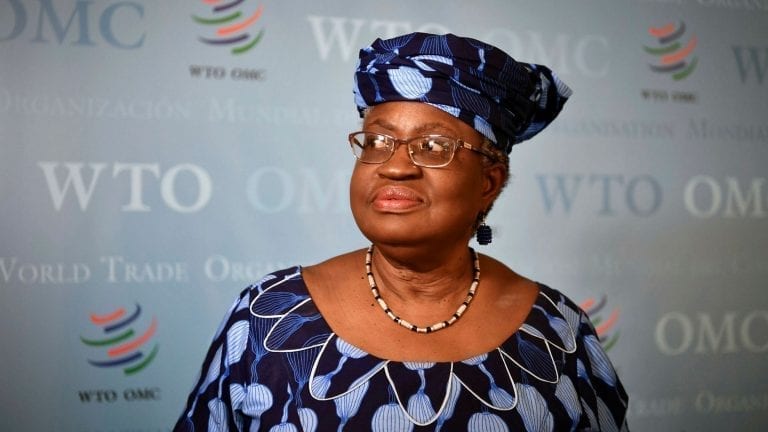
WTO DG: FG Intensifies Support for Okonjo-Iweala’s Bid  

1

The Nigeria Minister of State for Industry, Trade and Investment, Mrs Mariam Katagum disclosed to journalists on Friday that the federal government is currently reaching out to all members of the World Trade Organisation (WTO), including the United States of America and South Korea to overcome the current quagmire in reaching a consensus in the selection of a candidate for the position of the director-general of the organization.

She said efforts are also ongoing to persuade the United States to join the consensus in adopting the recommendation of the appointment of Dr. Ngozi Okonjo-Iweala as DG-WTO. Dr. Okonjo-Iweala who recently obtained her United States citizenship is being tipped by other WTO member nations as the next Director-General for the organization.

Katagum, who is the Chairperson of the Campaign Strategy Team for Nigeria’s candidate for the post of Director-General, WTO, spoke during a virtual emergency meeting she convened to review and strategize on the way forward in the light of recent developments in the selection process for the appointment of Director-General.

The minister pointed out that the third and final round of consultations for the selection of the DG-WTO which commenced in Geneva on October 19, 2020 was concluded on October 27.

According to her, “The Chair of the WTO General Council, Amb. David Walker of New Zealand, with the Facilitators of the selection process, the Chair of the Dispute Settlement Body and the Chair of the Trade Policy Review Body (Troika), on October 28 at the meeting of WTO Heads of Delegation in Geneva, informed the WTO Membership that the Nigerian candidate for DG-WTO, Dr. Ngozi Okonjo-Iweala secured overwhelming support of members both in terms of numbers as well as geographical spread and therefore emerged as the candidate most likely to gain consensus as DG-WTO. ” 
“The appointment of Dr. Ngozi Okonjo-Iweala is expected to be adopted by consensus of all Members in line with WTO decision making procedure at a Special General Council Meeting scheduled for November 9, 2020.
“However, the United States of America has registered reservation on the outcome of the final round because their preference is still the candidate of South Korea and further informed that they would not join the consensus in selecting Dr. Ngozi Okonjo Iweala as DG-WTO at the Special General Council of November 9, 2020. “

Katagum however, conveyed Nigeria’s profound appreciation to all Members of the WTO  that have supported Ngozi Okonjo-Iweala for the post of WTO Director-General adding that the federal government of Nigeria would reach out to other countries to secure the consensus needed in the final decision on her appointment as the next Director- General of the WTO.”

“We shall keep you updated on this issue and hope that, we would achieve the desired goal of Dr. Ngozi Okonjo-Iweala securing an appointment as the first African and the first female to Head the WTO,” she added.