Home Blog Page 31

What Entrepreneurs Can Learn From Femi Otedola

Femi Otedola is the second Nigerian after Alhaji Aliko Dangote to grace the Forbes list of the wealthiest people.

This article examines his life to tell you how he made his money. Perhaps, you might be able to follow in his footsteps and make yours. 

Femi Otedola’s life holds several business lessons and more for us as entrepreneurs. His journey through challenging Nigeria’s business terrain, his failures and his eventual return to fame leaves most Nigerian entrepreneurs in awe. I believe you are likely aware of some of these stories.

“Otedola with the money”, as he is fondly called, has a Twitter handle of Ote$. He is the father to the famous pink-haired DJ Cuppy, a philanthropist and an amiable person. 

I believe that many that would come to read this post would do so for one thing only – to find answers to the question that many before them have asked – How Did Femi Otedola Make His Money?

Before I give you an answer to that question, however, I would love to tell you about one of his many past mishaps in business. Perhaps, by analysing his past, you may have learned how he became the billionaire that he is today.

In examining the past, we can find life lessons. In any case, Otedola’s life unravels vital lessons for every entrepreneur – Being an entrepreneur doesn’t necessarily make you a good business manager; like Otedola, learn you must, either in a classroom or by sheer experience.

Background

Otedola was born on the 4th of November 1962 in Ibadan, the capital of Oyo State, southwest Nigeria, into the family of the late Sir Michael Otedola, Governor of Lagos State, from 1992 to 1993.

To be well suited to taking on the family business, Femi Otedola bagged a Diploma in Printing Technology in 1985 at the London College of Printing. 

After a decade of managerial experience at the printing press, Femi sought to solve one of the many challenges of his father’s printing press. He wanted to make diesel readily available to the printing press, and so, he started his own trading company. One could say destiny called him at that point, as Femi, in his bid to make diesel available to his father’s company, ventured into what would make him the man he is today – An oil mogul.

Though Femi has his hands in many business ventures, what truly made him the billionaire he is today started in 1999. In 1999, the company with which he would achieve dominance in the Oil industry, Zenon, was incorporated.

1. Seek Problems that You could Find Solutions For

It is almost impossible to talk about Femi’s rise to success without a brief history of his background in politics and the access it granted him later in his entrepreneurial journey.

Femi Otedola’s dad was Micheal Otedola, a one-time governor of Lagos.

Femi had talked his father into pursuing a political career; a risk that almost wrecked the family’s business. It took the help of Aliko Dangote and Mike Adenuga to help fund Michael Otedola’s political campaign. 

In 1992, Michael became the governor of Lagos state, but his tenure was cut short by the Abacha’s regime. Michael would return to his career as a writer and consultant with positions on the boards of various businesses. Meanwhile, Femi Otedola was now in charge of the marketing arm for his father’s printing press.

The printing press primarily relied on diesel generators due to the inadequate electricity supply in the country.

At first, getting diesel was not a problem; the family had a few connections within the government. But when the political climate changed, the regular and very affordable supply of diesel stopped. Femi resorted to buying diesel from retailers.

Business went well until one weekend when Femi made a more than usual order and opted to pay with a cheque, but his retailer refused the cheque.

This incident led Femi to start his diesel supply business by creating a better and efficient network for diesel supply.

So an otherwise disappointing venture would launch Femi Otedola into becoming Nigeria’s second richest man listed on Forbes.

2. Be Courageous and Relentless

Femi Otedola is one courageous and relentless businessman. Motivated by the disappointing events, he made a daring offer to buy a diesel depo for $20 million.

The depot was at that time worth $4 million. And at the time he made the proposed $20 million offer, Femi did not have such an amount. However, one thing that he had going for him was his courage and understanding of the use of his network.

3. Get Help When Needed

To source the money he needed to buy the oil depo, he went to Zenith bank and sold his idea. Jim Ovia loved it and agreed to fund him, and that was the beginning of Zenon Petroleum and Gas Limited.

Recommended: Sources of Funding for Small Business Owners

Femi’s family connection gave him access to influential people, and as a result of this connection. The business was hugely profitable.

Zenon customers consisted of banks and huge multinationals whom all needed diesel to run their generators. It was only a short while before Zexon gained control of most of the diesel supply infrastructure in Nigeria.

4. Expand Your Operations To Attract More Prospects

Soon, Femi discovered some challenges in his supply chain. There were significant lapses within the land transportation and shipping network involved in diesel supply, so he created F.O transport and Seaforce shipping to help move his products, both on land and in water. 

Setting up F.O. Transport and Seaforce helped him save costs on transporting diesel. In a few years, Zenon competed with other oil companies in Nigeria.

The success of Zenon served as a motivating factor for Femi to diversify into other lines of business.

5. Learn Fast and Keep Moving

Life is either a daring adventure or nothing at all:– Helen Keller, The Open Door.

In 2008, disaster loomed, Femi was to have an experience that would define him in business. With diesel worth $400 million on the high sea, all it took was a tip in oil prices from $146 per barrel to an unbelievable $36. The government of Nigeria further devalued the Naira, and Femi’s business faced a shipwreck.

If Zenon were the titanic, the managers were ship-hands too distracted to see the ship sailing toward an avoidable iceberg. Like the Titanic, the real tragedy wasn’t the iceberg, but aboard the ship, an ill-fated love affair brewed.

Don’t get lost in this story; Jim Ovia and Segun Agbaje are the fated lovers in terms of huge loans they’d signed off to Femi from Zenith and Guarantee Trust Bank, respectively.

Just like the Titanic, Zenon would sink as its assets were sold off to clear the debts. Unlike the Titanic, this captain would survive the horrible market crash of 2008.

Was it an easy fit? No.

Femi contemplated suicide, but in the end, he sold off his shares in different companies to pay off his debts. It was a long and dark moment in the oil mogul’s history.

With a controlling share in AP, Femi wanted something new. With his debt cleared off, he turns his focus to AP instead of reviving Zenon. He completely restructured the company by changing its name to Forte oil as well as hiring a crop of young experts to manage the business.

In his own words – “Being a good entrepreneur does not necessarily make you a good business manager. I learned to keep my hands off managing and leave it in the hands of experts”.

This strategy seemed to work against all odds, and Forte oil share price increased yearly. It was in this season that Femi would be profiled on Forbes as the 16th richest man in Africa in 2015.

Lessons for Entrepreneurs

  1. Opportunities. God speaks to us in opportunities. Our destiny unravels as we diligently travel down this path. If a chance leads you to a wall of debt, remember the next lesson.
  2. Tipping points. Tipping points always bring about significant changes. Read more about the Tipping point in Malcolm Gladwell’s book The Tipping Point. Rock bottom offers one thing; a platform to propel you upward.
  3. The beauty of growth. Growth is beautiful in retrospect but the agonising moments that shape an entrepreneur isn’t always lined with roses. It’s never lined with roses.

READ MORE: Top Ten Richest People in Nigeria in 2020 and What You Can Learn from Them

Conclusion

Every successful business person has a story for young entrepreneurs. These stories aren’t told to excite but to enlighten you on your journey to success. 

Hoodlums Attacks on Rice Mills Farmers Raise the Alarm over Food Security from 2021

149

The year 2020 has been anything short of being dramatic – Many people lost their jobs this year due to the pandemic, and many more countries have had to switch to their strategic food reserves and banks to ensure that they meet the food demands of their people.

In Nigeria, though we might not readily say that the COVID-19 pandemic hit so much that it was strong enough to cause food shortages around the country, what happened after the pandemic, however, is big enough to cause food shortage at a catastrophic proportion.

Some Nigerians took advantage of the #EndSARSNow protest and unleashed mayhem on the nation; looting and burning down facilities that they could gain access to.

The Rice Millers Association of Nigeria (RIMAN) on Thursday expressed concerns over the devastating mayhem and lootings carried out on its member’s facilities across the country, in the guise of the #ENDSARS protests.

The RIMAN National Chairman, Mr. Peter Dama, said the hoodlums and miscreants hid under the guise of being peaceful protesters, attacked and looted the Glams Foods Lagos, Shemad Rice Mill Yola, and several other companies operated by its members.

Mr Mohammed Shemad, the Chief Executive Officer of Shemad Concept Nigeria Ltd, recapped to reporters on Monday morning how the thugs forced their way into his rice mill located at Bakin Kogi and removed all the 10,615 bags of processed rice.

While condemning the attacks in a statement, RIMAN National Chairman, Mr Peter Dama, said tons of milled rice, rice paddy, furniture, machines and operational vehicles at the premises of the affected mills were destroyed and looted. At the same time, some parts of buildings were set ablaze.

As a result, he said the incident would create some deficits in its members’ contribution to the national food security. He regretted that the affected mills would be shut down for a while, and that would inhibit the national rice supply; leaving his members with huge debts to pay.

He added that the rice mills factories at the moment were in rubbles, describing the act as highly regrettable and insensitive.

He said: “RIMAN is therefore shocked and sad at the level of the havoc that was carried out on these rice mills and other government and private properties within the country.

“The resultant impacts on these rice mills will create some deficits in our member’s contribution to the National Food Security and Rice Value Chain, as the affected Rice mills will shut down for a while at this critical period with huge debts to pay.”

The association, therefore, urge the federal government to assist the rice millers with funds to rebuild and restock to commence their operations, as most of them, took bank facilities to answer the call by government to add to national food security deficit, particularly on rice self-sufficiency in the country.

The farmers also appealed to the government for the provision of adequate security cover at the mills which are currently under threat, to forestall future occurrence.

RIMAN also expresses its sympathy to all those whose properties – valuable assets and milling equipment, were destroyed, vandalised or looted and prayed that the authorities would compensate them on time so that they can resume operations.

The statement further appeals to the Nigerian youths “to sheath their swords, since they have spoken loud and clear and the government has heard. They should therefore retreat and await the implementation of government promises to them.

“We also further advice that in future, Nigerian youths should explore dialogue and negotiations with authorities whenever there are grievances to resolve to avoid miscreants hijacking their well-intended moves meant to move the nations forward.”

CBN Unveils Framework for the N75billion Nigeria Youth Investment Fund.

The Central Bank of Nigeria (CBN) has finally released the much-awaited implementation guidelines for the N75 billion Nigeria Youth Investment Fund (N-YIF). And kick-starts the scheme with a takeoff seed capital of N12.5 billion. 

The bank released the implementation guideline on Wednesday, the 28th day of October 2020, and listed the NIRSAL Microfinance Bank (NMFB) as the eligible participating financial institution for the Scheme. 

The primary objectives of the Scheme are:

  1. Improve access to finance for youth and youth-owned enterprises for national development
  2. Generate much-needed employment opportunities to curb youth restiveness
  3. Boost the managerial capacity of the youth and develop their potentials to become the future large corporate organizations. 

According to the apex bank, the target of the NYIF is to financially empower Nigeria youth to generate at least 500,000 jobs between 2020 and 2023. 

For more information on the N75 billion NYIF and how to access it, please click on the links below.

FG to Pay Minimum Wage Arrears to University Staff on IPPIS

157

The federal government has directed the management of federal universities to submit the staff details of respective institutions to enable it to process the payment of the arrears arising from the implementation of the national minimum wage on the Integrated Personnel and Payroll Information System (IPPIS).

The directive was conveyed in a letter addressed to all vice-chancellors of federal universities from the Office of the Accountant General of the Federation (OAGF), dated October 21 and signed by the Director of IPPIS, Dr. Nsikak Ben and

However, the move to pay the minimum wage arrears on IPPIS comes amidst the stern objection by university staff under the Academic Staff Union of Universities (ASUU) which had since opposed the implementation of IPPIS in the ivory towers, saying it will retard academic progress.

Given its operational peculiarities, ASUU had called for the adoption of the University Transparency and Accountability Solution (UTAS), which is its version of IPPIS, which it believed would better serve its interest.

University lecturers are currently on industrial action, partly to press the government to accede to their demand to among other things be excepted the government payroll platform.

Only recently, the federal government said it had finally resolved to remove all university staff who are yet to be enrolled on the Integrated Personnel and Payroll Information System (IPPIS) from its payroll effect from November 2020.

A letter earlier issued by Ben also stated that such staff would cease to receive salaries until they are properly enrolled on the platform.

But the government had maintained that IPPIS would assist it in fighting corruption and waste and provide accurate data about its actual workforce.

Businesses Accessed N1.80tn with Moveable Collaterals

The banking sector has availed credit facilities amounting to ₦1.80 trillion, $1.3bn and €10.92 million to 273,435 large companies, individuals and Micro Small and Medium Enterprises (MSMEs) registered under the National Collateral Registry (NCR).

The statement was credited to the Governor of the Central Bank of Nigeria (CBN), Mr. Godwin Emefiele.
He said the figures which were generated from a total of 113,153 financing statements registered on the registry in respect of movable assets offered as collateral, comprised of 262,904 individuals; 1,421 large firms; 4,260 medium firms,; 1,433 micro-businesses and 3,417 small businesses.

This is as the Chief Justice of Nigeria (CJN), Justice Ibrahim Tanko Muhammad, promised that the judiciary would ensure quick dispensation of justice in commercial or business transactions, adding that the financial sector and the overall economy will benefit from such timely adjudication.

Speaking at the opening of a specialised two-day virtual workshop for judicial officers on “Secured Transactions in Movable Asset and Credit Reporting Reforms in Nigeria”, Emefiele pointed out that as at September 30, a total of 694 financial institutions comprising 22 Deposit Money Banks, four Merchant Banks, five Development Finance Institutions, 580 Microfinance Banks, 37 Non-Bank Financial Institutions, 43 Finance Companies, one Primary Mortgage Banks (PMBs) and two Non-Interest Financial Institutions had registered on the NCR portal- the first step towards buy-in to the registry’s operations.

He said some components of the foreign currency-denominated loans represented the much-needed capital inflows into the economy and attests to the power of the registry as well as the Secured Transactions in Movable Assets Act (STMA)- centric reforms by the apex bank, to engender economic development.

Represented by CBN Director, Development Finance Department, Mr. Yila Yusuf, Emefiele, seeking to provide safeguards to credit disbursements under the programme, therefore, stressed the need to sensitise judicial officers, as enablers in the implementation of both the STMA and Credit Reporting Act (CRA, 2017), with a view to strengthening adjudication over them.

He said: “A lending relationship is based on trust and it is our belief that lenders will respond positively to the yearnings of MSMEs for greater access to finance, given the assurance that their legitimate interests would be protected under the enabling laws of the land.

“To this end, it is pertinent that we solicit, and get, the full support of the judiciary and law enforcement agencies towards providing a robust and resilient financial infrastructure that will deepen credit delivery to our MSMEs.”

The CBN governor said the collaboration with the judiciary would help scale the hurdles to significantly de-risk lending to the highly productive MSMEs sub-sector.

He said: “Let me assure you that, in general, we will pull out all the stops to enhance the safety, soundness and resilience of the financial system. Expect us to call on you more often as we continue stakeholder engagements leveraging all available media.

All Nigerians must enjoy the benefits of all reforms initiated in the financial system.”

However, the CJN, who addressed participants via web conference, further maintained that the importance of the judiciary to the financial sector could not be over-emphasised.

He explained that potential investors often hinged their decisions to invest in the country on the enforceability of their rights in any commercial venture, adding that courts must be well abreast of principles guiding credit transactions, especially with the passage of the STMA Act 2017.

As a result, the CJN posited that the judiciary must be empowered to help the financial sector protect credit transactions.

He said: “As the access to credit is necessary for the economic development of Nigeria, it behoves the judiciary to protect parties to a transaction and ensure fair and ethical standards.

“The purpose of both laws is to facilitate and promote access to credit and enhance risk management in credit transactions.

The protection of the rights of parties in a credit transaction would promote responsibility in the market and encourage responsible borrowing.”

He said the judiciary has a crucial role to play in securing transactions in movable assets and credit reporting adding that, “It is, therefore, our collective duty to ensure that the potential and prospects of credit delivery are optimally realised.

The on-going economic development strategy requires the joint efforts of the central bank, the judiciary, and all stakeholders to make giant strides.”
Also speaking at the occasion, World Bank Country Director for Nigeria, Mr. Shubham Chaudhuri said the banks required confidence and assurance of the judiciary to recover their assets.

He insisted that the only way to unlock the much-needed finances for MSMEs was through the noble initiative of the CBN to accept movable assets as collateral for credit, without which finance will be limited for small businesses.

CACOVID Reacts to Looting of Palliatives

141

That Nigerians have taken to looting government-owned warehouses in some states of the federation is no longer news. What is, however, the news is the fact that the looted items belonged to the Coalition Against COVID-19, a private-sector-led initiative to reach the grassroots with palliatives during the COVID-19 pandemic era.

That the palliatives could not get to the expected beneficiaries – the people is a story for another day.

The Coalition Against COVID-19 (CACOVID) on Monday said it is deeply concerned by the recent events leading to the looting of COVID-19 palliatives meant for distribution in various states across the country.

It also urged those involved in the wanton destruction of public and private property to immediately desist from these raids, to allow the states to proceed with a peaceful and fair distribution of these palliatives to the “neediest and most vulnerable in our society.”

In a statement by Osita Nwanisobi for the coalition, the group explained that over the past few months, the private sector, through CACOVID, had been working with all state governors, the FCT Minister, and the Nigerian Governors’ Forum, to procure, deliver and distribute these food relief items to almost 2 million most vulnerable families (over 10 million Nigerians) across the 774 Local Government Areas of the country, as part of the private sector’s support to the national response to the COVID-19 pandemic.

The statement added: “The sheer scale of this nationwide food programme and the timing of the orders and deliveries, which coincided with the lockdowns and reduced movement across the country, compelled CACOVID to roll out distribution in a staggered manner, with States classified in three timed phases, to enable orderly delivery to the needy.

“At the time CACOVID embarked on the palliatives effort in April 2020, we decided to procure the food directly from the manufacturers, to avoid a distortion of prices in the market. The group designed the food package such that each of the nearly 2 million vulnerable families received: a 10kg bag of Rice, a 5kg bag of garri/Maize flour/semolina, one carton of pasta, two cartons of noodles, 5kg of sugar and 1kg of salt.”

“Unfortunately, the immense size of the order, and the production cycle required to meet the demand, caused delays in delivering the food items to the States in an expeditious manner; hence the resultant delay in delivery of the food palliatives by the State Governors.

“For instance, Rice had to be milled, semolina and maize flour had to be processed, noodles and pasta had to be manufactured, and sugar had to be refined. As such, the first deliveries could not start until June. However, as of October 2020, a sizable portion of the items had been delivered but yet to be distributed by the Governors. Although various States and the FCT had commenced flag-off of the distribution of the food items since early August 2020, some could not conclude the distribution as they were yet to receive complete deliveries of the items allotted to them.”

Continuing, it said: “In the interest of transparency and accountability, CACOVID will, in due course, be providing the full delivery schedule and flag-off dates by each State.

“Before these events, CACOVID had worked with the States through the Nigerian Governors’ Forum to determine: the number of households per State; the States and FCT to provide clean and secure warehousing for the food; the composition of the State and Local Government Committees (including CSOs, religious organisations, LGA Chairpersons, Ward Leaders, media representatives, security services, CACOVID representatives); and clear distribution guidelines to ensure equitable distribution of the food amongst the neediest.”

It stated that. “Given that the States and Local Government authorities oversee all relief efforts in their jurisdictions and know their citizens best, we had worked with each Governor and the Minister of the FCT, utilising a combination of our protocols and their existing structures and processes to ensure food items reach the intended beneficiaries. We also appointed an independent monitoring team to ensure that the items would be delivered as intended.
.
“We are aware that official flag-off and handover of the palliatives has taken place in 28 States and the FCT, and State governments have been distributing at various paces. As of today, October 26, 2020, some States had confirmed completion of their distribution while others were in the process of proceeding with the distribution before these looting took place. By these looting incidents, it, therefore, meant that some intended beneficiaries had been deprived the opportunity of benefitting from CACOVID’s good intentions.

“In line with our earlier promise, KPMG Professional Services, our external auditors are at the verge of completing the audit of all contributions from our donors; as well as a listing of all medical and food items procured with these funds. We will be sharing the external audit reports of our spending, alongside full report of CACOvID activities, including delivery and planned flag-off dates of our donations to Nigerians.

“It is very unfortunate that various States, including States that have concluded the distribution of their allocations, are seeing their warehouses and other premises being raided. It must also be noted that not every warehouse in Nigeria that contains palliatives is affliated with the CACOVID donation, given that the States themselves, the Federal Government and other organisations have also made donations.”

CACOVID however stressed that, “In light of these unsavoury developments, we would like to appeal for calm, and for States to be allowed to proceed with their palliatives distribution peacefully, even as each State will undoubtedly keep its citizens abreast of the distribution process to ensure transparency, accountability, and equity.

“We urge all to be law-abiding, to be our brothers’ and sisters’ keepers, and to end the raiding of these warehouses.

“The Coalition disavows and urges the public to disregard, any unauthorised source of information regarding the current issue. CACOVID confirms this platform as the only one authorised to communicate on behalf of the group.”

FG Seeks to Harness $5.8bn Global Pepper Market

The federal government of Nigeria has reiterated its commitment to tap into opportunities in the global regular and chilli pepper market. The value of the regular and chilli pepper market, globally, is estimated at over $6 billion today and is projected to be about $10.6 billion by 2030.

The Permanent Secretary, Federal Ministry of Industry, Trade and Investment, Dr. Nasir Sani Gwarzo, made this known during the inauguration of the Executive Committee of the National Pepper Producers, Processors and Marketers Association of Nigeria (NAPPPMAN) in Abuja, last week.

He tasked the association, led by its National President, Mr. Mahmoud to assiduously and diligently carry out the assignment of promoting the development of the commodity for both domestic and international markets as well as enabling the country to rank among the top three of the world’s largest producers and exporters of regular and chilli peppers within the next two years.

The permanent secretary said the government remained keen towards implementing strategies that will stimulate increased pepper production and value-addition to boost exports, “So that farmers can tap maximally into the over $5 billion global pepper market by exporting value added pepper products and earn more foreign exchange and job creation.”

He pointed out that from a continental perspective, Europe exported the highest dollar worth of peppers during 2019 with shipments valued at $2.9 billion, representing about 49.9 per cent of global supply adding that North America accounted for 35.6 per cent, Asia 10.4 per cent while Africa led by Nigeria recorded 2.7 per cent as well as Latin America including the Caribbean 1.1 per cent and Oceania led by New Zealand accounting for 0.2 per cent of global share.

Gwarzo further emphasised that Nigeria with annual average production estimates at 723,000mtns from 90,000 ha (FAO, 2015) was “yet to fully harness the economic benefits from growing pepper despite the national potential in the production of the dollar crop across the 36 states and Federal Capital Territory (FCT).

He, however, expressed confidence in the ability of newly established association provide appropriate monitoring, and guidance to its members towards the development of the the value chain and also work closely with all relevant stakeholders in agricultural -commodity sector to drive innovation and entrepreneurship in the pepper subsector for the overall benefits of the operators and the country at large.

However, he said the ministry acknowledged some of the challenges facing pepper production in the country particularly lack of improved varieties for cultivation; influx of the products from Cameroon and Ghana; destructive methods of harvesting; informal export; low quantity and quality of harvest; lack of appropriate process technology and low level of investment in research and development activities.

He said:”Addressing these challenges,the ministry would convene a collaborative meeting with entrepreneurs and relevant Ministries, Departments and Agencies (MDAs), research institutions with a view to fashioning out implementable strategy to improve pepper production, processing, packaging and export in Nigeria.”

He added that the ministry will not relent until the yearnings and aspirations of the government and stakeholders for the pepper sub-sector are achieved.

Also Read:

FG Considers Possible Extension of Registration for Survival Fund Initiative

The federal government is considering a possible extension of registration for the Survival Fund initiative launched as part of the COVID-19 palliative support to minimise the impact of the pandemic on small businesses.

This statement was disclosed by the Special Assistant to the President on Micro Small and Medium Enterprises (MSMEs), Mr. Tola Johnson.

He said the federal government is assessing an appeal from the state governments for an extension following the closure of the registration portal on October 15.

Registration had been slow in many states due to challenges of internet connectivity and distortions by the activities of internet fraudsters.

However, Johnson, who is the project coordinator of the scheme said a recommendation for extension had been forwarded to the 10-man project Steering Committee, chaired by the Minister of State for Industry, Trade and Investment, Mrs. Maryam Katagum for consideration and approval.

The minister had in September, flagged off the National MSME Survival Fund and the Guaranteed Off-take Scheme (GOS), both valued at N75 billion and targeted towards assisting Micro Small and Medium Enterprises (MSMEs) to overcome the challenges posed by the COVID-19 pandemic as a core part of the N2.3 trillion Nigeria Economic Sustainability Plan (NESP).

The survival fund which targets MSMEs and self-employed individuals is a conditional grant to support vulnerable MSMEs in meeting their payroll obligations and safeguard jobs from the shock of the COVID-19 pandemic.

However, speaking during an interactive session with journalists, the presidential aide said about 400,000 beneficiaries would be paid between N30,000 and N50,000 as payroll support by the end of October.

He said out of the 70,000 businesses so far shortlisted, over 400,000 staff had been presented to benefit from the scheme.

Mr. Johnson further pointed out that the federal government had introduced the survival fund to ensure that businesses continued as going concern and do not lay off staff as a result of the pandemic.

According to him:“The payroll support is targeted at businesses that employ 10 to 50 people and we now pay 10 of those people from among the 50 employees.

We pay them between N30,000 and N50,000 but the minimum considered for payment is three staff for three months to support their businesses and to ensure that we are helping businesses to augment their salaries.

“The federal government cannot possibly pay every worker or businesses but we can chip in something to lessen the headache of those businesses, so that is what we use the payroll for.”

He said: “The decision to extend or not would be determined by data available, it will be looking at what we have, the states that have applied, the states that were successful, the states that were not successful and why we need to extend or not.

“The number of states that have met their quota is slightly below 20, so there is a strong cry for extension, and in my own opinion it is valid, but the decision lies in the hands of the steering committee.”

NPower 2021

Estimated reading time: 9 minutes

N-Power is a scheme set up by the President of Nigeria, Muhammadu Buhari on 8 June 2016, to address the issues of youth unemployment and help increase social development. The scheme was created as a component of the National Social Investment Program, to provide a structure for large scale and relevant work skills acquisition and development and to ensure that each participant will learn and practice most of what is necessary to find or create work.

It is for unemployed youths within the ages of 15 and 35 years.

Applicants are selected and placed in several places known as the primary place of assignment (PPA). Applicants can find these PPAs by checking their Npower Deployment Status. Applicants will then be paid specific stipends monthly by the scheme.

The scheme is the administration’s novel answer to youths unemployment and creating jobs.

An August 2020 report had shown that the unemployment rate in Nigeria was 27.1% in the second quarter of 2020. In other words, about 21.7 million Nigerians are jobless.

However, with Npower, young Nigerians can acquire skills, work experience and even receive monthly stipends from the government.

If you have been looking to join Npower but have questions on the program, here is a comprehensive guide for you. You will find answers to all your Npower questions here.

What is Npower?

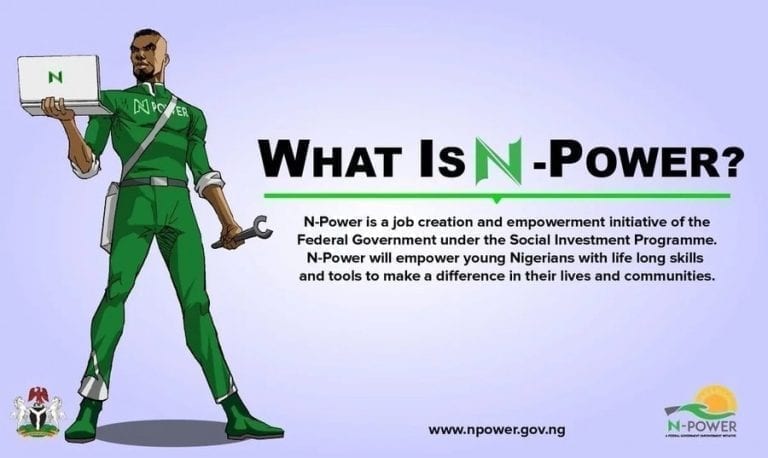
Npower is a program under the social investment policy dedicated to creating jobs and empowering young Nigerians.
To put it simply, Npower is set up to help unemployed youths in Nigeria acquire skill while providing some services and getting paid in the process.

The scheme was set up on 8th June 2016. Since then, it has empowered well over 200,000 young Nigerians who were deployed to some sectors in Nigeria, including education, public services and health.

Npower is also part of a strategic move to diversify the economy by preparing Nigerian youths for an economy based on knowledge.

How to apply for Npower 2020?

If you are an unemployed Nigerian youth between the age of 18 and 35, and you meet the other requirement of Npower, you can apply to join the Npower by visiting www.portal.npower.gov.ng to commence application.

The recruitment process is currently on-going through the Npower Recruitment Portal. The official Npower recruitment portal for 2021is https://npower.fmhds.gov.ng and nasims.gov.ng – open to only eligible Nigerians according to the guidelines given at the portal.

What is Npower official website?

The official website of Npower where you can find virtually all the information you need about the scheme is npower.gov.ng.

What are the requirements to register for Npower?

If you are considering applying for the Npower scheme on Npower portal, here are some of the requirements:

  1. You must be between the age of 18 to 35
  2. Must possess an NCE, OND, HND or Bachelor’s Degree
  3. You must express genuine interest in an Npower scheme
  4. Must pass the aptitude test
  5. Passport photographs
  6. Active email address
  7. NYSC discharge certificate (where applicable)

What is Npower application process?

There are three steps to take when applying to join the Npower program. They are as follows.

Step 1: Choose your program

There are series of options to choose from including NTeach, Ntech, Nbuild, NHealth among others. Select whichever best suits you and go on to the next step.

Step 2: Start your application

Now that you’ve chosen a program, it’s time to begin your application. All of these you will do on the Npower portal www.portal.npower.gov.ng

Step 3: Wait for Selection

Your job here is done, now you wait, hoping to be selected.

When is Npower registration ending?

There is currently no ongoing Npower registration; hence we cannot tell when it will end. Just keep checking Npower official website for all Npower news so you can know when the next registration would commence and end.

Is Npower registration still on?

At the time of writing this, there is no ongoing registration for Npower. However, keep checking the official website of Npower, www.npower.gov.ng to know when new registration will start.

Will federal government permanent Npower volunteers?

According to a statement credited to the federal government, there are no plans to permanently absorb Npower volunteers into civil service or other government jobs.

However, discussions are still ongoing on the possibilities of state governments and private organizations providing permanent employment to Npower volunteers after completing their two years of voluntary service.

How much is Npower salary?

Npower is a voluntary service and kind of training program, so there is no salary attached. However, the government pays a stipend of N30,000 monthly to all volunteers, and some get a mobile device as well.

What are the Different Npower Categories to choose from?

1. Npower Agro

Those selected under this category would be charged with the responsibility of providing some form of advisory services to farm owners and farmers across different parts of Nigeria.

They will serve as a communication channel to pass down the knowledge gotten from the federal ministry of agriculture and rural development. Also, they will help in gathering data on Nigeria’s agricultural assets.

2. Npower Tax

These Npower volunteers that would be selected to work as Community Tax Liaison Officers in their various states of residence. This is aimed at increasing internally generated revenue from tax.

Among others, Npower Tax volunteers are responsible for customer management, responding to online enquiries and creating awareness on tax payment compliance.

3. Npower Build

This one is a certified training program for unemployed young Nigerians. The aim is to help build a team of a highly competent and skilled workforce of artisans, technicians and professional service providers.

Some of the industries Npower build focus on include construction, utilities, gas and aluminium, automotive, building services and built environment services.

4. Npower Creative

This is a unique Npower program which is aimed at further putting Nigeria’s creative industry in the global radar. This training will last for three months, after which some of the participants will get internship opportunities while others will be linked to job opportunities.

5. Npower Health

Volunteers under Npower health are to be promoted and improve preventive healthcare in their various communities to some members of the society such as children, pregnant women, individuals and families.

6. Npower Teach

If you get selected under Npower Teach, your responsibility would be to help improve the delivery of primary education in Nigeria. You would be deployed as teacher assistants in primary schools around the country.

Your job will be to work as support teachers to the teachers in those schools.

7. Npower Hardware

The end goal of this particular Npower program is to serve as a catalyst that would expand our local capacity to produce and service smartphones, tables, laptop and desktop computers.

Participants here will go through thorough training which would expose them to tools and practical processes required to make and repair smart devices.

8. Npower Software

This is to expose some young Nigerians on software development and expose them to its booming local and international market.

If you get picked under this Npower category, you will be exposed to resources to succeed as a modern-day software developer as well as foundation software development tools.

How to write Npower aptitude test?

Once you enter your BVN and it is verified, you will receive an SMS to enable you to partake in the Npower test. Once you receive the text, do the following:

  1. Go to www.apply.npower.gov.ng/test
  2. Choose one of the different Npower categories you want to apply for (N-health, N-teach, N-tax, N-agro etc.)
  3. To log in, provide your correct BVN and phone number.
  4. Once you log in, you will be taken to where you will only click a button to start the test.

Before starting the test, here are some crucial information you need to prepare you

  1. Npower test questions depend on the category you select. Hence, make sure you choose a category that you understand the most
  2. Npower selection process is done in phases across different parts of the country
  3. Npower assessment also covers Lateral thinking, verbal and quantitative reasoning, general knowledge, numerical analysis and other questions assessing basic understanding of English.
  4. You can use your smartphone, tablet, laptop or desktop computer for Npower online test
  5. You will get two chances to attempt Npower test so if you fail the first time, you get a second chance to do better.

How to check my name on Npower list?

Here are the steps to take to check your name on the Npower list after application

  1. Visit Npower official website www.npower.gov.ng
  2. Look for ‘Check your pre-selection status’ and click on it.
  3. Enter your name, email address, BVN or phone number in the search box
  4. If you have been pre-selected, your name will pop up below.
  5. You will get an SMS and email congratulating you on your pre-selection
  6. Now you prepare for physical verification.

How to update my Npower profile

Sometimes, errors in name or other information can affect the monthly stipends from the federal government. So most people always wonder how they can update their Npower profile.

If you will like to update some information on your Npower Nigeria profile such as names, bank account details, phone number and email address, here is a guide.

  1. Visit the Npower portal portal.npower.gov.ng
  2. Log in with your username and password.
  3. Once you log in on your laptop or desktop computer, you will see the following options at the left-hand corner (Home, Prepare, Announcements, Account Settings, About NPVN and Get Help)
  4. Click on account settings, and these two options will pop up – Personal Information and Bank Information.
  5. Depending on the error you want to fix, click on any of the two make necessary changes and click on update when you’re done. That’s all.

Where to repair Npower devices?

Some Npower volunteers are given a tablet to aid their work. If you’re given one, and it’s faulty, here is how to fix it. Follow the instruction in the image below to fix your Npower device.

a to z of npower

How to reset my Npower password?

Resetting is not as difficult as many think. Visit the login page and click on “forgotten my password”. You’d be required to provide your email address. Enter the email address you registered with and submit.

A temporary new password would be sent to your mail so you can easily access your account.

#EndSARS: FG to Set up Another Youth Fund

According to a news article by The Punch Newspaper on its Twitter handle, The Minister of Finance, Dr. Zainab Ahmed, on Saturday, said the Federal Government had created a 25billion Naira Youth Fund as part of its efforts to effectively address the #EndSARS protests and other similar youth restiveness in Nigeria.

The Minister of Finance made this known at a stakeholder meeting held in Kaduna with the Deputy Governor of the State, Dr Hadiza Balarabe.

The meeting was in line with the presidential directive of the President to ministers and governors to dialogue with stakeholders following the #EndSARS protests.

Dr. Zainab Ahmed further explained that the fund set aside with the hope of supporting Nigerian youth to actualise their innovative and entrepreneurial ventures and aspirations in becoming self-reliant, would be increased to N75bn within a period of three years.

Balarabe said the essence of the meeting was to brainstorm towards tackling the security challenges during the #EndSARS protests.

The Minister of Environment, Dr Mohammad Abubakar, who was also present at the meeting, expressed that the Federal Government is committed to initiating people-friendly policies and reforms aimed at creating jobs for her youths.