Home Blog Page 32

Ban Importation of Tomato Paste to Nigeria

Put a total ban on the importation of tomato paste into the country. That was the request made to the federal government of Nigeria, by the managing director, Dangote Tomato Processing plant in Kadawa LGA of Kano State, Abdulkarim Kaita.

Kaita made the request during the distribution of tomato seedlings to 5,000 farmers under the Anchor Borrowers programme of the Central Bank of Nigeria on Thursday, at Kadawa village in Kura Local Government Area of Kano state.

“We are appealing to the Federal Government to put a total ban on the importation of tomato like what it did to rice,” Kaita has been credited to have said.

Kaita said the call became necessary to boost local production of tomatoes and ensure that Nigeria was self sufficient in tomato production and other food items within its food chain.

According to him, the ban on the importation of tomato paste would help to foster the creation of more tomato processing plants nationwide, thereby creating more job opportunities for many people in the country.

Kaita lamented that the importation of tomato paste was still thriving as the commodity was being imported mainly from Cameroon and Cotonou in Benin Republic.

According to him, the company had on several occasions visited the Customs Headquarters and met the Controller General with a view to lodging complaint over the issue, but nothing has been done to put the ugly trend to check.

“It is only by putting a total ban on tomato importation that the government can encourage farmers to grow the commodity for the country to be self sufficient,” he said.

Read more on Dangote – What Entrepreneurs Can Learn From Aliko Dangote

Did You Know That You Can Still Read Whatsapp Messages Even When Deleted?

26

Have you heard that curiosity kills the cat? Well, gratefully, cats have nine lives. And more so, aren’t we all curious at certain times or the other?

If you are like me, you should have been curious at a point or the other, especially when it concerns being able to read the deleted messages of friends and family.

It is always painful to note that before you could read a message in the chat line your partner chose to delete, and all you see is a notification that the message was deleted – Yes, their deleted Whatsapp messages.

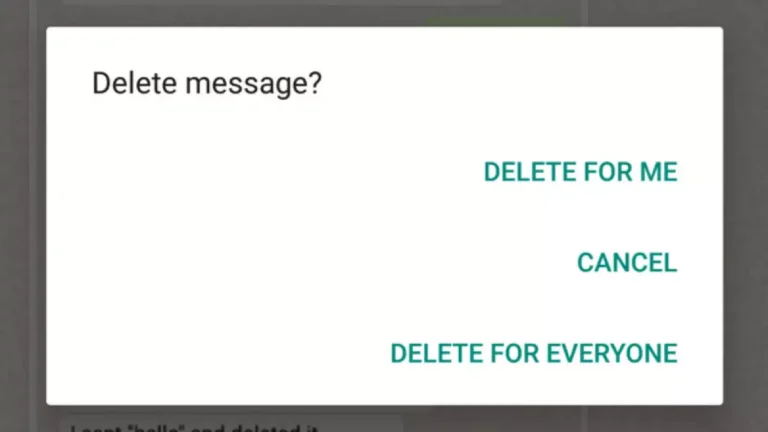
Thankfully, deleting WhatsApp messages is simple and only takes a few swipes. You can choose to delete messages just for yourself, or delete a message for everyone within an approximately one-hour time limit, meaning that they’ll disappear from the other person in the chats inbox as well.

WhatsApp introduced the delete message option to their users back in its 2017 updates, and since then we have had no choice but to ask if anyone might be able to read such deleted messages, still.

Luckily, there are apps that were developed just for that – To help you get back to your cancelled messages, or spy on your friends and family through their deleted Whatsapp messages.

  • WhatsApp Removed +:

This application is available on Google Play, when it detects a change, edition of a notification or deletion of a message, it will notify you and make a backup. 

For this to happen you must give him permission to access your conversations. It is important that you know that it only works with text messages, it does not backup images, videos or voice notes.

  • Notisave:

It is also in Google Play and saves notifications from your cell phone, which will allow you to read canceled WhatsApp messages. Like the previous one, it only works for texts.

For its part, in iOS it could be achieved by activating the backup of the platform messages, for this you will have to uninstall and install the application again.

Recall anyway that “With great power comes great responsibility“.

Use these applications with great caution.

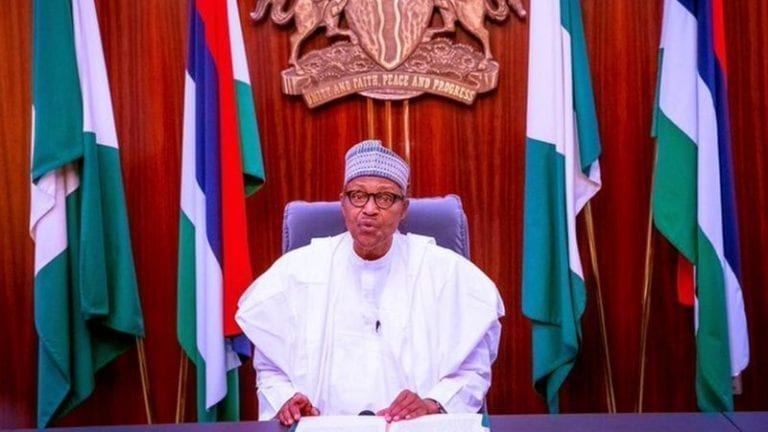
#EndSarsNow: Full text of President Muhammadu Buhari’s National address

155

Fellow Nigerians,

It has become necessary for me to address you, having heard from many concerned Nigerians and having concluded a meeting with all the Security Chiefs.

I must warn those who have hijacked and misdirected the initial, genuine and well-intended protest of some of our youths in parts of the country, against the excesses of some members of the now-disbanded Special Anti-Robbery Squad (SARS).

On Monday 12th October, I acknowledged the genuine concerns and agitations of members of the public regarding the excessive use of force by some members of SARS.

The choice to demonstrate peacefully is a fundamental right of citizens as enshrined in Section 40 of our Constitution and other enactments, but this right to protest also imposes on the demonstrators the responsibility to respect the rights of other citizens, and the necessity to operate within the law.

As a democratic government, we listened to and carefully evaluated the five-point demands of the protesters. And having accepted them, we immediately scrapped SARS and put measures in place to address the other demands of our youth.

On approving the termination of SARS, I already made it clear that it was in line with our commitment to the implementation of extensive Police reforms.

Sadly, the promptness with which we have acted seemed to have been misconstrued as a sign of weakness and twisted by some for their selfish unpatriotic interests.

The result of this is clear to all observers: human lives have been lost; acts of sexual violence have been reported; two major correctional facilities were attacked and convicts freed; public and private properties completely destroyed or vandalised; the sanctity of the Palace of a peace-maker, the Oba of Lagos has been violated. So-called protesters have invaded an International Airport and in the process disrupted the travel plans of fellow Nigerians and our visitors.

All these executed in the name of the ENDSARS protests. I am indeed deeply pained that innocent lives have been lost. These tragedies are uncalled for and unnecessary.

Certainly, there is no way whatsoever to connect these bad acts to legitimate expressions of grievances of the youths of our country.

The spreading of deliberate falsehood and misinformation through the social media in particular, that this government is oblivious of the pains and plights of its citizens, is a ploy to mislead the unwary within and outside Nigeria into unfair judgement and disruptive behaviour.

On the contrary, both our deeds and words have shown how committed this administration has been to the well being and welfare of citizens, even with the steadily dwindling revenues, and the added responsibilities and restrictions due to the Coronavirus pandemic.

Government has put in place measures and initiatives principally targeted at youths, women and the most vulnerable groups in our society. 

These included our broad plan to lift 100 million Nigerians out of poverty in the next 10 years; the creation of N75 billion National Youth Investment Fund to provide opportunities for the youths, and the Micro, Small and Medium Enterprises (MSME) Survival Fund, through which government is:

a. paying 3-months salaries of the staff of 100,000 micro, small- and medium- enterprises

b. paying for the registration of 250,000 businesses at the Corporate Affairs Commission

c. giving a grant of N30,000 to 100,000 artisans

d. guaranteeing market for the products of traders

These are in addition to many other initiatives such as:

a. Farmermoni,

b. Tradermoni,

c. Marketmoni,

d. N-Power,

e. N-Tech and

f. N-Agro.

No Nigerian Government in the past has methodically and seriously approached poverty-alleviation like we have done.

With regard to the welfare of police personnel, the National Salaries, Income and Wages Commission has been directed to expedite action on the finalization of the new salary structure of members of the Nigeria Police Force.

The emoluments of other paramilitary services are also being reviewed upwards.

In order to underscore the importance of education in preparing youths for the future, this administration has come up with a new salary structure and other incentives for our teachers.

Let me at this point re-affirm the Federal Government’s commitment to preserving the unity of this country.

We will continue to improve good governance and our democratic process, including through sustained engagement.

We shall continue to ensure that liberty and freedom, as well as the fundamental rights of all citizens, are protected.

But remember that government also has the obligation to protect lives and properties, as well as the right of citizens to go about their daily businesses freely and protected from acts of violence.

To our neighbours in particular, and members of the international community, many of whom have expressed concern about the ongoing development in Nigeria, we thank you and urge you all to seek to know all the facts available before taking a position or rushing to judgement and making hasty pronouncements.

In the circumstances, I would like to appeal to protesters to note and take advantage of the various well-thought-out initiatives of this administration designed to make their lives better and more meaningful, and resist the temptation of being used by some subversive elements to cause chaos with the aim of truncating our nascent democracy.

For you to do otherwise will amount to undermining national security and the law and order situation. Under no circumstances will this be tolerated.

I, therefore, call on our youths to discontinue the street protests and constructively engage government in finding solutions.

Your voice has been heard loud and clear, and we are responding.

And I call on all Nigerians to go about their normal businesses, and enjoin security agencies to protect lives and properties of all law-abiding citizens without doing harm to those they are meant to protect.

Let me pay tribute to officers of the Nigeria Police Force who have tragically lost their lives in the line of duty.

I would like to thank those State Governors, traditional and religious leaders who have appealed for calm and restraint.

I also thank youth leaders who have restrained their followers from taking the law into their own hands.

This government respects and will continue to respect all the democratic rights and civil liberties of the people, but it will not allow anybody or groups to disrupt the peace of our nation.

Thank you all.

God bless the Federal Republic of Nigeria.

Rising Public Debt, Non-Performing Loans Pose Threat to Financial Stability

The threat of recession, increased the national debt and non-performing loans in the country are pressurising regulators to reassess their supervisory activities.

The NDIC Managing Director, Alhaji Umaru Ibrahim, made this known at the 2020 workshop for Finance Correspondents Association of Nigeria (FICAN) in Lagos on Tuesday.

He emphasised that the rising public debt stock, as well as increase in non-performing loans (NPLs) in the banking industry, have put financial regulators under pressure to reassess their supervisory interventions to boost capabilities to respond and forestall a financial crisis.

Speaking in Lagos at the opening of the 2020 workshop for business editors and the Finance Correspondents Association of Nigeria (FICAN), Alhaji Umaru added that the threat of a pending economic recession and the potential for another financial crisis had further put regulators on their toes.

The NDIC boss noted that though the emergence of digital financial services enabled by financial technology (Fintech) had enhanced efficiency in the financial sector, it has also posed new challenges to financial regulators and consumers.

“The threat of a recession; increased national debt, increase in non-performing loans and a potential financial crisis have put pressure on regulators to reassess their supervisory activities to strengthen their capabilities to address these challenges and forestall a financial crisis,” he said.

Ibrahim said the impact of the COVID-19 pandemic and the resultant disruptions to social and economic activities had had negative consequences on all lives and nations across the world.

According to him, the emerging challenges became more apparent during the pandemic when the lockdown protocols hindered physical access to financial services, thereby encouraging more Nigerians to rely on digital financial services.

He, however, pointed out that as disruptive as the COVID-19 had been to other sectors of the country, the pandemic did not catch the NDIC napping.

He explained that based on the Corporation’s robust and proactive enterprise risk management strategy, it had immediately swung into action by activating its crisis management action plan to prevent any negative impact on its operations and the financial institutions under supervision.

The MD said the goal was to ensure the safety and protection of all staff and stakeholders to maintain continuity of its operations towards protecting depositors’ funds and ensuring the stability of the banking sector.

He said in recognition of the heightened fears of depositors’ lack of access to their money due to the COVID-19 disruptions. The Corporation had embarked on a nationwide public awareness campaign through the production and broadcast of radio and television jingles in the three major languages and pidgin, to enlighten depositors on the continued safety and security of their funds in licensed financial institutions under its purview https://havan-bet.com/.

He said the issues presently confronting the country were monumental and unprecedented adding however that are not insurmountable.
The NDIC boss, therefore, emphasised on the critical role of the media as central in shaping public perception and promoting financial stability through the reportage of the Corporation’s role in depositor protection.

This is as the NDIC Director, Communications and Public Affairs Department, Mr. Bashir Nuhu said part of the reforms being canvassed by the Corporation through the amendment of its establishment Act, was to ensure a definite timeline for failure resolution, preferably 10 days to enable failed bank customers get their money within a short period of time.

Also, speaking on “Global Review of COVID-Related Financial Stability Issues, Policy Measures Taken and Assessment of their Effectiveness”, the NDIC Director of Research, Policy and International Relations – Mr. Sunday Oluyemi, further stressed the need for increased surveillance of banks adding that the possibility of heightened impaired credits (NPLs) portfolio of banks arising from potential economic slowdown would require increased surveillance of the banking system through scheduled bank examination and improved off-site analysis.

As a result, he said that the Corporation is reviewing the framework for financial and technical assistance in readiness for assisting banks that are faced with liquidity and solvency challenges during the pandemic and beyond.

Among other things, he said there’s heightened need for financial and technical assistance by banks, pointing out that the Corporation is likely to receive applications for financial aid from supervised entities due to liquidity challenges occasioned by the pandemic.

Olayemi further observed that though the condition of the banking industry is generally satisfactory, the impact of COVID-19 had also led to a decline in credit facilities despite an increase in deposits from March to June 2020.

He said the regulatory and supervisory authorities had introduced measures to tackle the impact of the pandemic on the banking system with incentives including interest rate reduction, moratorium, liquidity injection and regulatory forbearance on loan restructuring among others.

He called for closer monitoring of banks and increased campaign on the safety of banks’ deposits through sustained public awareness, saying building trust and confidence in the financial system remained key priorities of regulators/ supervisors.

CBN Invests N120bn to Resuscitate Textile, Garment Industry

The Central Bank of Nigeria (CBN) disclosed that it had invested over N120 billion across the Cotton, Textile and Garment (CTG) value chain since the inception of its intervention programme in the industry.

CBN Deputy Governor, Corporate Services, Mr. Edward Adamu disclosed this at a meeting with stakeholders in the CTG sector in Abuja.

He said over 320,000 farmers had been financed between 2018 to date, adding that expected output for seed cotton is projected to be over 300,000 metric tons in 2020.

Adamu pointed out that this is expected to enhance the production capacity of the ginneries in producing over 102,000 metric tons of cotton lint which should meet and surpass the cotton lint requirement of textile industries in the country.

He said the domestic demand for cotton is currently met through local production, thereby halting the importation of cotton for the textile industry as well as an increase in capacity utilization of ginneries as the ginneries now operate throughout the year compared to months in the recent past.

The CBN deputy governor added that a total of 19 ginnernes had been resuscitated across the country adding that more are expected to become operational this year.

He said the apex bank’s enhanced drive toward anti-smuggling was already yielding positive result with over 15 textile smugglers’ accounts frozen across the country.

Addressing the farmers, he said: “A lot of progress has been made, but at the same time more needs to be done to ensure that we build an inclusive economy that supports domestic production of goods and services while offering job opportunities to teeming Nigerians.

“This assignment has been bestowed upon us all by the President of the Federal Republic of Nigeria, Muhammadu Buhari, who remains extremely supportive of the agricultural sector revolution due to its role in ensuring food security, creating jobs and stabilizing the Nigerian economy.”

Adamu said the revival of the textile sector remained vital to the country’s growth objectives adding that the CBN’s interventions is designed to resuscitate and return the industries back to its glorious days of job creation, economic diversification and achieving self-sufficiency in cotton production as well as minimize and eradicate smuggling and dumping of textile goods and facilitation foreign reserve accretion.

Also speaking at the occasion, CBN Director, Development Finance Department, Mr. Yila Yusuf, said smuggling of textiles remained the most significant challenge towards repositioning the sector.

Speaking with journalists, he said, “As you are aware a lot of them (smugglers), their accounts have been blocked. As restitution, we are telling them to go patronize the local textile factories”.

He said the CBN is also working with the uniform services to enhance patronage of locally made fabrics which are of high quality.

While addressing concerns raised by stakeholders on early funding to check arbitrage by intermediaries, he said going forward; the CBN will ensure that farmer get funded with the right interest regime.

The President of the National Cotton Association of Nigeria, Mr Anibe Achimugu had stressed the need for farmers to access funding from the Export Development Fund (EDF) to help them remain competitive.

He said: “As we speak we have excess cotton in warehouses because the current capacity of the textile companies is not able to utilize the cotton for now. But, of course, since the CBN is intervening in the textile companies, they should be able to improve their capacities in the future.

He said: “Quality planting seeds are not available on the quantity needed. We only have an institute of agricultural research, but that is not enough. But the government can open up the space for the private sector in seed production and processing.”

“We were not hacked”; Airtel Explains why it gave users N1,000 Airtime

2

Nigerian mobile network service provider, Airtel has revealed that it sent N1,000 worth of data and airtime to its subscribers on Monday, refuting claims that it was hacked.

News had gone round on social media in the early hours of Monday that Airtel was hacked by the famous community of hackers, Anonymous.

However, in a message sent to some of its subscribers, Airtel disclosed that the free airtime and data was its way of apologizing and compensating customers for network disruptions experienced on Friday, October 16th.

One of the messages some customers got reads:

“Dear customer, we apologise for the recent service disruption experienced on October 16. Normal service has been restored and your line will be credited with five minutes of on-net calls and 100MB of data both valid for one day.”

The step is in line with Nigerian Communications Commission’s compensation policy for the industry.

By the way, did you know that you could convert airtime to cash for all Nigeria networks? PayGold to your rescue, talk to them now.

How To Start Real Estate Business in Nigeria

Estimated reading time: 6 minutes

Since time immemorial, real estate has been one of the best ways of making money. The reason? Because land will always appreciate.

Buy a land today, and by the time you are selling it tomorrow (literally) you can bet it would have appreciated.

In spite of the fact that not so many people truly know how to do the real estate business in Nigeria, if you take a good look around you, and you will see there is a boom in the real estate business in Nigeria.

New real estate companies are coming up, and most of them have your favourite celebrities as brand ambassadors. What all that is telling you is that there is, more than ever, massive opportunity in the real estate sector and you should tap into it.

But how? That is the whole essence of this write-up. Read on to find out.

How To Invest in The Real Estate Business in Nigeria

1. Buy Rental Property

Everyone wants a house they can call their own. People save for years to achieve this. And then some people go as far as acquiring houses 2, 3, 4 and even more. And they spend money every now and then to maintain these properties, which have now become liabilities.

Instead of this, why not invest in real estate by purchasing rental properties. In other words, rather than buying several houses for yourself, why not buy apartments and put them out for rent to make returns.

If you have ever paid house rent in Lagos or Abuja, you will understand how lucrative this is.

It has its downside, however. And that is managing tenants.

From issues of payments to that of house maintenance, tenant management sometimes constitute a headache for rental property owners.

The solution to this is simple – get yourself a lawyer or agent to help manage the property. 

2. Put up Apartments on Airbnb

Did you know that one of the ways to start your journey to the real estate business in Nigeria is by starting out by putting up unused spaces like your BQs, Guest rooms, etc on Airbnb for good returns?

There are a lot of agents out there in Nigeria now that would gladly partner with you to help manage your space. They do the dirty work of managing your space and you take a back seat and just take in commissions.

3. House Flipping

Imagine you have been using an iPhone for the past three years. As a result, the smartphone is no longer looking attractive.

If you try to sell the phone as it is, be sure no one will want to buy it for much money.

But if you fix the phone make it new again, then prospects wouldn’t mind paying a reasonable price for it.

This is similar to how house flipping works. It’s a real estate investment strategy in which you fix up an old and probably ugly-looking property to sell for a better price.

And when you want to do house flipping, you must bear in mind the 70% rule.

According to Investopedia, the 70% rule states that an investor should pay at most 70% of the after repair value (ARV) of a real estate property minus the needed repairs.

3. House Hacking

House hacking is an investment strategy in real estate in which you can make money by renting out your primary residence.

If you have a duplex, for instance, you can rent out a unit and occupy the other unit(s).

You can use the money you make from the rent of a unit to maintain the remaining units and still have some cash to keep to yourself.

4. Property/Estate agent

Maybe you don’t have a land or property of your own to sell and don’t have enough money to buy any now. Not to worry, you can still make money from real estate as an agent.

As a property or estate agent, you serve as a middle man between property owners and buyers.

The widely popular standard is that agents get 10% off every property sold.

What most agents do is try to locate a community with great prospects and virgin lands; they then go into agreement the leader of such a community.

Now having the permission of the community leader, they go ahead and advertise the lands available for sell in the community to potential clients and make their 10% on every purchase.

Other ways to make money from Real Estate

Perhaps you don’t have the capital to buy properties or don’t have the time going to communities as an agent; there is still something for you in the real estate sector.

1. Buy Shares of real estate companies

Some of the real estate companies in Nigeria are quoted in the Nigerian stock exchange. That means you can buy their shares and make money from their dividends.

As stated earlier, the real estate sector in Nigeria is currently experiencing a boom, and so it presents an excellent opportunity to make a profit through shares.

Of course, do your due diligence before buying the shares of any company.

2. Land Survey

There is so much opportunity to make money in real estate as a land surveyor.

Of course, you first to be a trained surveyor. Then you will have to connect with real agents and firms to make sure jobs keep flowing in.

3. Architecture

Architects are responsible for drawing building plans for houses before they are constructed. This is another opportunity to make money in real estate in Nigeria.

Buildings don’t get approved in Nigeria until there is a plan which can only be drawn by architects. This goes to show how important this is to the sector and how lucrative it is.

The fees for architectural services are calculated based on the type of property and its location.

Architecture is a special skill that you can acquire from institutions of learning.

Are you a lawyer or legal practitioner? You’ve been missing a lot if you’ve not been paying attention to making money from real estate.

Since it’s a sensitive business, the services of lawyers are always required in real estate. 

One document that is required before a land purchase can be made is the deed of conveyance. The document conveys the ownership of the land from the seller to the buyer.

For a deed of conveyance to be valid, it has to be endorsed by a lawyer or legal practitioner, at a fee of course. And that’s not all.

In the event of issues coming up while ownership is about to change hands, the services of a lawyer will still be required.

Conclusion

And there you have the varieties of ways you can make money from real estate in Nigeria.

While some require some capital, some require some special skills and most just your leg (to walk) and mouth (to speak).

Recommended Articles

Nigerian Youth Investment Fund (NYIF)

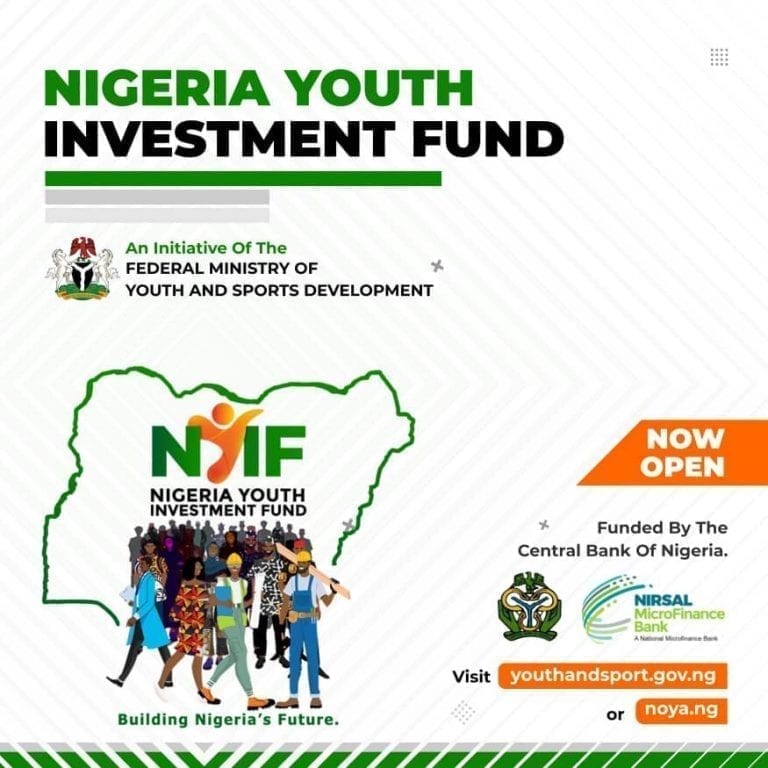
The Federal Nigerian Youth Investment Fund is an initiative of the Federal Government of Nigeria has launched the Nigeria. It was setup to help youths achieve their dreams of being self reliant through the proliferation of the in Youth Investment Funds Program.

But, have you wondered what the program is, its primary objective, target youth category, what you require to participate, and so many other questions that should naturally come to mind?

If you are like me, I bet you have.

During the launch of the program, Sunday Dare, the Minister for Youth and Sports Development, said that the NYIF underscored the importance placed on youths by the current administration.

The Minister said that the Fund, which is an initiative of the Federal Ministry of Youth and Sports Development and funded by the Central Bank of Nigeria (CBN), would be spread over three years to cater to youth-owned businesses and investment needs.

The Fund is to help youths with bankable business ideas fund their businesses. 

objectives of the NYIF

Types of Businesses That Get Funding for the NYIF

  • Agriculture and related value chain
  • Construction
  • Logistics and supply chain
  • Healthcare value chain
  • Technology/ Innovation
  • Creative sector
  • Green Economy and Renewable energy sector
  • Manufacturing
  • Hospitality/Tourism
  • Trading and Services

The NYIF Interest Rate

The loan provided under the NYIF has an interest rate of 5% per annum. Youth applying as an individual or non-registered businesses can draw up to two hundred and fifty thousand Naira (₦250,000.00). In contrast, youth who own registered companies can apply for up to three million Naira (₦3,000,000.00). 

ELIGIBILITY CRITERIA

  • Official Government Identification
  • Applicant must be between the ages of 18 and 35 years old
  • Notarized Guarantor Forms
  • Passport photographs
  • Bank Verification Number
  • Training Certificate
  • Fundable business idea
  • Registered business
  • Nigeria Citizenship
  • NYSC certificate for graduates
Other criteria (Sole Proprietors)
  • Be between ages 18 and 35
  • Have business/enterprises domiciled and operational in Nigeria
  • Has a clear financial crime record from the last 10 years
  • Has a valid Bank Verification Number (BVN)
  • Possess Local Government Indigene Certificate

Formal Business Enterprises

  • Evidence of registration with Corporate Affairs Commission (Certificate of Incorporation and Form CAC 2A)
  • Business questionnaire
  • List of Directors with BVN numbers
  • Evidence of regulatory approvals will be provided on demand
  • Tax Identification Number (TIN)

In you need help registering your new business, call 07051114444

Loans are with a tenure of five years and moratorium of up to 12 months.

There are, however, some criteria that must be met to give you eligibility to draw from the loan’s pool of Funds – you can get details of the NYIF requirements here.

On the sustainability of the initiative, the minister said: “It is my belief that the fund will grow to become a permanent feature of our society, where beneficiaries run successful businesses and repay the loans.”

What are The Application Portals for the Nigerian Youth Invest Fund (NYIF) loan?

www.nyif.nmfb.com.ng; and the ministry’s website, www.youthandsport.gov.ng or www.noya.ng

If you need help with processing your loan application for the NYIF or need a bankable business idea with a business plan, then send an SMS or a Whatsapp chat to 07051114444 now.

Ineligibility

Applicants who are a active part of any other NMFB loan scheme – the targeted credit facility (TCF) and agribusiness/small and medium enterprises investment scheme (AgSMEIS) and active beneficiaries of other government loan schemes that remain unpaid are not eligible to benefit from the NYIF.

FG Launches N75 Billion Youth Investment Fund, Here is How to Apply

280

The Federal Government, through the Ministry of Youth and Sports Development has, on Thursday, launched the application for the N75 billion Nigeria Youth Investment Fund (NYIF).

With this, Nigerian youths can access loan of up to N3 million from the Federal Government with convenient interest rates.

The minister of Youth and Sports Development, Sunday Dare, said the fund reiterates how much the current administration values youths.

He added that the fund is an initiative of the Ministry of Youths and Yports Development with funding from the Central Bank of Nigeria (CBN). 

The minister said that the fund would spread more than 3 years to take care of businesses and investments owned by youths.

Appreciating the CBN, Sunday Dare said “I must mention the support we enjoyed from the Central Bank of Nigeria (CBN), which in line with the President’s directive, provided the initial N12.5 billion required for the Fund to operate in the remaining part of the year 2020.

Individuals and non-registered businesses are eligible for loans of up to N250,000. Registered businesses, however, can access up to N3 million.

What’s the Interest Rate of NYIF Loan?

The minister revealed that the NYIF loan’s interest rate is 5% per annum and a 5 years tenor with a moratorium of about 12 months.

How to apply for NYIF Loan

You can apply for the NYIF loan by visiting Nigeria Youth Investment Fund Application Portal on the ministry of Youth and Sports development website www.youthandsport.gov.ng or on NIRSAL microfinance bank’s website www.nmfb.com.ng. 

Simply provide your BVN, name and email address to commence application.

NESG: FG to Rethink Nigeria’s Economic Fundamentals

FG to Rethink Nigeria’s Economic Fundamentals, Says Ahmed.

She opined that the 26th Nigerian Economic Summit (NES#26) will provide an opportunity to reanalyze the country’s economic fundamentals and have concreate deliberations on the impact of the global COVID-19 pandemic on the economy of the country. 

She said it was important that Nigeria’s top policy makers and business leaders proactively converge and engage to address the key questions that presently confront the country. 

Speaking at a media briefing for the NES#26, which is scheduled to commence from October 26–27 in Abuja, the minister added that the summit will emphasise the urgency to strengthen multi-stakeholder alliances between governments and businesses in co-creating a national strategy that will usher the country in the next decade.

She said: “It will be a big conversation for public and private sector stakeholders to reflect on the state of the Nigerian economy, rethink the country’s economic fundamentals and deliberate on the impact of the global COVID-19 pandemic.”

Themed: “Building Partnership for Resilience”, the minister expressed that the summit will be underpinned by three pillars, namely collaboration, execution, and impact adding that these pillars will resonate through all the sessions at with a strong emphasis on reinforcing the role of sub-nationals as the frontiers of economic growth and development, as the government strives to build a more inclusive and sustainable economy.

Ahmed further said that this summit is particularly timely as the government is currently developing a Medium-Term National Development Plan (MTNDP), 2021-2025 and the Nigeria Agenda 2050-which are the successor plans for the National Vision 20:2020 and the Economic Recovery and Growth Plan (ERGP) which expires in December.

She further stressed that the government is working on operational, regulatory and legislative interventions to enable the country move to the top 100 on ease of doing business ranking globally.

She added that the Nigerian governments across all levels will continue to initiate business-oriented policies and ensure adequate commitment to their implementation. 

She said as the country awaits the passage of the Petroleum Industry Bill, the Finance Act and the Companies and Allied Matters Act (Repeal and Re-enactment) which was recently signed by President Muhammadu Buhari into law will transform the business environment and re-energize the private sector as the engine of growth of the economy. 

She further maintained that the greatest challenge facing government is inadequate revenue to execute its numerous projects and other initiatives adding that new sources of revenue were being identified and explored while coordination and cohesion among revenue generating agencies is also being improved.

Ahmed also maintained that the closure of the country’s land borders was one of the boldest decisions ever taken by any administration to curb insecurity, smuggling and kidnapping.

She Said:”This has in a positive way impacted Nigeria as we are closer to attaining self-sufficiency in rice production than at any point in time in the country’s history. 

This spillover effect is also evident in other sectors such as manufacturing, livestock amongst others. This also provides an opportunity for the private sector to leverage increased local content and expand their businesses.”

The Chairman, Nigerian Economic Summit Group (NESG), MR. Asue Ighodalo, said the summit will be held at a turning point in the history of the country.

He said:”We have celebrated remarkable moments, we are weathering difficult times, but we will emerge stronger together.”

According to him, though Nigeria is currently the largest economy in Africa, “every Nigerian will acknowledge that there is still a lot of work to be done as we strive for regional and global competitiveness”. 

He said the NESG was proud to be playing its part in process, including the convening of annual Nigerian Economic Summits since 1993, the provision of platforms for sustained public and private sector engagements, and the provision of strong support in policy agenda setting.

“Even as we celebrate 60 years of nationhood, we do so against the backdrop of a global pandemic that has interrupted our economic development and further exposed the fragilities and vulnerabilities in the structure of our economy,” he said. 

He pointed out that the circumstances of the times had made the summit particularly important for the country, stressing that more than ever, all stakeholders must engage and feel engaged in the social and economic future of the country. 

“We must build a resilient economy, by coming together and working together in partnership,” he said.

Also speaking at the briefing, the Minister of State for Budget and National Planning, Prince Clem Agba, expressed optimism that the outcome of the summit will further help enrich government plans in ensuring that the impact of the pandemic on the economy and the citizens is minimised. 

He said relevant recommendations of the NES#26 will be mainstreamed into the medium and long term plans currently being developed by the ministry and all the critical stakeholders including the subnational governments, private sector operators, civil society organisations, women and youth organisations and development partners. 

He said:”With this assemblage of Nigerians from various works of life, the plan preparation process is designed to be participatory, inclusive and consultative. 

The outcome will be a national plan which has the ownership of all critical stakeholders and also implementable by various levels of government working closely with the private sector”.